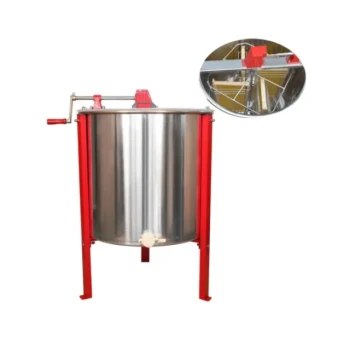
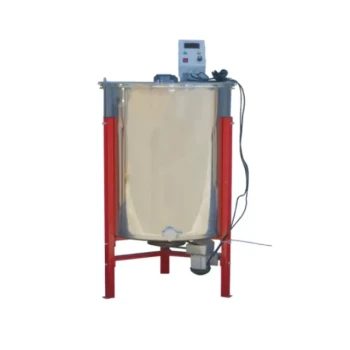
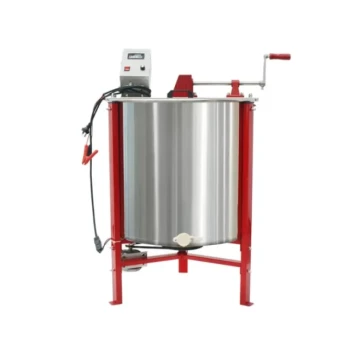
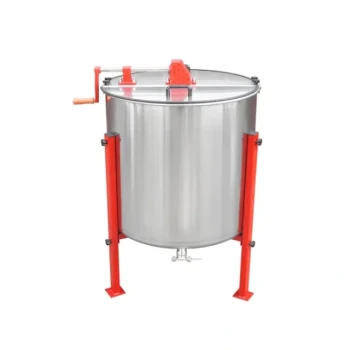
The primary decision metric is the scale of your operation. If you manage fewer than ten hives, a manual extractor is the most cost-effective and logical choice. However, if your apiary exceeds ten hives, or if you anticipate significant growth, an electric extractor is recommended to handle the volume and drastically reduce the physical labor involved.
The choice represents a trade-off between upfront cost and physical efficiency. While manual extractors are affordable and offer tactile control, electric extractors are an investment in time preservation and scalability.
Analyzing the Scale of Operation
The Ten-Hive Threshold
The industry standard suggests a "tipping point" at ten hives. Below this number, the volume of honey is manageable enough to process by hand without exhaustion.
Handling Large Volumes
Once you surpass ten hives, the time required to manually crank frames becomes prohibitive. Electric extractors are designed to process medium to large-scale quantities rapidly, transforming a multi-day chore into a streamlined task.
The Case for Manual Extractors
Cost-Effectiveness
For hobbyists or those just starting, the lower price point of a manual extractor is attractive. It allows you to harvest honey without a significant financial commitment to equipment.
Tactile Control
Manual extractors offer a "hands-on" experience that many hobbyists prefer. You have direct control over the spinning speed, allowing you to slow down instantly if you suspect a delicate comb might break.
Simplicity and Portability
These units rely solely on a hand crank, meaning they do not require a power source. This makes them ideal for harvesting in remote locations or off-grid setups.
The Case for Electric Extractors
Eliminating Physical Labor
The most significant advantage of an electric model is the motor. It replaces the repetitive, strenuous motion of hand-cranking, which is a major benefit for beekeepers with physical limitations or back issues.
Speed and Efficiency
Electric motors maintain a consistent high speed that is difficult to replicate by hand over long periods. This consistency extracts honey faster and more thoroughly, allowing you to cycle through frames much more quickly.
Understanding the Trade-offs
The "Sweat Equity" of Manual Models
The downside of saving money on a manual extractor is the physical toll. Extracting honey is physically demanding; relying on arm power alone can make the harvest feel like a workout rather than a rewarding conclusion to the season.
The Financial Investment of Electric Models
Electric extractors are significantly more expensive. For a beekeeper with only two or three hives, the time saved may not justify the high upfront cost compared to a manual unit.
Material Considerations
Regardless of the power source, you must consider the build quality. Stainless steel is the preferred material for both types due to its durability and ease of cleaning, though this can drive up the price further.
Making the Right Choice for Your Goal
To ensure you select the tool that matches your long-term needs, evaluate your specific situation:
- If your primary focus is budget and small-scale hobbyist beekeeping: Stick with a manual extractor, as it handles small batches (under 10 hives) efficiently without a high upfront cost.
- If your primary focus is efficiency or you have physical limitations: Invest in an electric extractor immediately to minimize physical strain and reduce the time spent in the honey house.
- If your primary focus is scaling your business: Choose an electric extractor now, as it will accommodate the increased volume of a growing apiary (10+ hives) without becoming a bottleneck.
Your extractor should be an asset that matches your volume, not a hindrance that limits your harvest.
Summary Table:
| Feature | Manual Honey Extractor | Electric Honey Extractor |
|---|---|---|
| Recommended Hive Count | < 10 Hives | 10+ Hives |
| Primary Advantage | Low cost & tactile control | High speed & labor reduction |
| Labor Intensity | High (hand-cranking) | Low (motor-driven) |
| Portability | High (no power source needed) | Lower (requires electricity) |
| Best For | Hobbyists & small-scale setups | Commercial apiaries & growing businesses |
Maximize Your Harvest Efficiency with HONESTBEE
Whether you are a growing commercial apiary or a large-scale distributor, HONESTBEE provides the professional-grade equipment you need to scale. From precision-engineered electric honey-filling machines and high-capacity extractors to complete hive-making machinery, we supply the full spectrum of beekeeping hardware and essential consumables.
Don't let manual processes limit your growth. Partner with a supplier that understands the demands of the beekeeping industry. Contact us today to explore our wholesale offerings and discover how our comprehensive tools and cultural merchandise can enhance your business value.
Related Products
- HONESTBEE 72 Frame Industrial Electric Honey Extractor for Beekeeping
- Commercial Electric 12 Frame Honey Extractor Spinner Motorized Honey Extractor
- HONESTBEE 6 Frame Self Reversing Electric Honey Extractor for Beekeeping
- HONESTBEE 3-Frame Manual Acrylic Honey Extractor
- Stainless Steel Manual 8 Frame Radial Honey Extractor Machine for Beehives
People Also Ask
- What is the importance of balancing honeycomb frames within a honey extractor? Ensure Stability and Protect Machinery
- How is honey separated from the frames after they are uncapped? Efficient Extraction Methods for High Yields
- What are the main benefits of using a honey extractor? Maximize Yields and Protect Your Honeycomb
- What are the recommended methods for removing honey from the honeycomb? Top Extraction Techniques for Maximum Efficiency
- How do manual honey extractors compare to electric honey extractors? Choosing the Right Tool for Your Apiary Growth