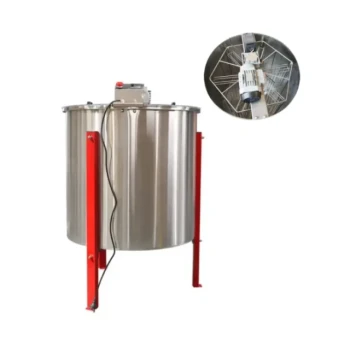
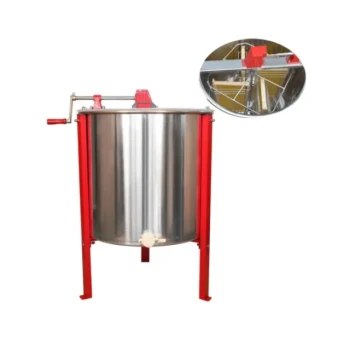
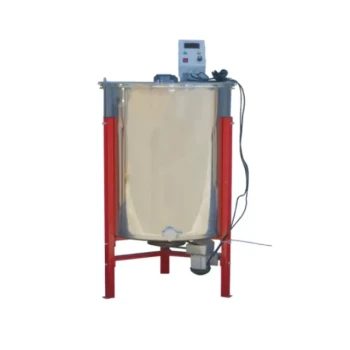
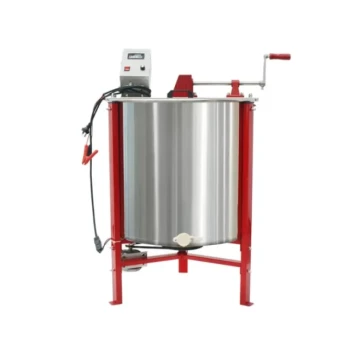
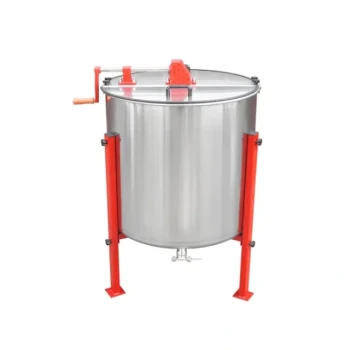
Determining the ideal honey extractor capacity is primarily a calculation of your current apiary size weighed against your immediate growth goals. For small operations with up to four hives, a 2-frame extractor is generally sufficient, while a 4-frame model is recommended for beekeepers managing up to eight hives. Once your operation scales to more than 10 hives, you should transition to an 8-frame or 9-frame model to handle the increased volume efficiently.
The right extractor choice is not just about fitting your current frames; it is about preventing labor bottlenecks. Undersizing your equipment for your hive count will turn a joyful harvest into an exhausting, time-consuming ordeal.
Scaling Capacity to Hive Count
The Small-Scale Standard (1–4 Hives)
For the hobbyist maintaining one to four hives, a 2-frame extractor is the standard recommendation.
At this volume, the harvest is manageable enough that the time spent extracting two frames at a time does not become burdensome. These units are typically manual, offering a lower cost of entry and a hands-on experience suitable for beginners.
The Mid-Sized Apiary (5–8 Hives)
When your apiary grows to between five and eight hives, the limitations of a 2-frame unit become apparent.
For this range, a 4-frame extractor is the optimal choice. It effectively doubles your processing speed, ensuring that the extraction process remains efficient as your honey yield increases.
Large-Scale Operations (10+ Hives)
For operations managing more than 10 hives, small-capacity extractors become a significant liability regarding time and labor.
It is strongly recommended to utilize 8-frame or 9-frame models for this scale. While supplementary data suggests distinct categories for 10-15 hives, the primary guideline is clear: exceeding 10 hives requires a significant jump in capacity to maintain commercial-level efficiency.
Beyond Frame Count: Operational Factors
Manual vs. Automatic Power
Manual extractors are typically found in the 2-to-4 frame range. They rely on a hand crank, making them cost-effective but physically demanding for larger harvests.
Automatic (electric) extractors are preferable if time and efficiency are priorities. They are ideal for large-scale needs, saving substantial labor by automating the spinning process while you focus on uncapping the next set of frames.
Material Durability
Regardless of capacity, you should prioritize models constructed from stainless steel.
This material ensures durability, rust resistance, and ease of cleaning. Stainless steel prevents contamination, ensuring the purity of your honey over years of use.
Understanding the Trade-offs
The "Future-Proofing" Risk
Buying a massive extractor for a small apiary is a common financial pitfall. While an 8-frame electric model is efficient, it represents a wasted budget if you never expand beyond two hives.
Conversely, buying a small unit to save money now often leads to "buying twice" later. If you plan to expand from 2 to 10 hives within a year, it is often wiser to purchase the larger capacity immediately.
Space and Stability
High-capacity extractors require more physical space and a stable base.
Larger models generate significant centrifugal force. Without a dedicated space and a solid mounting mechanism, high-capacity machines can become unstable and dangerous to operate, whereas smaller manual units are easier to store and stabilize.
Making the Right Choice for Your Goal
Select your equipment based on where your apiary will be in two years, not just where it is today.
- If your primary focus is budget and small-scale hobby beekeeping: Stick to a manual 2-frame extractor, as it is cost-effective and perfectly adequate for up to four hives.
- If your primary focus is efficiency and time management: Invest in an automatic extractor with at least a 4-frame capacity to minimize physical labor and speed up processing.
- If your primary focus is rapid expansion or commercial production: Start immediately with an 8-frame or 9-frame stainless steel model to prevent equipment bottlenecks as you cross the 10-hive threshold.
Match your extractor's capacity to your future ambition to ensure your harvest remains a reward, not a chore.
Summary Table:
| Hive Count | Recommended Frame Capacity | Operation Type | Recommended Power |
|---|---|---|---|
| 1 - 4 Hives | 2-Frame Model | Small-Scale Hobbyist | Manual |
| 5 - 8 Hives | 4-Frame Model | Mid-Sized Apiary | Manual or Electric |
| 10+ Hives | 8 - 9+ Frame Model | Commercial Operation | Automatic / Electric |
Scale Your Honey Production with HONESTBEE
Ready to eliminate labor bottlenecks and upgrade your commercial apiary? HONESTBEE caters to commercial apiaries and distributors with a comprehensive wholesale offering. We provide everything from professional-grade stainless steel honey extractors and honey-filling machines to specialized hive-making hardware and essential industry consumables.
Whether you are expanding your own hives or supplying the market, our portfolio of high-efficiency machinery and honey-themed cultural merchandise ensures you have the competitive edge.
Contact us today to discuss your wholesale needs and see how our premium tools can streamline your harvest.
Related Products
- HONESTBEE 72 Frame Industrial Electric Honey Extractor for Beekeeping
- Commercial Electric 12 Frame Honey Extractor Spinner Motorized Honey Extractor
- HONESTBEE 6 Frame Self Reversing Electric Honey Extractor for Beekeeping
- HONESTBEE 3-Frame Manual Acrylic Honey Extractor
- Stainless Steel Manual 8 Frame Radial Honey Extractor Machine for Beehives
People Also Ask
- What is the importance of balancing honeycomb frames within a honey extractor? Ensure Stability and Protect Machinery
- How is honey separated from the frames after they are uncapped? Efficient Extraction Methods for High Yields
- What are the main benefits of using a honey extractor? Maximize Yields and Protect Your Honeycomb
- What are the recommended methods for removing honey from the honeycomb? Top Extraction Techniques for Maximum Efficiency
- How do manual honey extractors compare to electric honey extractors? Choosing the Right Tool for Your Apiary Growth