Configuring the cooling system using tap water requires a straightforward, open-loop setup that relies on continuous flow rather than recirculation. You must connect your incoming tap water supply directly to the water inlet of the condenser. Crucially, the water outlets from both the condenser and the vacuum pump must be routed to a sewer drain, as the water will not be recaptured or stored.
A tap water configuration is defined by its "single-pass" nature; because there is no holding tank or recirculation pump, proper access to a drainage system is just as critical as the water supply itself.
Establishing the Inlet Connection
Locating the Intake point
The primary connection point for your cooling source is the condenser water inlet.
Connecting the Supply
Run your tap water pipe directly to this inlet. Ensure the connection is watertight and capable of sustaining the pressure of a continuous municipal water flow.
Managing the Discharge
The Condenser Outlet
Once the water has passed through the condenser to cool the honey, it must be expelled. Connect the condenser’s water outlet to a pipe or hose that leads directly to a sewer drain.
The Vacuum Pump Outlet
The vacuum pump also generates discharge that requires disposal. Similar to the condenser, the vacuum pump's water outlet must be connected to the sewer drain.
No Recirculation Required
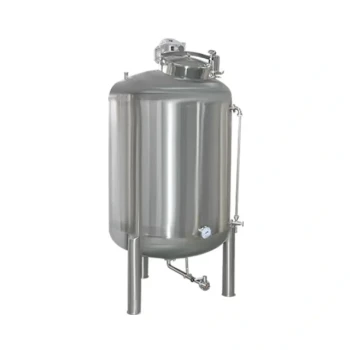
Unlike circulating systems that require large storage tanks (often over 2 tons) and recycling pumps, the tap water method requires no external machinery to move water back into the system. Once the water leaves the outlets, it is discarded.
Understanding the Trade-offs
Water Consumption
While this configuration is mechanically simple, it is resource-intensive. Because the water is discharged immediately into the sewer rather than recycled, water consumption will be significantly higher than in closed-loop systems.
Simplicity vs. Infrastructure
The primary advantage is the elimination of bulky infrastructure. You do not need to install the 0.37Kw pump or the large water tank required for circulating systems.
Drainage Dependency
You are strictly limited by your facility's drainage capacity. If your sewer connection cannot handle the combined continuous flow from both the condenser and the vacuum pump, the system may back up.
Making the Right Choice for Your Goal
Before finalizing your installation, confirm that your facility supports this specific configuration.
- If your primary focus is operational simplicity: Utilize this tap water setup to avoid purchasing and maintaining external pumps and storage tanks.
- If your primary focus is location flexibility: Ensure your machine is installed within reach of a floor drain or sewer line, as this "open loop" system cannot function without immediate disposal.
The efficiency of a tap water cooling system relies entirely on a secure inlet connection and unobstructed gravity drainage.
Summary Table:
| Feature | Tap Water Configuration (Open-Loop) | Circulating System (Closed-Loop) |
|---|---|---|
| Equipment Needed | Tap water supply, drainage line | 2+ ton water tank, 0.37Kw pump |
| Water Usage | High (Single-pass discharge) | Low (Recycled) |
| Complexity | Low (No external machinery) | Moderate (Requires pump maintenance) |
| Space Requirement | Minimal (Machine footprint only) | High (Requires tank space) |
| Drainage Need | High-capacity sewer connection | Minimal |
Scale Your Honey Production with HONESTBEE
Are you looking to streamline your apiary's processing capabilities? At HONESTBEE, we specialize in empowering commercial apiaries and distributors with premium wholesale solutions. From high-efficiency honey-filling machines and honey concentrators to specialized hive-making machinery, we provide the full spectrum of equipment and consumables needed to thrive in the modern honey industry.
Whether you are setting up a new facility or upgrading your current hardware, our team of experts is ready to help you optimize your configuration for maximum output. Contact us today to discover how our comprehensive beekeeping tools and industry expertise can bring superior efficiency to your business!
Related Products
- Honey Concentrating Vacuum Heating Thickening Machine Dehumidifier for Honey
- Honey Concentrating and Filtering Dehumidifier Machine 2T Capacity for Honey
- 0.5T Capacity Honey Dehumidifier Dryer with Vacuum Heating and Thickening Filtering Machine
- Professional Honey Storage Tank with Agitation System
- Professional Thermostatic Conical Honey Melter
People Also Ask
- What should be observed during the feeding process of the honey concentrator? Master Honey Processing Efficiency
- What are the advantages of using a honey concentrator machine in apiculture? Boost Quality & Shelf Life
- What are the benefits of a honey concentrator? Elevate Your Honey Quality and Market Value
- What are the main functions of the honey concentrating equipment? Essential Machinery for Commercial Quality
- What electrical safety precaution is necessary when operating the honey concentrating equipment? Essential Grounding Tips