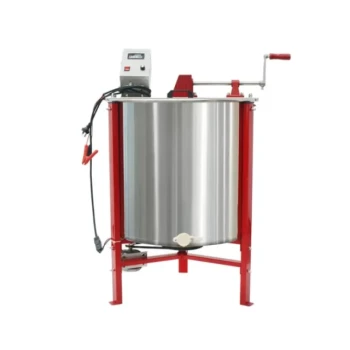
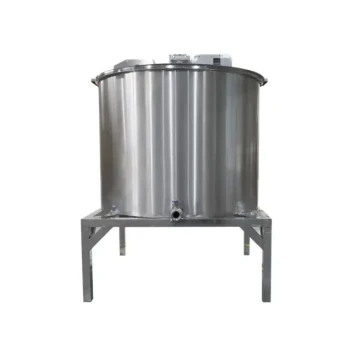
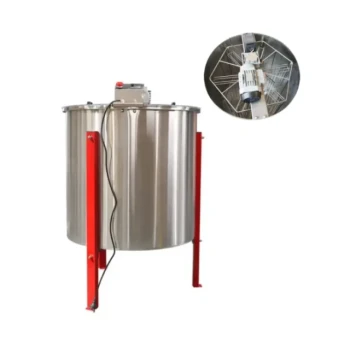
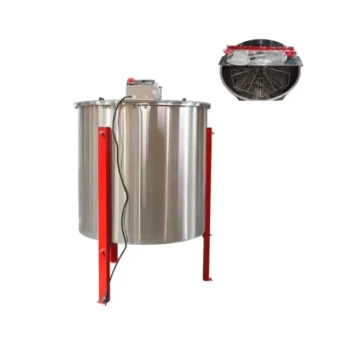
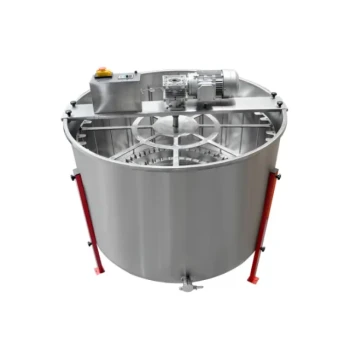
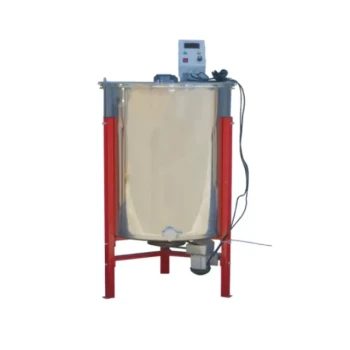
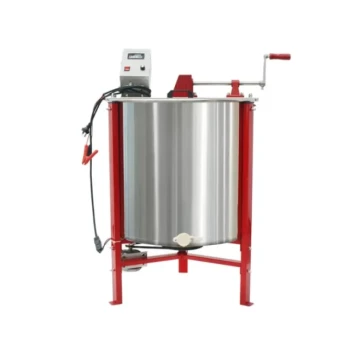
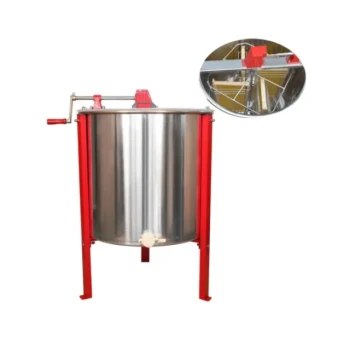
Yes, a manual honey extractor can generally be upgraded to an electric model. This process involves replacing the hand-crank mechanism with a motorized drive, achieved either by purchasing a dedicated motor conversion kit from the manufacturer or through a custom DIY modification if you possess the necessary mechanical skills.
The Bottom Line Converting your existing extractor allows you to scale your operation without purchasing an entirely new unit. While manufacturer kits offer a straightforward "bolt-on" solution, the decision ultimately rests on whether your specific model supports an upgrade and if the cost of the motor justifies the efficiency gains.
The Two Paths to Electrification
Manufacturer Conversion Kits
The most reliable method for upgrading is to use a conversion kit designed specifically for your model. Many reputable beekeeping equipment manufacturers anticipate that hobbyists will expand their operations.
Consequently, they sell motor units that bolt directly onto the existing mount points of the manual crank. This ensures perfect alignment and gear compatibility without requiring structural modifications to the extractor drum.
The DIY Approach
If a specific kit is unavailable or cost-prohibitive, beekeepers with advanced mechanical skills can opt for a custom solution.
This involves sourcing an electric motor and fabricating a mount to attach it to the extractor’s central shaft. This path requires a deep understanding of gear ratios and torque to ensure the frames spin at the correct speed without damaging the honey or the machine.
When to Make the Switch
Breaking the 10-Hive Threshold
The primary driver for this upgrade is volume. Manual extraction is cost-effective and manageable for small-scale hobbyists with just a few colonies.
However, once you manage more than 10 hives, the time investment of manual cranking becomes prohibitive. An electric motor transforms the bottleneck of your operation into a hands-off process.
Efficiency and Speed
The difference in processing power is drastic. A manual extractor typically processes 2 to 4 frames every 30 minutes, accounting for the physical rest required between spins.
In contrast, electric extractors provide consistent, high-speed rotation that does not fatigue. Industrial electric models can process massive quantities—up to 100 frames—in minutes, though even a small converted unit will significantly outpace a hand crank.
Understanding the Trade-offs
Cost vs. Capability
An electric conversion kit is a significant investment, often costing nearly as much as the manual extractor itself. You must weigh this cost against the price of buying a brand-new electric unit, which may offer better warranties or integrated speed controls.
Physical Demand vs. Control
Manual extractors offer precise control over speed, which can be useful for delicate frames, but they are physically demanding.
Electric motors remove the labor, making them ideal for beekeepers with physical limitations or those who need to multitask during the harvest. However, a poorly calibrated DIY motor can spin too fast, potentially blowing out the wax comb.
Making the Right Choice for Your Goal
Before ordering parts or dismantling your crank handle, evaluate your long-term apiary goals.
- If your primary focus is cost-efficiency for a small hobby (under 10 hives): Stick with the manual crank to maintain a "hands-on" experience and keep overhead low.
- If your primary focus is scaling up production or saving time: Purchase a manufacturer-verified conversion kit to ensure reliability and consistent spinning speeds.
- If your primary focus is engineering and customization: Attempt a DIY motor attachment only if you are confident in your ability to match torque and RPM requirements safely.
The right equipment scales with your passion, ensuring your harvest remains a pleasure rather than a chore.
Summary Table:
| Feature | Manual Extraction | Electric Conversion |
|---|---|---|
| Labor Intensity | High (Hand-cranking) | Low (Automated) |
| Processing Speed | 2–4 frames per 30 mins | Significant speed increase |
| Control | Full manual control | Consistent RPM/Speed |
| Ideal Scale | 1–10 Hives | 10+ Hives/Commercial |
| Cost | Low (Included) | Moderate (Kit cost) |
Scale Your Honey Production with HONESTBEE
Ready to transition from hobbyist to high-efficiency extraction? HONESTBEE provides commercial apiaries and distributors with the heavy-duty machinery needed to scale operations.
Whether you require specialized honey-filling machines, industrial hive-making equipment, or a complete range of wholesale beekeeping tools and consumables, we deliver professional-grade solutions to streamline your harvest.
Maximize your apiary's potential—Contact HONESTBEE today to discuss our bulk equipment and machinery solutions!
Related Products
- Vertical Motor Kits for 2 3 4 Frame Electric Honey Extractors
- HONESTBEE 8 Frame Electric and Manual Three Use Honey Extractor
- Electric 4 Frame Tangential Honey Extractor
- 32 Frame Commercial Electric Honey Extractor for Beekeeping and Honey Production
- HONESTBEE 6 Frame Self Reversing Electric Honey Extractor for Beekeeping
People Also Ask
- What operational benefits do motorized honey extractors provide? Scale Your Harvest Efficiency
- What operational practices are required when using motorized honey extractors to ensure smooth operation and prevent equipment imbalance? Explore our comprehensive guide for essential tips on balanced loading, speed control, and maintenance strategies.
- What are the advantages of using a motorized honey extractor? Maximize Efficiency and Precision for Your Apiary
- What other tasks can a honey extractor motor be used for? Explore its limited secondary applications.
- What is the primary function of a honey extractor motor in beekeeping? Boost Efficiency & Protect Honeycomb