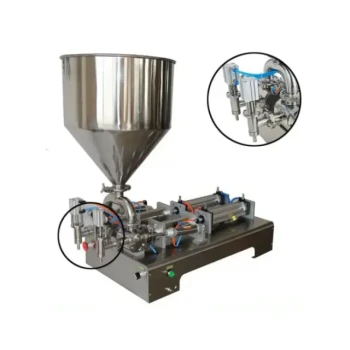
High-precision honey-filling machines function as a critical economic lever by transforming secondary by-products into high-value commercial assets. They utilize automated fluid control to ensure hygienic, large-scale packaging, directly increasing the market competitiveness of honey and beeswax which funds the broader pollination ecosystem.
Core Insight: By automating the transition from raw agricultural product to standardized consumer good, these machines generate the necessary revenue to sustain apiary operations. This financial stability incentivizes beekeepers to maintain the hives required for crucial crop pollination services, effectively linking efficient packaging to global food security.
Enhancing Market Competitiveness
The primary reference highlights that while pollination is the agricultural priority, honey and beeswax are vital secondary products. Maximizing the value of these by-products is essential for economic viability.
Accessing High-End Markets
Manual filling often results in inconsistencies that bar products from premium retail shelves or export trade. High-precision machines integrate sterilization and automated metering to ensure every unit meets strict national and international hygiene standards. This standardization allows beekeepers to transition from local farm stands to high-value global supply chains.
Preserving Organic Integrity
High-quality honey is sensitive to environmental factors. Advanced machines utilize fully enclosed stainless steel piping systems to prevent the product from contacting air during filling. This design significantly reduces oxidation and the risk of secondary contamination, preserving the honey’s organic quality and justifying a higher price point.
Professional Product Presentation
Consumer trust is heavily influenced by packaging consistency. Automated filling ensures identical volumes and professional sealing for every unit. This consistency improves brand image, transforming a raw agricultural commodity into a trusted commercial good.
Optimizing Operational Efficiency
Beyond increasing top-line revenue, these machines fundamentally alter the cost structure of an apiary.
Minimizing Material Waste
Servo-driven or pneumatic control systems achieve highly accurate quantitative filling. By eliminating the variance inherent in manual filling, beekeepers stop "giving away" product through overfilling. Over thousands of units, this reduction in material waste translates to significant profit retention.
Reducing Labor Dependencies
Manual packaging is labor-intensive and slow. Automated lines significantly reduce labor costs by handling the filling, sealing, and labeling processes. This allows staff to focus on hive management and health rather than repetitive packaging tasks.
Accelerating Cash Flow
Honey production is often seasonal, creating "boom and bust" inventory cycles. High-speed automation allows large-scale harvests to be processed and brought to market immediately. This rapid conversion of inventory into cash flow provides the liquidity needed to sustain operations year-round.
The Symbiosis of Filling and Pollination
The deep need addressed by this technology is the sustainability of the pollination industry itself.
Subsidizing Pollination Services
Pollination services alone often operate on thin margins. The "comprehensive income" derived from high-margin, value-added honey products provides the financial cushion beekeepers need. This economic incentive encourages operators to expand their colonies, directly supporting crop yields and food security goals.
Commercialization Driving Conservation
There is a direct economic loop between processing equipment and bee welfare. When backend processing equipment generates sustainable returns, beekeepers can invest more resources into protecting honeybees and their environments. Commercial utilization becomes the engine that drives conservation efforts.
Understanding the Trade-offs
While the economic benefits are clear, adopting high-precision automation introduces new challenges that must be managed.
High Initial Capital Expenditure
Transitioning from manual to automated systems requires a significant upfront investment. For smaller apiaries, the ROI horizon may be long, potentially straining short-term cash flow before the benefits of efficiency are realized.
Technical Maintenance Requirements
Unlike manual tools, servo-driven machines and pneumatic systems are complex. They require regular calibration and specialized maintenance to prevent downtime. An apiary must either train staff in technical maintenance or rely on external service contracts, which adds a new layer of operational complexity.
Making the Right Choice for Your Goal
The decision to invest in high-precision filling technology depends on your specific position within the market.
- If your primary focus is establishing an export business: You must prioritize machines with fully enclosed, sterilization-integrated systems to meet international hygiene and anti-oxidation standards.
- If your primary focus is local pollination services: Focus on mid-range automation that improves cash flow through speed, ensuring your honey revenue efficiently subsidizes your pollination contracts.
- If your primary focus is brand building: Prioritize servo-driven accuracy to ensure perfect consistency in shelf appearance, which builds the consumer trust necessary for premium pricing.
Ultimately, high-precision filling machines are not just packaging tools; they are the financial stabilizers that allow the vital work of pollination to continue.
Summary Table:
| Economic Driver | Key Benefit | Technical Feature |
|---|---|---|
| Market Value | Access to premium & export markets | Sterile, enclosed stainless steel systems |
| Waste Control | Eliminates overfilling & product loss | Servo-driven quantitative metering |
| Labor Costs | Reduces manual dependency | High-speed automated filling & sealing |
| Product Quality | Prevents oxidation & contamination | Vacuum-sealed, airtight piping |
| Cash Flow | Faster time-to-market for seasonal yields | Rapid processing & high-volume output |
Maximize Your Apiary's Profitability with HONESTBEE
Transition from raw production to a high-value commercial operation with HONESTBEE. We provide commercial apiaries and distributors with professional-grade beekeeping tools and advanced machinery designed to scale your business. From high-precision honey-filling machines that ensure product consistency to industrial hive-making equipment, we supply the full spectrum of hardware and consumables needed to dominate the market.
Our value to you:
- Global Standards: Equipment designed for international hygiene and export compliance.
- Efficiency: Reduce labor and waste with cutting-edge automation.
- Full Support: A comprehensive portfolio ranging from heavy machinery to honey-themed merchandise.
Ready to transform your honey production into a sustainable, high-margin asset? Contact our expert team today to find the perfect solution for your apiary.
References
- O. P. Chaudhary, Ramesh Chand. Economic benefits of animal pollination to Indian agriculture. DOI: 10.56093/ijas.v87i9.73903
This article is also based on technical information from HonestBee Knowledge Base .
Related Products
- Precision Durable Efficient HONESTBEE Rotary Honey Filling Machine
- Commercial Rotary Honey Filling Machine for Production
- Precision Automated Packaging Turntable Honey Spoon Filling Sealing Packing Machine
- Fully Automatic Honey Filling Packaging Machine for Processing Line
- Automatic Honey Filling and Filtering Machine for Beekeeping Bottle Filling
People Also Ask
- What is a key feature of the new generation of the honey filling machine? The Advanced Electronic Control Unit
- How do honey filling machines work? Achieve Precision & Speed for Your Apiary
- What are the common types of bottling machines used for honey? Choosing the Right Solution for Your Apiary
- What quality control role does professional honey filling equipment perform? Ensure Consistency and Product Stability
- How do high-precision honey filling machines ensure quality? Optimize Your Commercial Production with HONESTBEE