Instrumental insemination equipment reduces the paternal generation interval by allowing breeders to collect semen directly from drones produced by tested two-year-old mother colonies. This capability eliminates the need for an additional year typically required to raise specific drone-producing daughter colonies, effectively compressing the cycle from three years to two.
Core Takeaway Traditional isolated mating requires a three-year cycle to establish specific drone populations. By bypassing this requirement, instrumental insemination synchronizes the paternal and maternal intervals, allowing for faster generation turnover and accelerated genetic progress.
Overcoming the Mating Station Limitation
The Traditional Three-Year Cycle
In standard isolated mating station models, breeders cannot immediately use the drones from a tested queen. The process requires two years for performance testing the mother, followed by a third year to produce daughter colonies specifically to provide drones.
Direct Semen Collection
Instrumental insemination hardware removes the dependency on these daughter colonies. Breeders can collect semen directly from the drones of the original, performance-tested two-year-old mother colonies.
Synchronizing Generation Intervals
By eliminating the intermediate "daughter colony" step, the paternal interval is reduced to match the maternal interval. This synchronization allows the entire breeding program to operate on a two-year cycle, significantly speeding up the rate of genetic improvement.
Beyond Speed: Precision and Control
Eliminating Genetic Uncertainty
Beyond speed, this equipment overcomes the biological limitations of random aerial mating. It ensures that a virgin queen mates only with specific drones, providing absolute clarity regarding paternal information in the pedigree.
Targeting Specific Traits
High-precision instruments allow breeders to lock in superior traits such as high honey yield or disease resistance. By controlling the cross completely, breeders can better estimate genetic parameters and implement scientific breeding programs for adaptation to climate change.
Understanding the Trade-offs
High Barrier to Entry
Implementing this method requires significant investment in specialized, costly equipment. Essential hardware includes stereomicroscopes, high-precision insemination instruments, and fragile handmade glass needles.
Technical Complexity
The process is physically demanding and requires advanced beekeeping skills. Operators must use ventral and sting hooks to mechanically assist in exposing the vaginal opening and navigating anatomical obstacles, such as the valve fold, without injuring the queen.
The Necessity of a System
Instrumental insemination is a tool, not a magic bullet. It provides value only when paired with a systematic, scientific breeding methodology and the long-term resources to run a rigorous selection program.
Making the Right Choice for Your Goal
To determine if instrumental insemination is the right approach for your breeding program, consider your primary objectives:
- If your primary focus is accelerated genetic progress: Prioritize instrumental insemination to synchronize generation intervals and cut the breeding cycle from three years to two.
- If your primary focus is pedigree accuracy: Use this equipment to eliminate the variables of natural mating and ensure precise inheritance of specific traits.
- If your primary focus is resource management: Be aware that this method is labor-intensive and expensive, requiring a commitment to a long-term scientific framework rather than just a one-off procedure.
By shifting from a three-year natural cycle to a two-year controlled cycle, instrumental insemination serves as the definitive lever for high-speed, high-precision genetic advancement.
Summary Table:
| Feature | Traditional Isolated Mating | Instrumental Insemination |
|---|---|---|
| Breeding Cycle | 3 Years | 2 Years |
| Drone Source | Daughter colonies (3rd Year) | Direct from tested Mother (2nd Year) |
| Paternal Control | Limited/Statistical | Absolute/Precise |
| Technical Difficulty | Moderate | High (Specialized Skill) |
| Genetic Progress | Gradual | Accelerated |
Elevate Your Breeding Precision with HONESTBEE
Accelerating genetic progress requires the right tools. HONESTBEE empowers commercial apiaries and distributors with professional-grade instrumental insemination equipment, high-precision microscopes, and specialized hardware designed for elite bee breeding.
Whether you are looking to compress your breeding cycles or scale your distribution of advanced beekeeping machinery and consumables, we provide the technical expertise and wholesale solutions you need to succeed.
Ready to upgrade your apiary’s performance? Contact us today to explore our full spectrum of beekeeping tools and machinery!
References
- Manuel Du, Andreas Hoppe. The Potential of Instrumental Insemination for Sustainable Honeybee Breeding. DOI: 10.3390/genes14091799
This article is also based on technical information from HonestBee Knowledge Base .
Related Products
- Queen Bee Artificial Insemination Instrument Equipment for Instrumental Insemination
- Professional Queen Catcher and Introduction Queen Cage
- Retractable Chinese Queen Rearing Grafting Tools Equipment
- All-Stainless Steel Pivoting Honey Uncapping Fork for Beekeeping
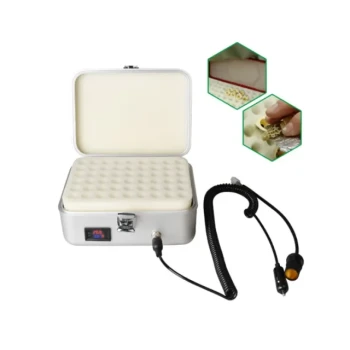
- Portable Queen Bee Incubator with 12V Car Adapter for Safe Transport
People Also Ask
- Why is maintaining sanitary conditions important during artificial insemination? Protect Your Queen from Fatal Infections
- Why are artificial insemination instruments critical in bee hybridization? Master Genetic Control & Pure Breeding
- What is the core value of bee artificial insemination instruments in breed improvement? Achieve Precise Genetic Control
- Why is professional bee artificial insemination equipment considered a core tool for genetic control in honeybee breeding? Ensure 100% Purity
- Why is high-purity CO2 used for queen bee artificial insemination? Unlock Precision Breeding & Faster Egg-Laying