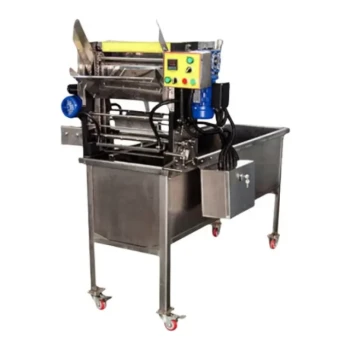
Automated honey-filling machines fundamentally transform commercial apiaries by shifting packaging from a manual bottleneck to a high-speed, precision-driven process. These systems enhance competitiveness by ensuring standardized product quality, drastically reducing labor overhead, and enabling the volume necessary to compete in global markets.
By removing the inconsistencies of manual labor, automated filling systems unlock the ability to scale. They guarantee the hygiene and precision required by modern food standards while freeing up human capital to focus on the biological health of the apiary.
Streamlining Production and Scalability
Accelerating the Harvest-to-Market Cycle
For commercial operations, time is a tangible cost. Automated machines utilize high-speed processing to rapidly convert bulk honey from storage tanks into retail-ready packaging.
This efficiency shortens the overall production cycle. It optimizes the supply chain, ensuring that products reach the market faster than competitors relying on manual or semi-manual processes.
Meeting Global Volume Demands
To establish a brand operation capable of serving global markets, volume is key. Manual filling cannot consistently meet the high output requirements of large-scale distribution without massive labor expansion.
Automation allows apiaries to scale production up or down without the logistical friction of hiring temporary seasonal labor.
Ensuring Product Consistency and Hygiene
Achieving Precision Compliance
Regulatory bodies and modern food industries demand strict adherence to net weight labeling. Automated fillers use high-precision weighing sensors to ensure every unit contains the exact amount of product.
This eliminates product giveaway (overfilling) and regulatory fines (underfilling). It ensures the standardization necessary for retail shelves.
Minimizing Contamination Risks
Manual handling is the primary vector for introducing bacteria or foreign particles into food products. Industrial-grade machines use vacuum suction technology and precision pumping to move honey through a closed system.
This "sterile" approach significantly reduces the risk of secondary contamination. It ensures the final product is safe and shelf-stable.
Preserving Chemical Integrity
Honey is a sensitive biological product. Excessive heat or agitation can alter its chemical makeup.
Advanced filling systems control flow and pressure to maintain stability in chemical indicators, such as Hydroxymethylfurfural (HMF) levels. This preserves the quality and nutritional value of the honey, a critical selling point for premium brands.
Reallocating Resources to Core Operations
Focusing on Colony Health
The most profound competitive advantage of automation is the redirection of labor. By streamlining the post-harvest phase, beekeepers can dedicate more time to colony management.
This allows for timely interventions, such as treating Varroa destructor mites. Effective mite management is critical for reducing winter mortality rates and protecting the apiary's primary asset: the bees themselves.
Enabling Genetic Improvement
For facilities focused on breeding, time saved in the bottling room can be invested in research.
Staff can focus on population genetic improvement and honeybee health monitoring. This leads to stronger, more productive colonies over time, further widening the competitive gap.
Understanding the Trade-offs
Capital Investment vs. Volume
Automation requires significant upfront capital. For smaller apiaries without a guaranteed high-volume distribution channel, the ROI (Return on Investment) may be too slow to justify the expense.
Maintenance Complexity
While these machines reduce general labor, they introduce a need for technical maintenance. Apiaries must have access to skilled technicians to calibrate sensors and maintain vacuum systems, creating a different type of operational dependency.
Making the Right Choice for Your Goals
- If your primary focus is Global Export: Prioritize machines with high-precision weighing sensors to meet strict international labeling and standardization regulations.
- If your primary focus is Colony Sustainability: Use automation to minimize bottling labor, redirecting your workforce to critical tasks like disease management and overwintering preparation.
- If your primary focus is Premium Branding: Select equipment designed to preserve HMF levels, ensuring you can market the highest quality, chemically stable product.
Automation is not merely about bottling speed; it is the strategic lever that empowers commercial apiaries to secure their supply chain and invest in the long-term health of their colonies.
Summary Table:
| Competitive Advantage | Impact on Commercial Apiaries | Key Technology Feature |
|---|---|---|
| Scalability | Accelerates harvest-to-market cycle for global demand | High-speed processing units |
| Precision | Eliminates product giveaway and ensures regulatory compliance | High-precision weighing sensors |
| Hygiene | Minimizes contamination risks via closed-system handling | Vacuum suction technology |
| Quality Control | Preserves HMF levels and chemical integrity of honey | Controlled flow & pressure sensors |
| Resource Allocation | Redirects labor to colony health and genetic research | Streamlined post-harvest automation |
Elevate Your Commercial Beekeeping Operation with HONESTBEE
Are you ready to transform your apiary from a manual bottleneck into a high-performance global competitor? At HONESTBEE, we specialize in empowering commercial apiaries and distributors with the industrial-grade machinery needed to scale.
Our comprehensive wholesale offering includes high-precision honey-filling machines, hive-making equipment, and a full spectrum of specialized beekeeping tools and consumables. By integrating our advanced automation solutions, you can guarantee product consistency, reduce labor overhead, and redirect your team's expertise toward critical colony health and genetic improvement.
Partner with HONESTBEE to secure your supply chain and dominate the market.
Contact our experts today to find your custom equipment solution!
References
- Aleksandra Arsenijević. POTENTIAL CONTRIBUTION OF ENVIRONMENTAL ACCOUNTING TO MODERN BEEKEEPING AS A PART OF THE AGRICULTURAL SECTOR. DOI: 10.22190/fueo250404009a
This article is also based on technical information from HonestBee Knowledge Base .
Related Products
- Fully Automatic Honey Filling Packaging Machine for Processing Line
- Automatic Honey Filling and Filtering Machine for Beekeeping Bottle Filling
- Precision Durable Efficient HONESTBEE Rotary Honey Filling Machine
- Semi Automatic Small Honey Bottle Filling Machine Honey Filler
- Precision Automated Packaging Turntable Honey Spoon Filling Sealing Packing Machine
People Also Ask
- Why are fully automatic honey filling and packaging lines essential? Boost Your Honey's Market Value and Quality
- What is a fully-automatic honey filler? Streamline Your Production with High-Precision Automation
- How do automated honey filling and packaging machines affect profitability? Boost Margins with HONESTBEE Technology
- How do automated honey filling and packaging machines contribute to the market value of honey products? Maximize Your ROI
- How do industrial-grade automated honey filling and packaging machines mitigate the risk of physical contamination?