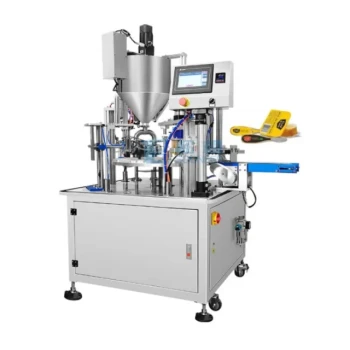
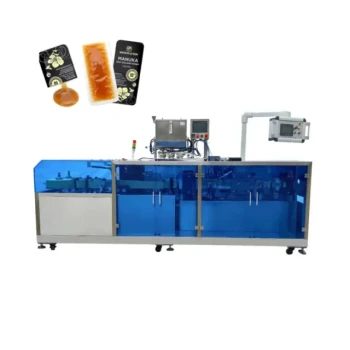
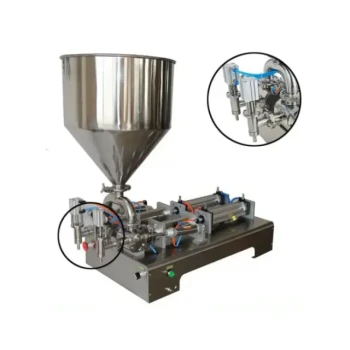
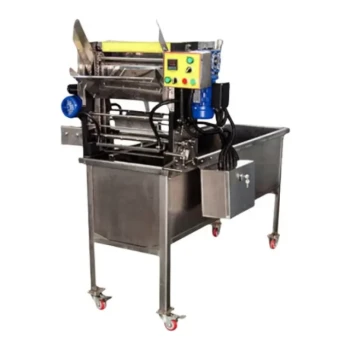
Automated filling machines provide a decisive operational advantage by significantly increasing production throughput and ensuring uniform filling accuracy, which are critical for large-scale honey processing. Beyond raw speed, they minimize direct human contact to drastically reduce the risk of secondary contamination and lower the marketing cost per kilogram, essential for maintaining price competitiveness in organized markets.
The Core Insight Automation is more than a speed upgrade; it is the strategic bridge between selling bulk commodities and entering high-value retail markets. By transforming labor-intensive tasks into standardized industrial processes, automation grants cooperatives the consistency, hygiene, and volume required to compete with major distributors.
Operational Efficiency and Cost Reduction
Maximizing Production Throughput
Manual operations are inherently limited by human speed and fatigue. Automated machines transform these labor-intensive tasks into high-efficiency industrial processes.
This transition allows facilities to achieve packaging speeds that manual labor cannot match. The result is a dramatic increase in overall daily output without a proportional increase in headcount.
Lowering Unit Costs
In large-scale processing, margins are often thin. Automation significantly lowers the marketing cost per kilogram of honey.
By spreading fixed costs over a much larger volume of product, cooperatives can achieve economies of scale. This reduction is vital for remaining price-competitive when selling to organized markets or large retailers.
Standardization and Quality Assurance
Ensuring Precise Filling Accuracy
Inconsistent product weight is a major liability in retail environments. Manual filling often leads to variations that violate strict standardization requirements.
Automated machinery ensures uniform filling accuracy for every unit. This precision guarantees that every jar meets the exact volume specifications required by modern retail standards and consumer protection laws.
Minimizing Contamination Risks
Human handling is the primary vector for introducing pathogens or impurities into food products.
By minimizing direct human contact with the product, automated machines drastically reduce the risk of secondary contamination. This creates a closed, hygienic loop that protects the integrity of the honey during packaging.
Strategic Business Growth
Shifting from Bulk to Brand
Many cooperatives are stuck selling honey in bulk at low prices. Automation enables the transition to branded, consumer-ready products.
By meeting the standardization and volume requirements of supermarkets, producers can capture the higher added value of the retail market rather than acting solely as raw material suppliers.
Strengthening Bargaining Power
Retailers and export markets require reliability. They need assurance that a supplier can handle large-scale orders consistently.
Possessing professional processing machinery proves scalability. This capacity strengthens a cooperative's bargaining power when negotiating contracts with large-scale distributors or international buyers.
Understanding the Trade-offs
The Requirement for Standardization
Moving to automation requires a rigid adherence to process. Unlike manual operations, which can adapt to irregularities on the fly, automated lines require consistent inputs (bottles, caps, and viscosity).
The Necessity of Volume
The economic benefits of automation—specifically the reduced cost per kilogram—rely on high utilization.
For operations that cannot sustain large-scale throughput, the efficiencies gained may not justify the shift to industrial processing. Automation is an engine for scale, not a solution for low-volume variety.
Making the Right Choice for Your Goals
To determine if automated filling is the right step for your cooperative, consider your immediate strategic targets:
- If your primary focus is Price Competitiveness: Automation is essential to lower the marketing cost per kilogram and protect your margins in organized markets.
- If your primary focus is Market Access: The standardized hygiene and filling accuracy of automation are prerequisites for entering strict retail and export sectors.
- If your primary focus is Brand Building: Automation allows you to move from low-value bulk sales to high-value, consistent consumer packaging.
Adopting automated filling is not just an equipment purchase; it is a fundamental shift toward professionalizing your production to meet global standards.
Summary Table:
| Feature | Manual Operations | Automated Filling Machines |
|---|---|---|
| Production Speed | Low (Limited by fatigue) | High (Continuous throughput) |
| Filling Accuracy | Variable/Inconsistent | High Precision/Uniform |
| Contamination Risk | High (Human contact) | Minimal (Hygienic closed-loop) |
| Unit Cost | High per kilogram | Low (Economies of scale) |
| Market Readiness | Bulk/Small-scale | Retail/Export Ready |
Scale Your Honey Business with HONESTBEE
Transitioning from bulk sales to a high-value retail brand requires more than just honey—it requires professional industrial capability. HONESTBEE specializes in empowering commercial apiaries and distributors with the tools needed to dominate organized markets.
We provide a comprehensive wholesale portfolio, including:
- Advanced Machinery: Precise honey-filling and specialized hive-making machines.
- Beekeeping Tools: A full spectrum of professional-grade equipment.
- Essential Consumables: Every supply needed for seamless daily operations.
- Cultural Merchandise: Unique honey-themed products to enhance your brand appeal.
Our solutions are designed to lower your unit costs, guarantee food safety, and give you the bargaining power to win contracts with major retailers.
Ready to professionalize your production?
Contact HONESTBEE Today to find the perfect equipment for your scaling needs.
References
- K. Anil Kumar, D. H. Mitrannavar. Disposal Pattern of Honey in Western Ghats of Karnataka, India. DOI: 10.20546/ijcmas.2020.909.256
This article is also based on technical information from HonestBee Knowledge Base .
Related Products
- Fully Automatic Honey Filling Packaging Machine for Processing Line
- Automatic Honey Filling and Filtering Machine for Beekeeping Bottle Filling
- Precision Durable Efficient HONESTBEE Rotary Honey Filling Machine
- Semi Automatic Small Honey Bottle Filling Machine Honey Filler
- Precision Automated Packaging Turntable Honey Spoon Filling Sealing Packing Machine
People Also Ask
- Why are fully automatic honey filling and packaging lines essential? Boost Your Honey's Market Value and Quality
- What is a fully-automatic honey filler? Streamline Your Production with High-Precision Automation
- How do automated honey filling and packaging machines affect profitability? Boost Margins with HONESTBEE Technology
- How do automated honey filling and packaging machines contribute to the market value of honey products? Maximize Your ROI
- How do industrial-grade automated honey filling and packaging machines mitigate the risk of physical contamination?