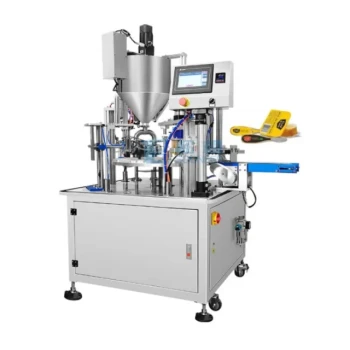
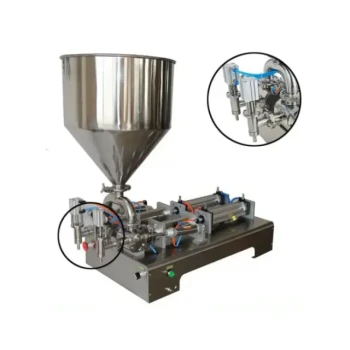
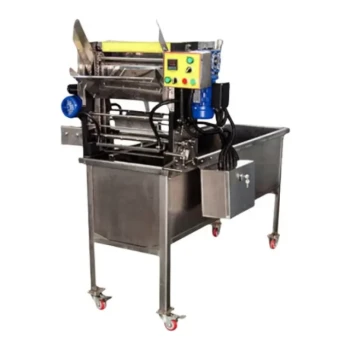
Automated honey-filling machines provide the technical foundation necessary for coffee farmers to successfully transition into commercial honey production. By delivering precise volumetric control and ensuring rigorous hygiene standards, these systems allow producers to move beyond informal sales and meet the strict requirements of formal distribution channels and supermarket supply chains.
Core Insight: For diversified operations combining coffee and beekeeping, investing in filling automation is not merely about speed; it is about establishing the product consistency and safety required to turn a byproduct into a scalable, high-value revenue stream.
Achieving Commercial-Grade Precision
Exact Volumetric Control
Automated machines utilize precise quantitative control systems to ensure every container receives the exact same amount of product. This eliminates the variances inherent in manual filling, ensuring that the final product consistently matches its labeled weight.
Compliance with Trade Standards
By maintaining consistent net weights, producers can confidently meet strict international trade standards. This reliability is a prerequisite for entering retail markets where regulatory compliance regarding weights and measures is mandatory.
Minimizing High-Value Waste
Honey is a high-value commodity, and manual processing often leads to spills or overfilling. Industrial-grade equipment provides accurate dosage control, significantly reducing material loss from overflow and maximizing the yield from every harvest.
Ensuring Hygiene and Product Safety
Closed-Loop Processing
Automated filling lines often operate within a closed environment or utilize closed-pipe designs. This isolation minimizes the honey's contact with external air, preventing the absorption of moisture and blocking the introduction of airborne impurities.
Preventing Secondary Contamination
Manual handling allows for multiple points of human contact, increasing the risk of bacterial introduction. High-precision automation effectively removes human error from the filling stage, drastically reducing the risk of secondary contamination and ensuring the product remains pure.
Extending Shelf Life
Advanced sealing technologies integrated into these machines isolate the product from contaminants immediately after filling. This standardization of the bottling process effectively extends the shelf life of the honey, a critical factor for logistics and storage in retail environments.
Understanding the Trade-offs
The Shift from Manual to Technical
Transitioning to automated filling represents a shift from low-overhead manual labor to a dependence on specialized hardware. While manual methods have lower upfront costs, they are unable to achieve the throughput or hygiene consistency required for scaling.
Operational Complexity
Adopting industrial equipment requires a commitment to maintaining technical infrastructure. The efficiency gains are significant, but they rely on the equipment functioning correctly; therefore, the operation moves from being labor-intensive to being capital and maintenance-intensive.
Making the Right Choice for Your Goal
To determine if automation aligns with your current stage of diversification, consider your immediate objectives:
- If your primary focus is entering supermarkets: You must prioritize automation to ensure the standardization and professional aesthetics required for shelf placement.
- If your primary focus is maximizing profit margins: Automation is essential for reducing material waste and preventing the loss of high-value product through spills.
- If your primary focus is brand reputation: The closed-loop hygiene systems of automated machines provide the safety assurance needed to build long-term consumer trust.
Automation bridges the gap between a farm-side hobby and a professional, scalable enterprise.
Summary Table:
| Feature | Advantage | Impact on Commercialization |
|---|---|---|
| Volumetric Control | Precise weight consistency | Meets retail trade standards and reduces waste |
| Closed-Loop System | Minimized environmental exposure | Prevents contamination and moisture absorption |
| Hygiene Standards | Reduced human contact | Ensures food safety and builds consumer trust |
| Advanced Sealing | Standardized bottling | Extends shelf life for logistics and storage |
| Operational Efficiency | High-throughput processing | Enables scaling from hobby to professional enterprise |
Transform Your Honey Production with HONESTBEE
Ready to elevate your beekeeping operation from a farm-side hobby to a professional, scalable enterprise? HONESTBEE specializes in helping commercial apiaries and distributors maximize their efficiency through industry-leading technology.
We provide a comprehensive wholesale range designed for the modern honey producer, including:
- Precision Honey-Filling Machines to eliminate waste and ensure trade compliance.
- Automated Hive-Making Equipment for infrastructure scaling.
- Industrial Beekeeping Tools and Machinery to streamline your workflow.
- Essential Consumables and Cultural Merchandise to strengthen your brand presence.
Our team is dedicated to providing the specialized hardware and technical support you need to enter high-value supermarket supply chains with confidence.
Unlock the full potential of your harvest today. Contact HONESTBEE Experts to discuss your customized equipment solution.
References
- Juliana Hipólito, Lucas A. Garibaldi. The value of pollinator-friendly practices: Synergies between natural and anthropogenic assets. DOI: 10.1016/j.baae.2016.09.003
This article is also based on technical information from HonestBee Knowledge Base .
Related Products
- Fully Automatic Honey Filling Packaging Machine for Processing Line
- Automatic Honey Filling and Filtering Machine for Beekeeping Bottle Filling
- Precision Durable Efficient HONESTBEE Rotary Honey Filling Machine
- Semi Automatic Small Honey Bottle Filling Machine Honey Filler
- Precision Automated Packaging Turntable Honey Spoon Filling Sealing Packing Machine
People Also Ask
- Why are fully automatic honey filling and packaging lines essential? Boost Your Honey's Market Value and Quality
- What is a fully-automatic honey filler? Streamline Your Production with High-Precision Automation
- How do automated honey filling and packaging machines affect profitability? Boost Margins with HONESTBEE Technology
- How do automated honey filling and packaging machines contribute to the market value of honey products? Maximize Your ROI
- How do industrial-grade automated honey filling and packaging machines mitigate the risk of physical contamination?