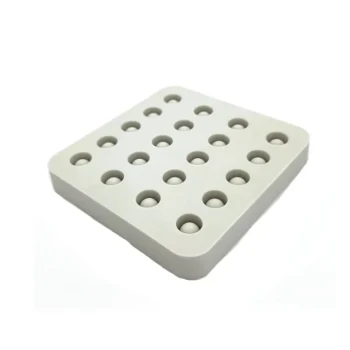
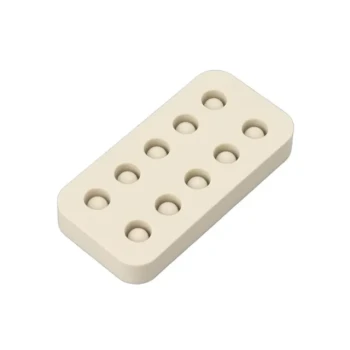
Silicone cell mandrels significantly streamline wax cup production by utilizing superior material properties that traditional wooden tools lack. Their inherent flexibility and non-stick surface eliminate the need for lubrication, allowing for the rapid removal of cooled wax cups and ensuring a cleaner, safer environment for queen rearing.
The transition to silicone fundamentally changes the workflow by removing the need for soapy water release agents, thereby increasing production speed while eliminating chemical residues that threaten larval development.
The Efficiency of Material Properties
Eliminating the Lubrication Step
Traditional wooden mandrels are porous and prone to sticking, requiring the user to constantly dip them in soapy water. Silicone mandrels are inherently non-stick, completely removing this repetitive lubrication step from the process.
Rapid Demolding
The rigidity of wood often makes removing the cooled wax cup difficult without distorting it. Silicone’s flexibility allows the mold to bend slightly, letting the wax cup release effortlessly once cooled.
Reduced Cycle Times
By removing the lubrication phase and simplifying the release process, the total time required to produce a batch of cells is drastically reduced. This allows producers to create more inventory in a shorter working session.
Biological and Chemical Safety
Minimizing Chemical Residues
Wooden mandrels rely on soapy water or other release agents to function effectively. These agents often leave behind chemical residues inside the wax cup.
Protecting Larval Development
Queen larvae are highly sensitive to their environment. By eliminating the need for release agents, silicone mandrels prevent the introduction of foreign substances that could interfere with the delicate development of the larvae.
Understanding the Trade-offs
Rigidity vs. Flexibility
While the flexibility of silicone aids in demolding, it lacks the absolute rigidity of wood. Users accustomed to the hard stop of a wooden mandrel may need to adjust their handling technique to ensure consistent dipping depth.
Equipment Compatibility
Silicone mandrels are specialized tools designed for specific holders or bars. Unlike wooden dowels which can be easily fashioned or modified in a home shop, silicone requires purchasing specific manufactured forms.
Making the Right Choice for Your Apiary
To determine if upgrading to silicone is the right move for your operation, consider your specific production goals:
- If your primary focus is maximizing throughput: Choose silicone to eliminate the time-consuming lubrication step and speed up the demolding process.
- If your primary focus is biological purity: Choose silicone to ensure your wax cups remain free of soapy residues that could harm sensitive larvae.
By removing the friction of lubrication and the risk of contamination, silicone mandrels offer a cleaner, faster path to high-quality queen cell production.
Summary Table:
| Feature | Traditional Wooden Mandrels | Silicone Cell Mandrels |
|---|---|---|
| Lubrication | Requires soapy water (time-consuming) | Non-stick (no lubrication needed) |
| Demolding | Difficult, risk of wax distortion | Rapid and effortless due to flexibility |
| Chemical Safety | Potential soap residue in wax cups | Zero residue, safer for larvae |
| Production Speed | Slower due to repetitive dipping | High-speed cycles and high throughput |
| Durability | Prone to rot and water damage | Long-lasting and easy to sanitize |
Elevate Your Apiary Operations with HONESTBEE
Are you looking to scale your commercial queen rearing or streamline your wholesale inventory? HONESTBEE provides professional-grade silicone mandrels and a full spectrum of beekeeping tools designed for maximum efficiency and biological safety.
From advanced hive-making machinery and honey-filling systems to high-quality consumables for commercial apiaries and distributors, we deliver the hardware you need to succeed. Our solutions eliminate production friction, ensuring your larvae develop in a residue-free environment while your throughput reaches new heights.
Ready to upgrade your equipment? Contact us today to explore our wholesale offerings and see how we can support your business growth.
References
- Ralph Büchler, J. Wilde. Standard methods for rearing and selection of <i>Apis mellifera</i> queens 2.0. DOI: 10.1080/00218839.2023.2295180
This article is also based on technical information from HonestBee Knowledge Base .
Related Products
- High-Efficiency 20-Cell Silicone Mold for Beeswax Bee Queen Cup Production
- 10-Cell Silicone Beeswax Bee Queen Cups Forming Mold
- 3D Square Honeycomb Pillar Silicone Candle Molds for Making Beeswax Candles
- 3D Beehive Silicone Skep Wax Candle Molds for Candles
- Colorful Silicone Beeswax Foundation Mold Mould for Beekeeping
People Also Ask
- What is the first tip for pouring beeswax into a silicone mold? Ensure a Perfect Release
- What are the technical advantages of using precision silicone molds for the manufacturing of beeswax queen cups? - Scale
- How do beeswax queen cell cups function? Optimize Queen Rearing with Biological Mimicry
- What is the biological function of beeswax queen cell cups? Boost Acceptance in Artificial Queen Rearing
- What are the advantages of using tapered wooden dowels for queen cups? Boost Rearing Consistency & Acceptance