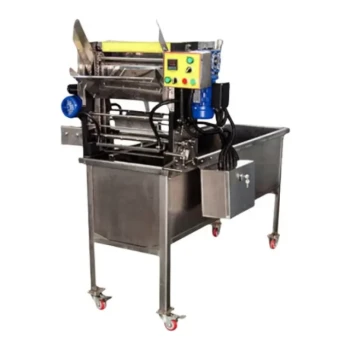
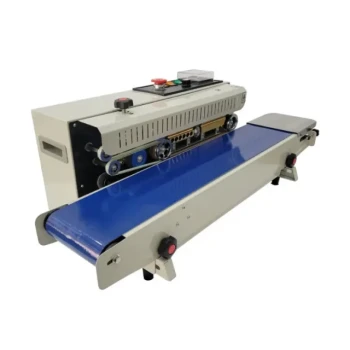
Automatic filling and sealing equipment transforms honey packaging from a manual task into a precision-engineered process, delivering consistent accuracy and rigorous sanitary control. By automating these stages, producers eliminate the variability of human error, ensuring that every container meets exact volumetric specifications while preserving the biological integrity of the product.
Core Takeaway While manual packaging struggles with consistency and hygiene, automated systems standardize production to ensure legal compliance and safety. They provide the dual benefit of minimizing material waste through high-precision filling and extending shelf life through superior airtight sealing.
Precision and Resource Management
Eliminating Material Waste
Manual filling often results in overfilling or spillage, which represents a direct loss of profit. Automated machines utilize high-precision piston or weighing systems to dispense the exact amount of honey required. This drastically reduces the deviation in net content, minimizing raw material waste.
Meeting Legal Standards
For commercial distribution, ensuring the net weight matches the label is a legal necessity. Automated equipment maintains filling consistency within a minimal range. This ensures compliance with legal metrology requirements, protecting the producer from regulatory penalties associated with underfilling.
Advanced Anti-Drip Mechanisms
Honey is viscous and prone to trailing, which can soil the bottle exterior and the workspace. Modern filling systems integrate anti-drip mechanisms and positioning accuracy. This prevents product loss and ensures the container remains clean, reducing the need for post-fill cleaning.
Hygiene and Product Integrity
The Sterile Enclosed Environment
The primary reference highlights that automation maintains strict sanitary standards. Automated lines operate in an enclosed filling environment, effectively isolating the honey from external contaminants. This separation significantly reduces the risk of secondary microbial contamination often associated with manual handling.
Superior Airtight Sealing
Honey is hygroscopic, meaning it absorbs moisture from the air, which can lead to fermentation and spoilage. Automatic sealing processes provide a superior airtight barrier compared to manual capping. This barrier is critical for preventing moisture absorption and oxidation during storage and transport.
Tamper-Evidence and Shelf Life
Technologies such as induction sealing create a hermetic seal by bonding a foil liner to the container mouth without direct contact. This not only prevents leakage during transport but also acts as a tamper-evident safety feature. A robust seal preserves the honey’s original flavor and quality until it reaches the consumer.
Scalability and Market Presentation
Enhancing Professional Appearance
Consumers associate consistent packaging with quality. Automated equipment ensures uniform fill levels and clean, drip-free bottles. This professional appearance enhances shelf appeal and builds consumer trust, which is vital for market competitiveness.
Operational Flexibility
Standardized packaging does not mean rigid packaging. Many automatic machines support multiple specifications, allowing producers to switch between standard 1L containers and smaller, budget-friendly sizes like 250ml. This flexibility allows producers to meet diverse consumer demands without sacrificing sealing quality or speed.
Understanding the Trade-offs
While the advantages are significant, automation introduces new complexities. The initial capital investment is substantially higher than manual setups, requiring a clear ROI calculation based on volume. Additionally, these systems require technical maintenance; a breakdown in an automated line can halt the entire production process, whereas manual packing is more resilient to single-point failures. Finally, changing between drastically different bottle shapes may require time-consuming retooling compared to the adaptability of a human hand.
Making the Right Choice for Your Goal
To determine if automation aligns with your current operational needs, consider your primary objectives:
- If your primary focus is Regulatory Compliance: Automation provides the documented precision necessary to strictly meet legal net-weight standards and hygiene regulations.
- If your primary focus is Market Expansion: The ability to produce a consistent, leak-proof, and professional-looking product is essential for entering retail chains and shipping over long distances.
- If your primary focus is Profit Margin: The reduction in material waste and labor costs per unit makes automation the most viable path for high-volume production.
Standardized automation is not just about speed; it is the infrastructure required to guarantee product safety and brand consistency at scale.
Summary Table:
| Benefit Category | Manual Packaging | Automated Equipment |
|---|---|---|
| Filling Accuracy | High variability; frequent overfills | High-precision piston/weighing systems |
| Waste Management | Frequent spills and material loss | Integrated anti-drip mechanisms |
| Hygiene Control | High risk of manual contamination | Enclosed sterile environment |
| Sealing Quality | Inconsistent airtightness | Superior hermetic & induction sealing |
| Legal Compliance | Risk of underfilling penalties | Guarantees legal metrology standards |
| Shelf Appeal | Inconsistent fill levels/appearance | Uniform, professional presentation |
Scale Your Honey Production with HONESTBEE
Transitioning to automated packaging is the key to unlocking consistent quality and higher profit margins. At HONESTBEE, we empower commercial apiaries and distributors with high-performance honey-filling machines, specialized hive-making hardware, and a complete range of professional beekeeping tools. Whether you are standardizing your packaging or expanding your wholesale reach, our comprehensive equipment portfolio ensures your products meet the highest industry standards.
Ready to optimize your facility? Contact HONESTBEE today to discover how our tailor-made machinery solutions can drive your business growth.
References
- Nicol Gurung, Alisara Thapa. ECONOMICS OF PRODUCTION AND MARKETING OF HONEY IN CHITWAN DISTRICT OF NEPAL. DOI: 10.47760/cognizance.2024.v04i09.002
This article is also based on technical information from HonestBee Knowledge Base .
Related Products
- Precision Automated Packaging Turntable Honey Spoon Filling Sealing Packing Machine
- Fully Automatic Honey Filling Packaging Machine for Processing Line
- Automatic Honey Filling and Filtering Machine for Beekeeping Bottle Filling
- Automatic Single-Dose Snap & Squeeze Honey Sachets Packing Machine
- Precision Durable Efficient HONESTBEE Rotary Honey Filling Machine
People Also Ask
- Why is the use of professional filling and sealing packaging machinery necessary for the production of high-value honey?
- What role do automated filling and packaging machines play in the honey supply chain? Scale Your Retail Distribution
- What are the benefits of automated honey filling and packaging? Scale Your Apiary with Industrial Precision
- What role do professional automated filling and packaging machines play in honey processing? Boost Efficiency & Value
- How do automated honey filling and packaging machines contribute to the market value of honey products? Maximize Your ROI