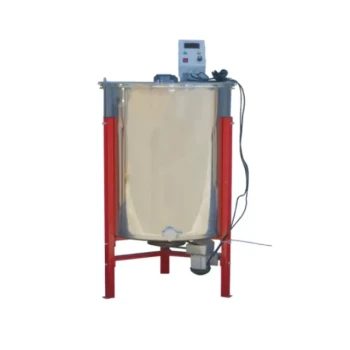
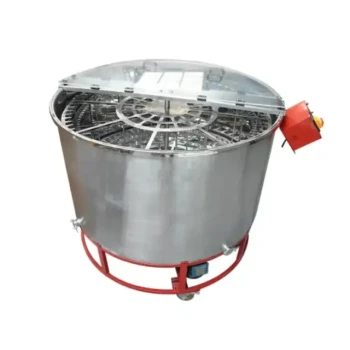
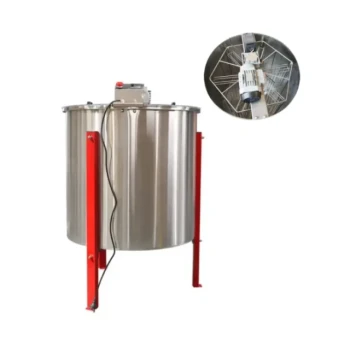
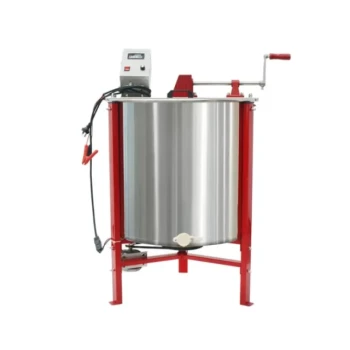
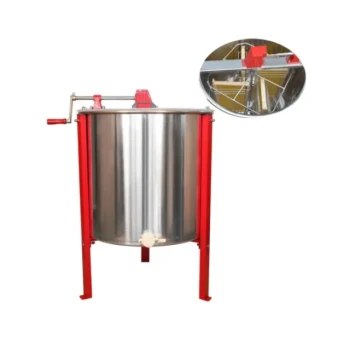
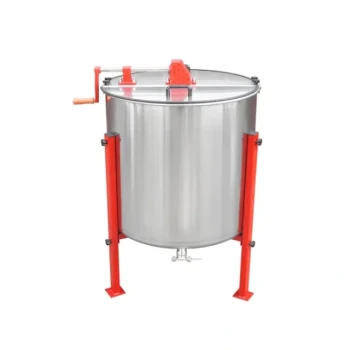
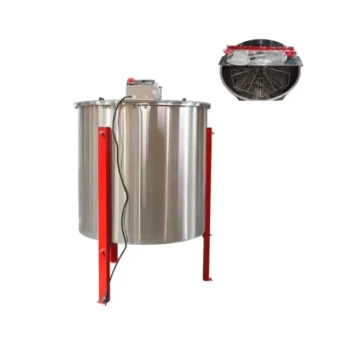
To maintain the integrity of your harvest and equipment, the three most critical mistakes to avoid are overloading the extractor with too many frames, attempting to extract honey from unripe or uncapped honeycombs, and spinning the device at excessive speeds. These errors often result in structural damage to the honeycombs and can compromise the quality of the final product.
Core Takeaway: The efficiency of a centrifuge extractor relies on a balance of speed and preparation. Rushing the process by forcing unripe honey or spinning too aggressively will destroy the wax foundation you intend to reuse and risk damaging the extractor itself.
Operational Discipline and Speed Control
Regulating Spin Velocity
One of the most frequent errors is spinning the extractor at excessive speeds. While it may seem faster, high velocity creates too much centrifugal force for the wax to handle.
This often causes the honeycombs to break or blow out completely. A gentle, consistent speed preserves the comb structure, allowing you to return the intact frames to the hive for reuse.
Managing Frame Capacity
Avoid the temptation to overload the extractor with an excessive number of frames. Exceeding the manufacturer's capacity limits strain on the mechanism and often results in an uneven spin.
Ensure every frame is placed vertically and seated correctly. If the load is unbalanced, the extractor will wobble violently, potentially damaging the equipment and the honeycomb.
The Importance of Direction
For efficient extraction, frames should generally be spun for approximately 5 to 6 minutes in one direction.
However, a common oversight is failing to address the second side of the comb. You must either reverse the spinning direction or, if using a tangential extractor, manually flip the frames to extract the remaining honey.
Preparation and Honey Quality
Avoiding Unripe Honey
Never attempt to extract honey from unripe honeycombs. Unripe honey has a high water content and is prone to fermentation, which spoils the harvest.
Ensure the honey is fully cured by the bees before removing the frames for extraction.
Complete Uncapping
A critical preparatory mistake is placing frames in the centrifuge without fully removing the wax caps.
If the caps of the wax cells are not removed prior to spinning, the honey remains trapped inside. No amount of spinning force will extract honey from a capped cell; it simply stresses the frame.
Common Pitfalls and Maintenance Trade-offs
The Hygiene Trap
A major trade-off of using a centrifuge extractor is the high maintenance requirement to prevent contamination. Failing to clean the unit immediately after use is a significant error.
Leftover residues can lead to bacteria and mold growth, or the spread of disease between hives if the equipment is shared. The unit must be disassembled and washed with warm soapy water after every use.
Storage Risks
Improper storage is a silent equipment killer. Storing the extractor in a damp environment often leads to rust, particularly on non-stainless components.
Always store the device in a dry, cool, and clean area. If moisture is allowed to settle on the mechanism, the lifespan of the extractor will be significantly reduced.
Hive Compatibility Limitations
Be aware that centrifuge extractors are not universally compatible. They are generally unsuitable for Top Bar or Warre hives, as these often lack the framed structure required for the centrifuge basket.
Making the Right Choice for Your Goal
To get the most out of your extraction process, tailor your approach to your specific priority:
- If your primary focus is Equipment Longevity: Prioritize immediate disassembly and cleaning with warm soapy water to prevent rust and mold buildup.
- If your primary focus is Honey Quality: Ensure you only harvest fully capped, ripe frames to prevent fermentation and spoilage.
- If your primary focus is Process Efficiency: Spin for exactly 5-6 minutes per side, ensuring you reverse direction or flip frames to avoid wasting time on empty spins.
Treating the extraction process with patience ensures a pure harvest and protects your investment for seasons to come.
Summary Table:
| Potential Mistake | Consequence | Prevention Strategy |
|---|---|---|
| Excessive Speed | Damaged/blown-out honeycombs | Start slow; maintain gentle, consistent velocity. |
| Overloading Frames | Violent wobbling and machine strain | Adhere to manufacturer capacity; balance frames vertically. |
| Extracting Unripe Honey | Fermentation and spoiled harvest | Only harvest fully capped and cured honeycombs. |
| Incomplete Uncapping | Honey remains trapped in cells | Ensure all wax caps are removed before spinning. |
| Neglecting Cleaning | Bacteria growth and disease spread | Disassemble and wash with warm soapy water after every use. |
| Improper Storage | Rust and mechanical failure | Store in a dry, cool, and clean environment. |
Maximize Your Honey Production Efficiency with HONESTBEE
At HONESTBEE, we understand that high-quality extraction equipment is the backbone of any successful commercial apiary or distribution business. As a leading supplier to industry professionals, we provide a comprehensive range of beekeeping tools, from high-capacity honey-filling machines to durable centrifuge extractors designed for longevity and performance.
Whether you are scaling your operations or looking for specialized hardware and industry consumables, our expert team is here to support your growth with wholesale solutions tailored to your needs.
Ready to upgrade your apiary’s efficiency?
Contact HONESTBEE today to explore our full equipment portfolio
Related Products
- electric honey extractor honey centrifuge 3 frame honey extractor stainless steel honey frame extractor
- Manual Hand Crank 4 Frame Honey Extractor Centrifuge for Beekeeping
- Professional 4 Frame Self Reversing Electric Honey Extractor for Beekeeping
- Electric 4 Frame Tangential Honey Extractor
- HONESTBEE 72 Frame Industrial Electric Honey Extractor for Beekeeping
People Also Ask
- What are the characteristics of electric honey extractors? Boost Your Apiary Efficiency with Automated Technology
- What are the disadvantages of using an electric honey extractor? Weighing Cost, Power, and Comb Safety
- What are the advantages of an electric honey extractor? Boost Efficiency and Scale Your Honey Production
- What are the technical advantages of electric honey extractors? Maximize Yield and Protect Your Bee Colony
- How does an electric honey extractor affect the quality of honey? Preserve Flavor & Purity with Precision Extraction