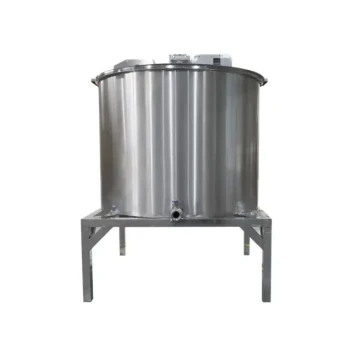
Industrial automated centrifugal and filling equipment fundamentally transforms apiary operations by replacing manual extraction and packaging with streamlined, high-speed processes. This technology addresses the critical need to manage processing pressure following large-scale harvests while establishing rigorous hygienic safety protocols essential for modern food production.
Adopting industrial automation is not merely about speed; it is the structural pivot that allows an apiary to transition from an amateur craft to a professional, standard-compliant food processing facility with diversified revenue streams.
Elevating Operational Efficiency and Safety
Managing Harvest Pressure
The primary technical advantage of this equipment is the drastic reduction in time required to process raw honeycomb. By automating the extraction phase, beekeepers can quickly manage the processing pressure that occurs immediately after large-scale harvests.
Ensuring Hygienic Consistency
Manual extraction carries inherent risks regarding contamination and inconsistency. Automated systems enclose the process, ensuring the hygienic safety of the production line and aligning the facility with modern food processing standards.
Standardizing the Final Product
Automated filling equipment eliminates the variability found in hand-packed jars. This precision ensures every unit meets specific weight and volume requirements, transforming raw honey into a competitive retail product suitable for broader market distribution.
Strategic Economic Advantages
Establishing Stable Profit Centers
Traditionally, many apiaries rely heavily on seasonal pollination services for income. High-efficiency processing machinery allows the apiary to establish a stable profit center based on product sales, independent of pollination contracts.
Optimizing Revenue Structures
By reducing marketing inefficiencies and enabling professional packaging, apiaries can capture more value from their surplus honey. This shifts the business model from selling raw bulk ingredients to selling value-added consumer goods.
Expanding into By-Products
Small-scale industrial refining machines open new avenues for resource utilization. They allow operations to process propolis, royal jelly, and beeswax through controlled physical separation, turning what might be waste into commercial-grade ingredients or high-value goods.
Understanding the Trade-offs
The Shift from Craft to Industrial Management
Moving to automated systems facilitates a transition from "amateur craft" to industrial standards, but this requires a shift in mindset. The operator must move from being solely a beekeeper to a process engineer, managing machinery rather than just handling hives.
Complexity of Implementation
While these systems improve economic resilience, they introduce new layers of complexity regarding maintenance and operation. Success requires not just installing the machine, but integrating it into a workflow that can support high throughput.
Making the Right Choice for Your Goals
To determine if this level of automation suits your apiary, consider your primary business objectives:
- If your primary focus is Volume and Scalability: Prioritize centrifugal automation to eliminate bottlenecks during peak harvest seasons.
- If your primary focus is Retail Growth: Invest in automated filling and packaging equipment to ensure shelf-ready consistency and brand competitiveness.
- If your primary focus is Revenue Diversification: Look for refining machinery that processes by-products like propolis and beeswax to maximize the value of every hive.
True modernization in beekeeping is defined by the ability to process resources efficiently without compromising quality.
Summary Table:
| Feature | Key Benefit | Impact on Apiary Operations |
|---|---|---|
| Centrifugal Automation | High-speed honey extraction | Eliminates post-harvest bottlenecks and pressure |
| Automated Filling | Precision packaging & consistency | Ensures shelf-ready retail quality and brand trust |
| Refining Machinery | By-product processing | Monetizes propolis, royal jelly, and beeswax |
| Enclosed Systems | Hygienic safety protocols | Meets modern food safety and industry standards |
| Workflow Integration | Professional standardization | Shifts from amateur craft to industrial efficiency |
Scale Your Production with HONESTBEE Professional Solutions
Transitioning from manual extraction to an industrial-grade operation requires more than just machinery—it requires the right partner. HONESTBEE specializes in empowering commercial apiaries and distributors with high-performance beekeeping tools and advanced machinery.
Whether you are looking to install high-speed honey-filling machines, automated extraction lines, or seeking a reliable supply of essential industry consumables, we provide the comprehensive wholesale offering you need to thrive. Our portfolio extends to specialized hardware for hive-making and honey-themed cultural merchandise, ensuring you capture maximum value from every hive.
Ready to optimize your revenue structure and lead the market?
Contact us today to discuss your facility upgrade!
References
- Agnieszka Kuś. Innovation management in apiaries in times of biodiversity crisis: evidence from Poland. DOI: 10.33119/jmfs.2024.54.3
This article is also based on technical information from HonestBee Knowledge Base .
Related Products
- Fully Automatic High Speed Centrifugal Bottle Unscrambler
- Automatic Honey Filling and Filtering Machine for Beekeeping Bottle Filling
- Precision Automated Packaging Turntable Honey Spoon Filling Sealing Packing Machine
- Fully Automatic Honey Filling Packaging Machine for Processing Line
- Manual Honey Filling Machine Bottling Machine for Honey
People Also Ask
- What is the technical purpose of using a high-speed centrifuge in honey analysis? Ensure Purity and Quality Standards
- What role does a high-speed centrifuge play in the preliminary processing of raw honey? Enhancing Purity and Clarity
- Why are 15ml centrifuge tubes essential for honey sampling? Ensure Sample Integrity and Analytical Accuracy
- How does a rotational viscometer contribute to the quality assessment of honey? Ensure Perfect Texture and Flow
- What are the advantages of using 15 mL centrifuge tubes for bee pollen? Enhance Sample Integrity and Chemical Resistance