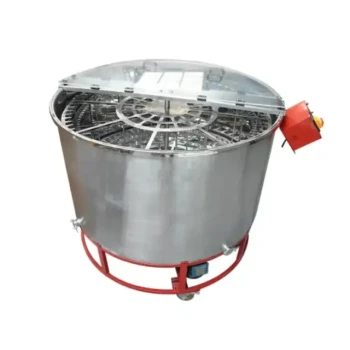
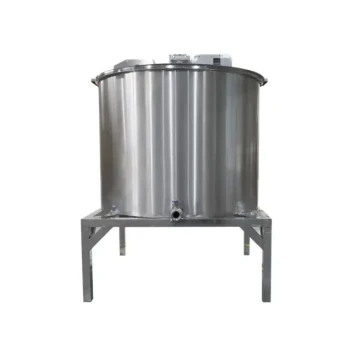
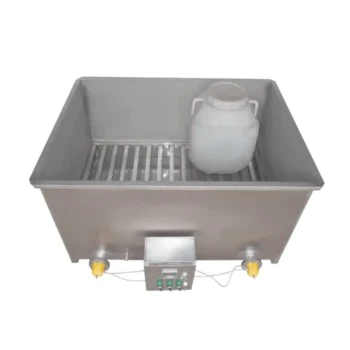
The primary technical requirement for organic honey equipment is the exclusive use of food-grade stainless steel construction to strictly prevent metal ion contamination and oxidation. Furthermore, the equipment design must support a "classified extraction" workflow, which mechanically isolates honey-only combs from those containing larvae, a critical stipulation for maintaining organic certification and superior physical purity.
The core technical challenge in organic honey processing is not just extraction, but isolation. Your equipment must create a sterile, closed-loop environment that separates the honey from biological impurities (larvae) and environmental contaminants while preserving the raw chemical structure of the product.
Material Composition and Hygiene
Food-Grade Stainless Steel
All contact surfaces within the extraction and bottling line must be constructed from high-quality food-grade stainless steel. This is non-negotiable for organic processing.
Using stainless steel prevents the leaching of metal ions into the honey, which can alter flavor and compromise chemical safety. It also eliminates the risk of oxidation, ensuring the honey maintains its natural color and chemical stability.
Closed-Loop Operations
To maintain organic integrity, the system should operate as a closed loop. This minimizes the honey's exposure to ambient air and humidity.
Closed operations drastically reduce the risk of environmental contamination, such as dust or airborne microbes, entering the product stream. This is a foundational requirement for obtaining food safety certifications.
Extraction Mechanics and Workflow
Classified Extraction Capability
Unlike conventional processing, organic standards prohibit extracting honey from combs that contain larvae.
Your facility requires equipment capable of handling "classified extraction." This means the machinery must accommodate workflows where individual honey-only combs are sorted and processed separately from brood combs, preventing biological contamination.
Stable Centrifugal Controls
High-quality extractors utilize stable, variable rotation speeds tailored to the specific viscosity of the honey.
This precision prevents damage to the delicate beeswax structure during the spin cycle. By maintaining the integrity of the comb, you minimize the amount of wax debris entering the honey, reducing the filtration burden later in the process.
Processing and Filtration
Multi-Stage Precision Filtration
Industrial processing must include multi-stage filtration systems designed to remove physical contaminants like beeswax residues and debris.
However, for organic honey, this process must be mechanical rather than chemical. The goal is to ensure high clarity and sensory quality without stripping the honey of its natural pollen or nutritional components.
Controlled Temperature Systems
While industrial processing often uses heat to reduce viscosity and moisture, organic honey requires strict thermal limits.
Equipment must feature precise temperature controls. Overheating destroys the natural antioxidant activity and active enzymes that define organic quality. The machinery must balance effective dehydration and flow with the preservation of heat-sensitive nutrients.
The Bottling Environment
Aseptic Filling Technology
The final stage requires high-precision filling machines that operate under sterile conditions.
Aseptic packaging technology prevents secondary contamination during the transfer from tank to bottle. This ensures that the purity achieved during extraction is maintained continuously until the vessel is sealed.
Precision Dosing and Sealing
Automated metering ensures uniformity across finished products, which is essential for high-end retail markets.
Efficient sealing processes are equally critical. A secure seal locks in the honey's natural moisture content and prevents oxidation, effectively extending the shelf life and maintaining the flavor profile during commercial distribution.
Understanding the Trade-offs
Filtration vs. Nutritional Integrity
A common pitfall is over-filtration in pursuit of perfect clarity.
While removing impurities extends shelf life and improves visual appeal, aggressive filtration can remove pollen and other natural particles that consumers expect in organic products. You must calibrate your filtration equipment to balance clarity with nutritional density.
Speed vs. Wax Integrity
High-speed centrifugation increases yield by extracting every drop of honey, but it risks fracturing the comb.
Excessive speed generates more wax debris, which forces your filtration system to work harder, potentially clogging filters or requiring heat to facilitate flow. The trade-off often favors slightly lower speeds for higher quality, cleaner raw output.
Making the Right Choice for Your Goal
Selecting the right equipment depends on balancing volume with strict organic compliance.
- If your primary focus is Organic Certification: Prioritize equipment that supports classified extraction workflows and allows for distinct separation of honey-only combs from larval combs.
- If your primary focus is Product Shelf-Life: Invest heavily in aseptic filling and precision sealing technologies to eliminate oxidation and secondary contamination risks.
- If your primary focus is Sensory Quality: Focus on controlled temperature systems and stable centrifugation to preserve enzymes and prevent wax contamination.
True industrial-grade organic processing requires machinery that treats honey not as a commodity to be pumped, but as a living biological product to be preserved.
Summary Table:
| Technical Feature | Requirement for Organic Standards | Key Benefit |
|---|---|---|
| Material | Food-grade stainless steel (SUS304/316) | Prevents metal ion leaching and oxidation |
| Extraction | Classified extraction capability | Isolates honey from biological impurities (larvae) |
| Filtration | Multi-stage mechanical (non-chemical) | Ensures clarity without stripping natural pollen |
| Temp Control | Strict thermal limits & precision sensors | Preserves heat-sensitive enzymes and antioxidants |
| Packaging | Aseptic filling & automated sealing | Prevents secondary contamination and extends shelf life |
Elevate Your Honey Production with HONESTBEE
Maintaining organic integrity requires more than just standard machinery—it requires specialized engineering designed for biological preservation. HONESTBEE caters to commercial apiaries and distributors with a comprehensive wholesale offering of high-performance beekeeping tools and industrial machinery.
From specialized hive-making and honey-filling machines to advanced extraction lines, we supply the full spectrum of equipment needed to meet rigorous organic certifications. Whether you are scaling a commercial operation or supplying the industry as a distributor, we provide the hardware and essential consumables to ensure your honey remains a premium, living product.
Ready to upgrade your processing line?
Contact us today to discuss your wholesale equipment needs
References
- Andreas Thrasyvoulou, Dany El‐Obeid. Improvements To The Regulations On Organic Farming To Facilitate The Practice Of Organic Beekeeping. DOI: 10.1080/0005772x.2014.11417604
This article is also based on technical information from HonestBee Knowledge Base .
Related Products
- HONESTBEE 72 Frame Industrial Electric Honey Extractor for Beekeeping
- Manual Honey Filling Machine Bottling Machine for Honey
- Honey Gate Valve with Ergonomic Ball Handle Plastic Bee Honey Tap for Beekeeping Bottling and Honey Extractor Equipment
- Double Nozzle Small Honey Filling Machine Honey Sachet Packing Packaging Equipment
- Precision Durable Efficient HONESTBEE Rotary Honey Filling Machine
People Also Ask
- What is the importance of balancing honeycomb frames within a honey extractor? Ensure Stability and Protect Machinery
- How is honey separated from the frames after they are uncapped? Efficient Extraction Methods for High Yields
- What are the main benefits of using a honey extractor? Maximize Yields and Protect Your Honeycomb
- What are the recommended methods for removing honey from the honeycomb? Top Extraction Techniques for Maximum Efficiency
- How do manual honey extractors compare to electric honey extractors? Choosing the Right Tool for Your Apiary Growth