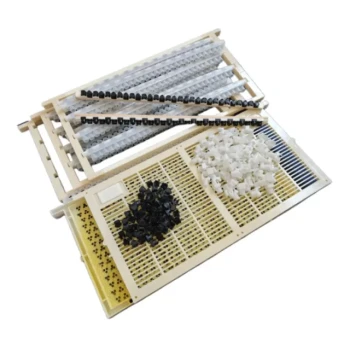
The fundamental advantage of using a vacuum suction system for royal jelly harvesting is the simultaneous improvement of extraction speed and biological preservation. By utilizing negative pressure to draw fluid directly from queen cups into a sealed container, this technology eliminates the bottlenecks of manual labor. It drastically reduces the time the product spends exposed to open air and ambient temperatures, ensuring the harvested jelly retains its quality and chemical stability.
The shift from manual extraction to vacuum suction is not just about speed; it is a quality control upgrade. It maximizes unit yield and protects the royal jelly’s bioactivity by replacing physical handling with a closed-loop, non-contact extraction process.
Optimizing Process Efficiency
Accelerating Extraction Speed
In a manual setup, extracting royal jelly is a labor-intensive, repetitive task that limits daily throughput.
Vacuum suction systems utilize negative pressure to instantly remove the jelly from the queen cups. This mechanization allows for a continuous workflow, significantly increasing the volume of jelly that can be harvested in a single session compared to traditional scraping or spooning methods.
Maximizing Unit Yield
Manual extraction often relies on the dexterity of the operator, which can lead to inconsistencies and leftover product in the cup.
A vacuum system ensures complete collection from every cell. The suction force effectively pulls the jelly from the base and walls of the cup, maximizing the yield per unit and ensuring no valuable product is wasted.
Preserving Product Quality
Minimizing Oxidation and Air Exposure
Royal jelly is a biologically active substance that degrades when exposed to air and heat.
Vacuum systems draw the product immediately into a sealed collection container. This creates a controlled environment that drastically reduces the duration of exposure to oxygen. By limiting oxidation, the system preserves the delicate bioactive compounds that give royal jelly its market value.
Eliminating Contamination Risks
Manual methods inherently involve physical contact between tools, the operator, and the product, which creates vectors for contamination.
Vacuum harvesting is a non-contact process. By removing the need for hand-held tools to touch the jelly, the system eliminates the risk of secondary contamination and physical impurities. This results in a cleaner, more hygienic final product suitable for high-grade applications.
Understanding the Trade-offs
While vacuum systems offer superior performance, they introduce mechanical complexity to the apiary workflow.
Maintenance and Sterilization: Unlike simple manual tools, a vacuum system consists of pumps, tubes, and sealed containers. These components require rigorous cleaning and maintenance protocols to prevent bacterial buildup within the machinery itself.
Operational Dependency: Moving to a vacuum system creates a dependency on the equipment's functionality. A mechanical failure in the pump or a loss of pressure stops the entire harvesting line, whereas manual methods are resilient to equipment failure.
Making the Right Choice for Your Goal
To determine if a vacuum suction system aligns with your operation, consider your specific production targets:
- If your primary focus is Scalability: Implement vacuum suction to remove the labor bottleneck, allowing you to process significantly more hives per day without adding headcount.
- If your primary focus is Product Potency: Choose vacuum suction to minimize oxidation and air exposure, ensuring the highest possible retention of bioactive ingredients.
Adopting vacuum technology transforms royal jelly harvesting from a craft-dependent chore into a scalable, sanitary industrial process.
Summary Table:
| Feature | Manual Extraction | Vacuum Suction System |
|---|---|---|
| Extraction Speed | Slow (Labor-intensive) | Rapid (Continuous workflow) |
| Product Yield | Inconsistent (Manual scraping) | Maximum (Complete suction) |
| Hygiene Level | High risk of contact contamination | Non-contact, hygienic process |
| Product Integrity | High oxidation/air exposure | Sealed environment/low oxidation |
| Equipment Needs | Simple hand tools | Pump, tubing, and sealed tanks |
Scale Your Apiary Production with HONESTBEE Precision Equipment
Transitioning from manual labor to automated efficiency is the key to scaling your beekeeping business. HONESTBEE specializes in supporting commercial apiaries and distributors with high-performance wholesale solutions. From advanced vacuum suction systems that preserve royal jelly potency to specialized honey-filling machines and hive-making hardware, we provide the full spectrum of equipment needed to maximize your yield.
Our portfolio is designed to help you reduce labor costs, eliminate contamination risks, and deliver a premium product to your customers. Partner with us to modernize your operations today.
Contact HONESTBEE for Wholesale Solutions
References
- Maria Josiane Sereia, Priscila Wielewski. Alternative sources of supplements in Africanized honeybees submitted to royal jelly production. DOI: 10.4025/actascianimsci.v35i2.16976
This article is also based on technical information from HonestBee Knowledge Base .
Related Products
- No Grafting Queen Rearing Kit: System for Royal Jelly Production and Queen Rearing
- Honey Concentrating Vacuum Heating Thickening Machine Dehumidifier for Honey
People Also Ask
- What is the primary function of a queen rearing kit? Eliminate Manual Grafting for Superior Bee Breeding
- How do specialized queen rearing kits and queen management tools improve the success rate of bee colony expansion?
- What are some alternative methods to grafting for queen cell production? Discover Graft-Free Queen Rearing Systems
- Are queen rearing systems generally suitable for all honeybee species? Master Efficient Breeding Methods
- Are queen rearing systems suitable for all beekeepers? Modern Tools for Every Experience Level