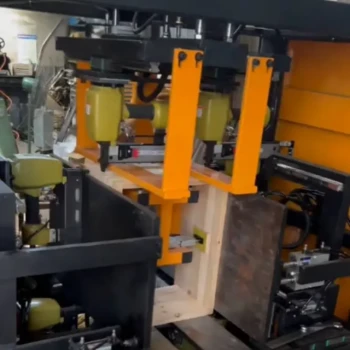
Standardized artificial hives provide a superior defensive perimeter against Small Hive Beetle (SHB) attacks compared to natural nesting sites. By leveraging precision manufacturing for tighter seals and incorporating specific design elements like observation windows, these hives enable beekeepers to physically exclude pests and detect infestations before they become fatal.
Core Insight: The primary advantage of standardized hives lies in transforming pest management from passive to active. They combine mechanical exclusion with enhanced visibility, allowing for the integration of physical traps and resin barriers that specifically target the vulnerabilities of the Small Hive Beetle.
Mechanical Exclusion and Structural Defense
Precision Manufacturing
Standardized hives are often produced using hive-making machinery that ensures high dimensional accuracy. This precision results in components with superior airtightness compared to natural tree cavities or rustic boxes.
Eliminating Entry Points
The tight fit of these components mechanically limits the movement of pests. By reducing gaps and cracks, the hive structure itself acts as a primary barrier, preventing Small Hive Beetles from easily infiltrating the colony to reproduce.
Resin-Based Enhancements
The design of these hardware units facilitates the integration of resin-based defense enhancements. Indigenous stingless bees (Meliponini) naturally use resin for defense; standardized hives provide optimized structures for bees to apply these barriers effectively against invaders.
Enhanced Monitoring and Early Detection
The Value of Observation Windows
A critical advantage of standardized artificial hives is the inclusion of observation windows. These allow beekeepers to inspect the colony's status without opening the hive and breaking its thermal or propolis seals.
Detecting Early Invasions
Because the internal environment is visible, beekeepers can detect Small Hive Beetle invasions at the early stage. Rapid identification is essential for intervening before the beetles cause irreversible damage to the honeycombs and larvae.
Monitoring Internal Dynamics
Beyond pest detection, these hives allow for the monitoring of general colony health, such as honey storage and queen vitality. A strong, healthy colony is naturally more resilient to biological stress and pest pressure.
Active Defense Integration
Physical Traps
Standardized designs allow for the seamless insertion of specific protective hardware, such as trap bottom boards. These devices physically capture beetles that manage to enter, removing them from the colony environment.
Reducing Biological Stress
By mechanically handling part of the defense burden, the hive reduces the biological stress on the bee colony. This allows the bees to focus energy on foraging and brood rearing rather than constantly fighting off significant pest populations.
Understanding the Operational Trade-offs
The Requirement of Active Management
While standardized hives offer "superior operability," they are tools that require human engagement. The advantage of an observation window is nullified if the beekeeper does not perform regular inspections.
Dependence on Standardization
Standardization allows for predictable foraging pressure and consistent research variables (such as controlling colony weight). However, beekeepers must ensure the specific dimensions (e.g., 300mm by 470mm frames) are appropriate for the specific local species of Meliponini they are managing.
Making the Right Choice for Your Goal
To maximize the benefits of standardized hives, align your usage with your specific objectives:
- If your primary focus is Conservation: Prioritize hives with integrated trap bottom boards and resin enhancements to minimize biological stress and maximize colony survival rates.
- If your primary focus is Production or Research: Leverage the structural consistency of standardized frames to accurately measure colony growth and streamline the harvesting process.
Ultimately, the standardized hive functions not just as a shelter, but as a sophisticated tool that amplifies the natural defensive behaviors of indigenous bees.
Summary Table:
| Feature | Advantage for Meliponini Protection | Impact on Pest Control |
|---|---|---|
| Precision Seals | Eliminates gaps and cracks found in natural cavities | Prevents Small Hive Beetle (SHB) entry points |
| Observation Windows | Enables colony inspection without breaking propolis seals | Allows for early detection of beetle infestations |
| Trap Bottom Boards | Integrates physical capture devices into the hive base | Mechanically removes beetles from the environment |
| Resin Support | Optimized structures for natural bee defenses | Enhances the bees' ability to apply resin barriers |
| Machined Uniformity | Consistent dimensions for all colony components | Facilitates rapid maintenance and research scaling |
Elevate Your Apiary with Professional Standardized Equipment
Protect your indigenous stingless bee colonies and maximize production with precision-engineered solutions from HONESTBEE. As a specialist partner for commercial apiaries and global distributors, we provide the comprehensive tools necessary for modern apiculture.
Our Value to Your Business:
- Precision Machinery: High-quality hive-making and honey-filling machines to ensure airtight, pest-resistant hive construction.
- Comprehensive Inventory: From specialized hardware and beekeeping tools to essential industry consumables.
- Scale Your Operations: We cater to large-scale wholesale needs, helping you maintain healthy, high-yield colonies with standardized efficiency.
Ready to upgrade your beekeeping infrastructure? Contact HONESTBEE today for wholesale inquiries and expert support!
References
- Natalia Bulacio Cagnolo, Karina Antúnez. Current status of the small hive beetle Aethina tumida in Latin America. DOI: 10.1007/s13592-023-00995-0
This article is also based on technical information from HonestBee Knowledge Base .
Related Products
- Plastic Handle Single Row Artificial Fiber Bee Brush
- Queen Bee Artificial Insemination Instrument Equipment for Instrumental Insemination
- HONESTBEE Entrance Bee Feeder Professional Hive Nutrition Solution for Beekeeping
- Modern Flat-Mount Hive Number Set for Beekeeping
- Plastic Bee Hive Stand for Beekeeping
People Also Ask
- What is the specific function of a bee brush? Ensure Pure Harvests and Colony Welfare During Honey Extraction
- What is the purpose of using a bee brush during the inspection of hive components? Safe & Precise Hive Management
- What problem does a bee brush solve? Protect Your Colony with Gentle Precision Tools
- What are the key features of a popular bee brush? Essential Design for Bee Safety and Hive Hygiene
- What are the key characteristics of the bristles on a bee brush? Master Gentle and Efficient Bee Removal