Industrial honey extraction and pretreatment systems serve as the critical infrastructure for scaling apiary operations. They utilize advanced centrifugal and filtration technologies to rapidly separate and purify honey. This high-efficiency processing significantly shortens turnover times, mitigating the risks of excessive moisture and impurity contamination that often result from manual processing delays.
Core Takeaway By automating the separation process and preserving honeycomb integrity, industrial equipment allows apiaries to shift focus from manual labor to strategic yield management. The result is a dual increase in immediate output volume and the long-term biological efficiency of the hive.
Optimizing Biological and Operational Workflows
Accelerating Production Turnover
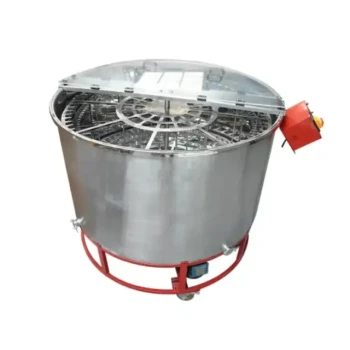
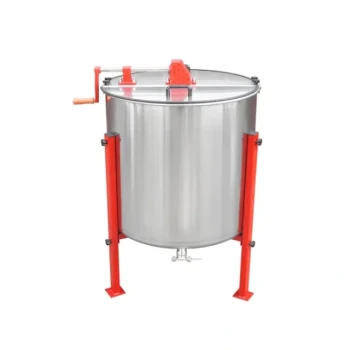
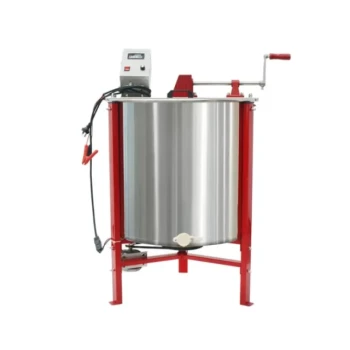
Industrial equipment uses efficient centrifugal forces to rapidly separate honey from the comb. This speed is critical during harvest seasons, as it prevents bottlenecks that occur with manual extraction. Rapid processing minimizes the time honey is exposed to the environment, reducing the risk of fermentation due to moisture absorption.
Redirecting Colony Energy
A major, often overlooked advantage of professional extractors is their ability to preserve the beeswax structure. By using stable rotation speeds, the equipment extracts honey without destroying the comb. When these intact combs are returned to the hive, bees do not need to expend energy secreting new wax to rebuild them.
Increasing Harvest Frequency
Because bees are spared the energy-intensive task of comb building, they can immediately focus on nectar collection. This biological efficiency allows apiaries to align production cycles with the peak flowering periods of plants like Eucalyptus and Acacia. Consequently, operations can achieve a higher frequency of honey production throughout the year.
Enhancing Commercial Viability
Ensuring Quality Stability
Large-scale production requires consistency that manual processing cannot provide. Industrial pretreatment systems utilize fine filtration to purify honey, removing impurities while maintaining natural physical and chemical properties. This consistency is vital for maintaining the commercial value of the honey across large batches.
Meeting Hygiene and Export Standards
Automated production lines integrate extraction, filtration, and bottling into a closed, sterile environment. This significantly reduces the risk of contamination compared to open-air manual processing. Adherence to these strict hygiene standards provides the material foundation necessary for obtaining food safety certifications and accessing international export markets.
Reducing Labor and Material Costs
Integrated automation reduces the dependency on manual labor for extraction and bottling. Furthermore, precision dosing in filling machines minimizes material loss. These factors combine to allow for more accurate unit cost accounting, stabilizing the financial output of the production unit.
Critical Operational Considerations
The Necessity of Precision Calibration
While centrifugal extraction offers speed, it relies heavily on technical precision. The equipment must provide stable rotation speeds tailored specifically to the viscosity of different honey varieties. Failure to match the speed to the honey type can result in incomplete extraction or damage to the beeswax structure, negating the biological benefits of the system.
Balancing Volume with Infrastructure
Investing in high-capacity extraction machinery is most effective when aligned with high-volume harvest seasons. The equipment serves as a safeguard against yield loss caused by processing delays. However, this requires the apiary to have a sufficient logistical framework to transport and feed raw honey into the system efficiently to justify the technical capability.
Making the Right Choice for Your Goal
To maximize the return on investment in industrial extraction equipment, align your choice with your specific operational targets:
- If your primary focus is increasing total yield: Prioritize centrifugal extractors that guarantee honeycomb preservation, as reusing combs directly converts bee energy from wax secretion to honey production.
- If your primary focus is export and high-value markets: Select automated lines with closed-loop filtration and filling systems to ensure sterility and compliance with international hygiene standards.
- If your primary focus is cost reduction: Implement integrated automated systems that combine extraction and precision bottling to lower labor costs and minimize raw material waste.
Ultimately, industrial extraction is not just about speed; it is about synchronizing mechanical efficiency with the biological rhythm of the hive to maximize output.
Summary Table:
| Key Advantage | Impact on Apiary Operations | Primary Benefit |
|---|---|---|
| Comb Preservation | Retains beeswax structure during centrifugal extraction | Redirects bee energy to honey collection |
| High-Speed Turnover | Rapidly processes large volumes of honey | Minimizes fermentation and moisture risk |
| Closed-Loop Filtration | Maintains a sterile, automated environment | Ensures compliance with export hygiene standards |
| Precision Automation | Integrated extraction and filling machinery | Reduces labor costs and minimizes material waste |
Maximize Your Harvest with HONESTBEE Solutions
At HONESTBEE, we specialize in empowering commercial apiaries and distributors with the industrial tools needed to scale. Whether you are looking for high-capacity centrifugal extractors, precision honey-filling machines, or a full suite of specialized beekeeping hardware, our portfolio is designed to enhance your biological efficiency and commercial viability.
Our value to you:
- Comprehensive Wholesale Offering: Access a full spectrum of machinery and essential industry consumables.
- Global Compliance: Our equipment ensures your honey meets the highest hygiene standards for international markets.
- Operational Excellence: From hive-making to honey-themed cultural merchandise, we support every facet of your business.
Ready to transform your production line? Contact us today to discuss your equipment needs!
References
- Jonah M. Ulmer, Hugo Castignani. Aproximación al efecto de la trashumancia en el desempeño de los sistemas de producción apícola característicos de la zona central de la provincia de Santa Fe: campaña 2009/10. DOI: 10.14409/favecv.v11i1/2.4561
This article is also based on technical information from HonestBee Knowledge Base .
Related Products
- HONESTBEE 72 Frame Industrial Electric Honey Extractor for Beekeeping
- 6 Frame Manual Stainless Steel Honey Extractor Beekeeping Equipment
- HONESTBEE 2 Frame Manual Acrylic Honey Extractor Beekeeping Equipment
- Electric 8 Frame Honey Spinner Extractor Equipment for Beekeeping
- Electric Double Wall Honey Filtering Machine Purifier Equipment for Honey Processing Plant
People Also Ask
- What is the importance of balancing honeycomb frames within a honey extractor? Ensure Stability and Protect Machinery
- How is honey separated from the frames after they are uncapped? Efficient Extraction Methods for High Yields
- What are the main benefits of using a honey extractor? Maximize Yields and Protect Your Honeycomb
- What are the recommended methods for removing honey from the honeycomb? Top Extraction Techniques for Maximum Efficiency
- How do manual honey extractors compare to electric honey extractors? Choosing the Right Tool for Your Apiary Growth