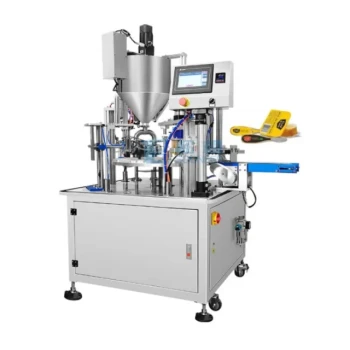
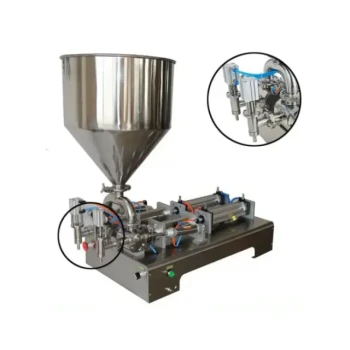
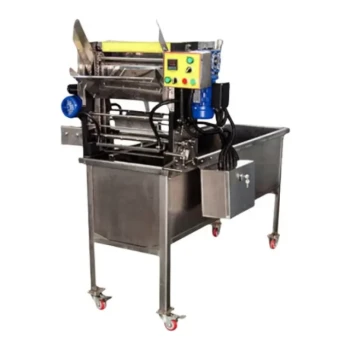
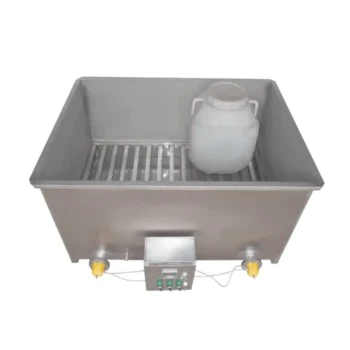
An automatic filling and packaging line serves as the operational backbone for high-volume honey production. It integrates four critical stages—container cleaning, precision metering, vacuum capping, and automated labeling—into a single, continuous workflow. This system replaces manual variability with mechanical consistency, significantly increasing processing capacity while ensuring the final product meets strict commercial specifications.
Core Insight: By removing direct human intervention from the packaging process, automated lines do more than just increase speed; they fundamentally alter the safety profile of the product. They transform honey processing from a variable manual task into a standardized, sterile industrial operation capable of meeting international export criteria.
Elevating Hygiene and Product Integrity
Sterility Through Isolation
The primary application of an automated line is the creation of an enclosed, sterile processing environment. By automating the movement and filling of containers, the system drastically reduces direct human contact.
This isolation minimizes the risk of secondary contamination, such as hair, dust, or biological contaminants, which are common issues in manual handling.
Preserving Chemical Quality
Honey is sensitive to its environment; prolonged exposure to air can lead to moisture absorption and spoilage. Automated machines utilize closed-system packaging to limit air exposure during the filling process.
This speed and containment preserve the honey's natural enzyme activity and flavor profile. It also prevents the moisture content from rising, which is critical for extending the product's shelf life.
Achieving Precision and Standardization
Exact Volume Control
Automatic lines utilize high-precision piston or weighing systems to dispense honey. This ensures that the net content of every bottle is identical and meets industry regulations.
Consistent "net weight" is not just a regulatory requirement; it is a financial necessity for large-scale distributors to prevent product giveaway or underweight penalties.
Consistent Aesthetic Presentation
Beyond the liquid itself, these lines automate the capping and labeling phases. Vacuum capping ensures superior airtightness, while automated labeling guarantees perfect alignment on every unit.
This uniformity creates a professional "shelf presence." For enterprises moving from local sales to broader retail distribution, this consistency is essential for building brand value and consumer trust.
Understanding the Operational Trade-offs
The Requirement for Standardization
Moving to an automated line requires a commitment to rigid container and label standards. Unlike manual packing, where a worker can easily adapt to different jar shapes on the fly, automated machinery relies on standardized inputs.
Complexity of Implementation
While these machines reduce manual labor, they introduce a need for technical oversight. Maintaining high-precision weighing systems and vacuum sealers requires a shift in focus from manual processing skills to machine maintenance and calibration.
Making the Right Choice for Your Goal
To maximize the return on investment in automation, align the equipment's capabilities with your specific business objectives:
- If your primary focus is International Export: Prioritize systems with enclosed filling environments and vacuum capping to ensure the hygiene and shelf-life compliance required by foreign regulators.
- If your primary focus is Brand Building: Focus on the labeling and aesthetic consistency capabilities to ensure every unit on the retail shelf reinforces a premium image.
- If your primary focus is Volume and Scale: Lean on the high-precision metering and throughput capabilities to maximize daily output while minimizing product waste.
Automation is the bridge that allows a beekeeping enterprise to transition from simple production to sophisticated, brand-oriented manufacturing.
Summary Table:
| Feature | Key Benefit | Impact on Production |
|---|---|---|
| Automated Filling | High-precision volume control | Eliminates product waste and ensures regulatory compliance |
| Vacuum Capping | Superior airtight sealing | Preserves honey freshness and extends shelf life |
| Enclosed System | Sterile environment | Minimizes contamination risks and meets export standards |
| Auto-Labeling | Uniform aesthetic | Enhances brand professional image and retail shelf presence |
Scale Your Honey Production with HONESTBEE Precision Engineering
Transitioning from manual labor to industrial-grade automation is essential for commercial apiaries and distributors aiming for the global market. HONESTBEE specializes in delivering the technical backbone for this growth. We provide high-performance honey-filling machines, automated packaging lines, and specialized beekeeping tools designed to maximize your output while preserving product integrity.
Whether you are a commercial distributor looking to standardize your brand or an apiary scaling for export, our comprehensive wholesale offering covers everything from industrial machinery to essential consumables and honey-themed cultural merchandise.
Ready to automate your success? Contact HONESTBEE today to discover how our equipment solutions can transform your honey processing into a high-efficiency operation.
References
- Nancy Diana Panța. Applying Value Chain Analysis through the Lens of Sustainability to Enterprises in the Beekeeping Sector. DOI: 10.18662/lumproc/gekos2020/12
This article is also based on technical information from HonestBee Knowledge Base .
Related Products
- Fully Automatic Honey Filling Packaging Machine for Processing Line
- Precision Automated Packaging Turntable Honey Spoon Filling Sealing Packing Machine
- Automatic Single-Dose Snap & Squeeze Honey Sachets Packing Machine
- Automatic Honey Filling and Filtering Machine for Beekeeping Bottle Filling
- Double Nozzle Small Honey Filling Machine Honey Sachet Packing Packaging Equipment
People Also Ask
- Why are fully automatic honey filling and packaging lines essential? Boost Your Honey's Market Value and Quality
- What is a fully-automatic honey filler? Streamline Your Production with High-Precision Automation
- How do automated honey filling and packaging machines affect profitability? Boost Margins with HONESTBEE Technology
- How do automated honey filling and packaging machines contribute to the market value of honey products? Maximize Your ROI
- How do industrial-grade automated honey filling and packaging machines mitigate the risk of physical contamination?