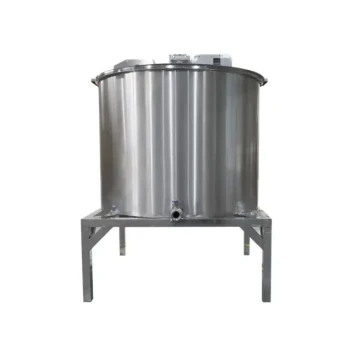
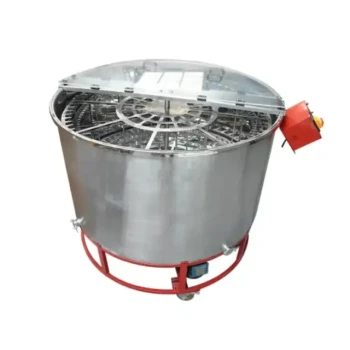
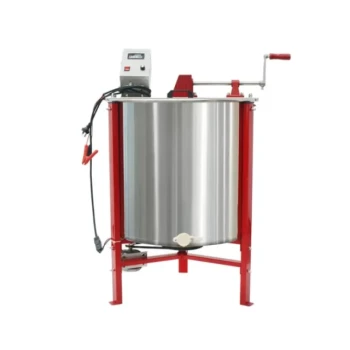
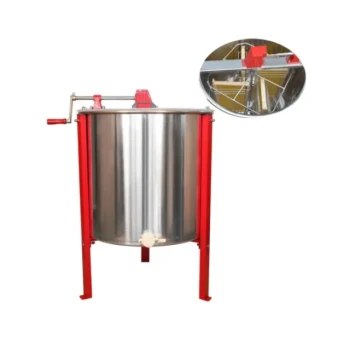
Automated honey extraction and processing lines provide a decisive advantage by integrating complex functions—such as centrifugal extraction, multi-stage filtration, and vacuum dehydration—into a unified, sanitary workflow. This industrial approach effectively minimizes the honey's exposure to the external environment and human operators, drastically reducing contamination risks while ensuring physicochemical stability. By rigorously controlling these variables, producers can secure the product quality necessary to meet strict international and European export standards.
Core Takeaway Automation transforms honey production from a variable craft into a traceable science. The primary value lies not just in speed, but in the creation of a closed-loop, sterile environment that preserves natural bioactive ingredients while satisfying the rigorous sanitary and composition requirements of global markets.
Preserving Bioactivity and Purity
The Closed-Loop Advantage
Automated lines utilize a closed processing environment that significantly reduces the contact time between honey and the open air.
By limiting this exposure, the system effectively prevents the ingress of environmental impurities, dust, and airborne contaminants. This isolation is critical for maintaining the raw integrity of the product from the comb to the storage vessel.
Mechanical Extraction vs. Manual Squeezing
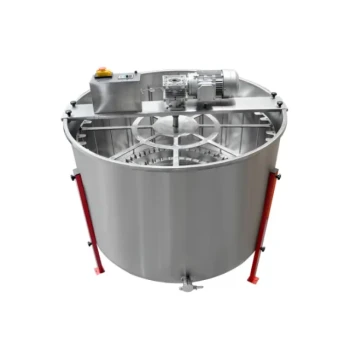
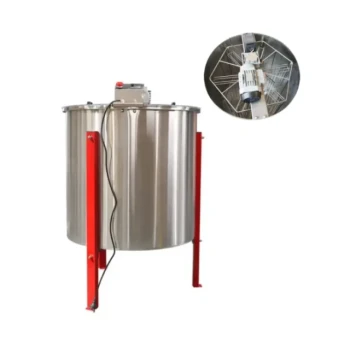
Modern systems employ centrifugal force to separate honey from combs, a distinct improvement over traditional manual squeezing methods.
This physical method efficiently removes hive debris and beeswax particles without subjecting the honey to unnecessary stress or friction. Consequently, the nutritional components and natural flavor profile of the honey remain intact, leading to better clarity and sensory quality.
Integrated Filtration and Dehydration
High-end automated lines incorporate multi-stage filtration and vacuum dehydration directly into the workflow.
These technologies remove microscopic impurities and control moisture content without resorting to excessive heat that could damage enzymes. This ensures the retention of natural bioactive ingredients, which is a key differentiator in the high-value retail market.
Achieving International Compliance
Meeting Physicochemical Standards
To enter markets like the European Union, honey must strictly adhere to specific physicochemical indicators regarding sugar content, acidity, and moisture.
Automated processing lines offer the precision control needed to hit these targets consistently across large batches. This consistency is the foundation of export competitiveness, ensuring that every shipment meets the regulatory criteria for purity and composition.
Ensuring Sterility and Traceability
Industrial extraction facilities allow for equipment registration and comprehensive product traceability.
The use of sterile filling processes and hygiene-focused equipment designs minimizes the risk of secondary contamination and cross-contamination of diseases like foulbrood. This level of sanitary control is often a prerequisite for obtaining the necessary certifications for international trade.
Precision in Filling and Packaging
Automated filling equipment replaces manual estimation with precision flow control.
This ensures that every unit meets consistent net weight specifications and hygiene standards, a requirement for retail compliance. It facilitates the transition from low-margin bulk exports to high-value, consumer-ready retail commodities.
Operational Efficiency and Sustainability
Preserving the Honeycomb Structure
Professional centrifugal extractors are designed to strip honey while maintaining the structural integrity of the wax comb.
This preservation allows apiarists to return the empty combs to the hive for reuse. Because bees consume significant energy to secrete wax and build nests, reusing combs drastically shortens the production cycle and increases total honey yield.
High-Efficiency Recovery
Mechanized operations ensure the high-purity recovery of valuable byproducts, including beeswax and propolis.
This establishes a foundation for high-quality downstream processing, maximizing the economic return from every hive.
Understanding the Trade-offs
Capital Investment vs. Volume
Automated lines represent a significant capital expenditure compared to manual equipment.
For smaller producers with low output, the Return on Investment (ROI) may be slow to realize. These systems are optimized for scale, where the increase in yield and export capability justifies the initial cost.
Maintenance and Technical Expertise
While automation reduces manual labor, it increases the need for technical oversight.
Operators must be trained to calibrate vacuum pressure and filtration settings to prevent "over-processing," which can inadvertently remove pollen markers required for geographic origin tracing. Furthermore, the machinery requires strict cleaning protocols to maintain the sterile environment it promises.
Making the Right Choice for Your Goal
To maximize the value of automated processing, align your equipment choice with your specific market objectives.
- If your primary focus is EU Export Compliance: Prioritize systems with advanced vacuum dehydration and precise filtration control to guarantee your physicochemical indicators meet strict regulatory standards.
- If your primary focus is Production Scalability: Focus on high-throughput centrifugal extractors that preserve honeycomb integrity, reducing the energy burden on your bees and shortening harvest cycles.
Automated processing is the bridge between raw agricultural output and a globally competitive, high-value commodity.
Summary Table:
| Feature | Benefit | Impact on Compliance |
|---|---|---|
| Closed-Loop System | Minimizes air exposure & contamination | Ensures purity & sanitary standards |
| Centrifugal Extraction | Preserves comb structure & honey flavor | Maintains natural sensory quality |
| Vacuum Dehydration | Precise moisture control without heat | Meets EU physicochemical indicators |
| Multi-stage Filtration | Removes microscopic impurities | Achieves high-clarity retail standards |
| Automated Filling | Consistent weight & sterile packaging | Guarantees traceability & retail readiness |
Scale Your Honey Production with HONESTBEE
Transitioning from manual craft to industrial excellence requires the right technology. HONESTBEE empowers commercial apiaries and distributors with high-performance honey-filling machines, specialized hive-making hardware, and full extraction lines.
Our comprehensive wholesale range includes:
- Advanced Machinery: From centrifugal extractors to vacuum dehydration systems.
- Beekeeping Tools: A full spectrum of professional hardware and consumables.
- Cultural Merchandise: Honey-themed products to diversify your brand.
Ready to meet international export standards and maximize your yield? Contact HONESTBEE today to discover how our equipment can transform your honey into a globally competitive commodity.
References
- T. Senchuk, Vitaliia Didenko. SUSTAINABLE DEVELOPMENT OF THE UKRAINIAN BEEKEEPING INDUSTRY. DOI: 10.30525/2256-0742/2022-8-5-170-175
This article is also based on technical information from HonestBee Knowledge Base .
Related Products
- Fully Automatic Honey Filling Packaging Machine for Processing Line
- 32 Frame Commercial Electric Honey Extractor for Beekeeping and Honey Production
- HONESTBEE 72 Frame Industrial Electric Honey Extractor for Beekeeping
- Automatic Honey Filling and Filtering Machine for Beekeeping Bottle Filling
- Electric Double Wall Honey Filtering Machine Purifier Equipment for Honey Processing Plant
People Also Ask
- Why are fully automatic honey filling and packaging lines essential? Boost Your Honey's Market Value and Quality
- What is a fully-automatic honey filler? Streamline Your Production with High-Precision Automation
- How do automated honey filling and packaging machines affect profitability? Boost Margins with HONESTBEE Technology
- How do automated honey filling and packaging machines contribute to the market value of honey products? Maximize Your ROI
- How do industrial-grade automated honey filling and packaging machines mitigate the risk of physical contamination?