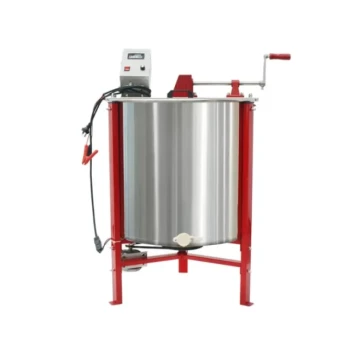
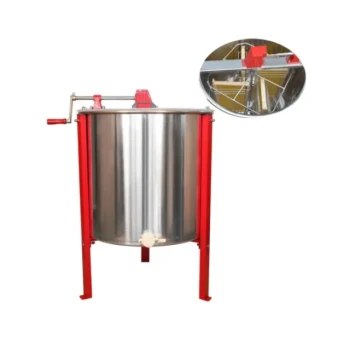
Professional honey extraction equipment fundamentally transforms apiary operations by replacing labor-intensive manual pressing with precise mechanical separation. This shift immediately improves product purity, preserves vital enzymes, and significantly enhances overall efficiency by reducing processing time.
Core Takeaway Manual pressing often compromises honey quality by crushing impurities into the final product and destroying the comb structure. Professional extraction utilizes centrifugal force or suction to isolate the honey, preserving the biological integrity of the harvest and allowing for the reuse of combs, which drastically shortens production cycles.
Elevating Product Quality and Purity
Eliminating Contaminants
Traditional manual pressing forces honey through filters alongside wax, pollen, and sometimes larvae. This "squeezing" action inevitably introduces impurities.
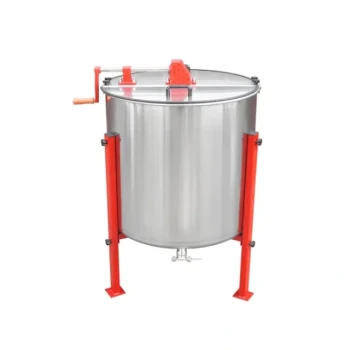
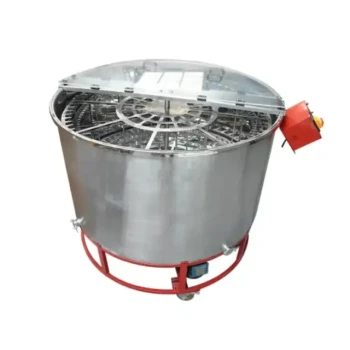
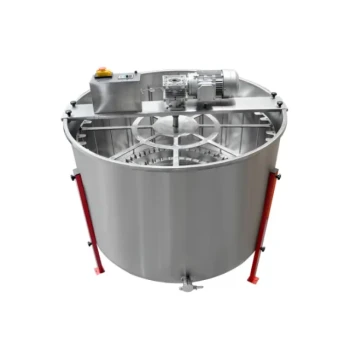
Professional extractors utilize centrifugal force or negative pressure to pull honey out without crushing the surrounding material. This results in a cleaner final product with significantly lower turbidity and foreign matter.
Preserving Bio-Active Compounds
Honey is a heat-sensitive product containing valuable enzymes and antioxidants. Manual handling increases the risk of oxidation and environmental exposure.
Modern equipment is designed to operate at controlled low temperatures. This prevents the elevation of hydroxymethylfurfural (HMF) levels and preserves the honey’s full nutritional and medicinal profile.
Standardizing Flavor and Aroma
By minimizing the time honey is exposed to air and human contact, mechanical extraction locks in natural floral aromas. This consistency is critical for meeting the strict hygiene and quality standards required for premium market classification.
Operational Efficiency and Hive Health
The Value of Non-Destructive Harvesting
The most significant operational advantage of professional equipment is the preservation of the honeycomb or cerumen pots.
Manual pressing destroys the storage structure, forcing bees to consume vast amounts of energy and time rebuilding wax before they can store new honey. Centrifugal extractors leave the comb intact, allowing it to be returned to the hive for immediate reuse.
Accelerating Production Cycles
Because the bees do not need to rebuild their infrastructure, the interval between harvests is significantly shortened.
For specific varieties like stingless bees, specialized suction devices protect the structural integrity of cerumen pots. This reduces nest repair time and directly boosts the frequency of honey production cycles.
Reducing Labor and Contamination Risks
Mechanical processing automates the most physically demanding aspects of harvesting.
This automation reduces the reliance on manual labor and lowers the risk of human-introduced contamination. The result is a streamlined workflow that can handle higher volumes without a linear increase in staffing costs.
Economic Expansion Through By-Products
High-Quality Beeswax Recovery
While the primary focus is honey, professional equipment also revolutionizes beeswax collection.
Because the process separates honey without mashing it into the wax, the remaining beeswax maintains its structural integrity and purity. This high-quality raw wax is essential for producing value-added secondary products, such as pharmaceutical-grade creams, soaps, and cosmetics, thereby diversifying the apiary's revenue streams.
Understanding the Trade-offs
Initial Investment vs. Scale
While the benefits are clear, professional equipment represents a capital expense. For extremely small hobbyist operations (1-2 hives), the cost of a centrifugal extractor may not offer an immediate Return on Investment (ROI) compared to simple gravity straining.
Maintenance Requirements
Mechanical extractors introduce complexity. Unlike simple cheesecloth or presses, these machines require regular cleaning and maintenance of moving parts (bearings, motors) to ensure hygiene and longevity.
Making the Right Choice for Your Goal
To determine if this transition aligns with your current operation, consider your primary objectives:
- If your primary focus is Premium Quality/Medical Grade: Switch to mechanical extraction to minimize HMF levels and preserve the enzymatic activity and antioxidant profile of the honey.
- If your primary focus is Volume and Scalability: Prioritize centrifugal equipment to preserve honeycombs, allowing bees to focus energy on nectar collection rather than wax production.
- If your primary focus is Diversified Income: Use professional separation to obtain the high-purity beeswax necessary for creating value-added cosmetics and soaps.
Investing in professional extraction is not just about speed; it is about respecting the biological integrity of the hive to produce a superior, marketable product.
Summary Table:
| Feature | Traditional Manual Pressing | Professional Mechanical Extraction |
|---|---|---|
| Honey Purity | Low (includes wax/pollen debris) | High (clean centrifugal separation) |
| Comb Integrity | Destroyed (requires rebuilding) | Preserved (ready for immediate reuse) |
| Enzyme Preservation | High oxidation risk | Optimized (low-temp processing) |
| Production Cycle | Long (bees must rebuild wax) | Short (bees focus on nectar) |
| Labor Intensity | High manual effort | Low (automated & streamlined) |
| By-product Quality | Impure crushed wax | High-purity pharmaceutical-grade wax |
Scale Your Apiary Operations with HONESTBEE
Transitioning from manual pressing to professional equipment is the key to unlocking premium honey quality and higher yields. HONESTBEE specializes in supporting commercial apiaries and distributors with a full spectrum of high-performance beekeeping tools and machinery.
From precision honey-filling machines and centrifugal extractors to specialized hardware for hive-making, our comprehensive wholesale offerings are designed to maximize your ROI and operational efficiency. Whether you are seeking to produce medical-grade honey or high-purity beeswax for cosmetics, we provide the industrial-strength solutions you need to lead the market.
Ready to upgrade your production? Contact our experts today to find the perfect equipment for your business!
References
- Philip F. Forboseh. Estimating benefits from beekeeping in the montane forests of north-western Cameroon. DOI: 10.1080/0005772x.2002.11099560
This article is also based on technical information from HonestBee Knowledge Base .
Related Products
- Electric 8 Frame Honey Spinner Extractor Equipment for Beekeeping
- 6 Frame Manual Stainless Steel Honey Extractor Beekeeping Equipment
- HONESTBEE 2 Frame Manual Acrylic Honey Extractor Beekeeping Equipment
- HONESTBEE 72 Frame Industrial Electric Honey Extractor for Beekeeping
- Professional Stainless Steel Honey Filtering Machine with Water Bath Heating for Beekeeping
People Also Ask
- What are the advantages of an electric honey extractor? Boost Efficiency and Scale Your Honey Production
- What are the characteristics of electric honey extractors? Boost Your Apiary Efficiency with Automated Technology
- What are the disadvantages of using an electric honey extractor? Weighing Cost, Power, and Comb Safety
- What are the features of an electric honey extractor? Boost Your Apiary's Productivity with Motorized Efficiency
- What are the technical advantages of electric honey extractors? Maximize Yield and Protect Your Bee Colony