The longevity of your beekeeping equipment depends entirely on shielding it from environmental exposure. When tools, veils, suits, and unused hives are not in use, they must be stored in a dry, protected location—such as a shed, barn, or large tote—to prevent damage.
Moisture is the primary enemy of stored beekeeping gear. To ensure your equipment survives the off-season without developing mold or rot, it must be kept in a consistently dry, enclosed space away from the elements.
The Principles of Safe Storage
The Importance of a Dry Environment
The single most critical factor in storage is eliminating moisture.
Equipment left in damp conditions is highly susceptible to mold growth. This is particularly damaging to fabric items like veils and suits, as well as wooden hive components.
Ideal Storage Locations
You should utilize a dedicated structure to house your gear.
Recommended locations include a storage shed or a barn. These structures provide a physical barrier against rain and snow while allowing you to organize larger items like hive bodies.
Using Storage Containers
For smaller items or whenever a shed is unavailable, large totes are an effective solution.
These containers provide a sealed environment that protects tools and protective clothing. They are especially useful for organizing loose gear that might otherwise be scattered.
The Winter Factor
Storage becomes critical during the winter months.
During this time, equipment often sits unchecked for long periods. If the storage location is not secure and dry, damage can accumulate unnoticed until the next season begins.
Common Pitfalls to Avoid
Neglecting Fabric Items
It is a mistake to leave protective gear exposed to the air in humid environments.
Veils and suits can degrade quickly if mold takes hold. Once mold permeates the fabric, it can be difficult to clean and may compromise the integrity of the protective mesh.
Storing Wet Equipment
Never place equipment into storage—especially into a sealed tote—while it is still damp.
Trapping moisture inside a container creates an incubator for mold. Ensure all tools and woodenware are thoroughly dry before you pack them away for the season.
Making the Right Choice for Your Goal
To ensure your apiary is ready for the next season, match your storage method to your available resources:
- If your primary focus is protecting large woodenware: Utilize a shed or barn to keep unused hives off the ground and out of the rain.
- If your primary focus is organizing tools and suits: Use large plastic totes to create a dry, sealed environment for smaller, mold-prone items.
Proper storage today ensures your equipment is safe, clean, and ready for deployment the moment the bees become active again.
Summary Table:
| Storage Method | Best For | Key Advantage |
|---|---|---|
| Shed or Barn | Large Hive Bodies & Woodenware | Prevents rot while offering easy access and organization |
| Large Plastic Totes | Veils, Suits, and Hand Tools | Creates a sealed, moisture-proof barrier against mold |
| Winterizing | All Seasonal Equipment | Prevents long-term environmental degradation during dormancy |
| Air Drying | All Gear (Pre-Storage) | Eliminates the primary cause of mold and bacterial growth |
Maximize Your Apiary's Efficiency with HONESTBEE
Proper storage is only half the battle—starting with high-quality, durable equipment is what truly defines a successful season. At HONESTBEE, we specialize in supporting commercial apiaries and distributors with premium wholesale solutions. From heavy-duty hive-making and honey-filling machinery to a full spectrum of beekeeping tools and essential industry consumables, we provide everything you need to scale your operations.
Ready to upgrade your equipment or restock your inventory? Contact us today to learn how our comprehensive wholesale portfolio and industry expertise can bring superior value to your beekeeping business.
Related Products
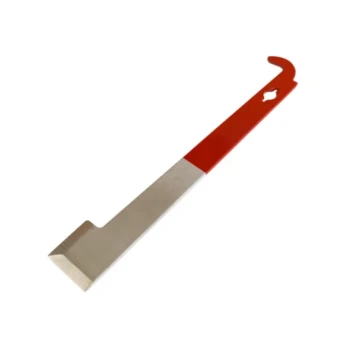
- Stainless Steel J Hook Hive Tool for Beekeeping
- HONESTBEE 15-in-1 Beekeeper Multi-Tool with Hammer and Pliers for Beekeeping
- HONESTBEE Classic Pry Bar Hive Tool with High Visibility Finish for Beekeeping
- Multi-Function Plier-Style Frame Grip Hive Tool
- Stainless Steel Queen Grafting Tool for Beekeeping and Bee Queen Grafting
People Also Ask
- What specific challenges do beekeeping hive tools address during hive maintenance? Essential Solutions for Apiaries
- What is a J-hook hive tool and why is it favored by some beekeepers? Master Gentle Frame Handling
- What are the features of a J-hook hive tool? Effortlessly Lift Frames with Superior Leverage
- What is the purpose of the J-hook hive tool? Effortlessly Lift Frames with Superior Leverage
- How is a J-hook hive tool designed and what is its primary use? Master Effortless Hive Inspections