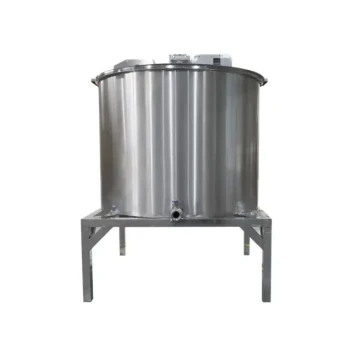
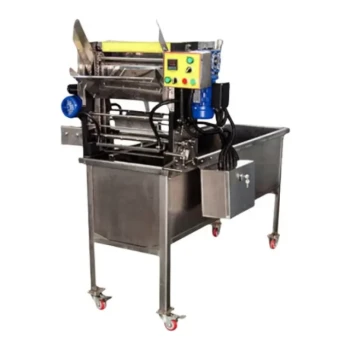
Industrial-grade automatic honey filling machines are the defining factor in transforming beekeeping from a manual craft into a scalable commercial enterprise. By replacing manual labor with precision metering control systems and enclosed filling environments, these machines deliver superior production efficiency and hygiene consistency. This technology enables operators to manage high yields effectively, ensuring that large volumes of honey are converted into revenue without the bottlenecks or inconsistencies inherent in manual processing.
Core Insight: The transition to automated filling is not merely about increasing speed; it is about establishing the technical reliability required for mass market entry. Automation guarantees the weight accuracy, sterile conditions, and standardized presentation that retail supply chains demand—metrics that manual processes cannot consistently achieve at scale.
Precision and Volumetric Control
Achieving Exact Net Weight
In manual operations, fill levels vary by operator and fatigue. Industrial machines utilize precision metering control systems to ensure high-precision quantitative control.
This guarantees that every bottle meets strict industry standards for net weight. It eliminates the financial loss associated with overfilling and the regulatory risks of underfilling.
Minimizing Waste with Anti-Drip Technology
Manual filling often results in spills and drips, which waste product and stick to packaging.
Advanced industrial units employ vacuum anti-drip systems. This technology ensures a clean break after every fill, maintaining a hygienic production line and ensuring every ounce of yield makes it into the bottle.
Hygiene and Product Safety
The Enclosed Filling Environment
A critical advantage of automation is the physical isolation of the product. These machines operate within an enclosed filling environment.
This design effectively separates the open product from the external facility environment. It significantly lowers the risk of airborne particulates or pests affecting the final product.
Preventing Secondary Contamination
Manual filling involves repeated human interaction with the product and container.
Automated lines utilize sterile packaging technology to prevent secondary contamination. By removing direct human contact during the critical filling stage, producers can guarantee a higher standard of hygiene safety that aligns with modern food safety regulations.
Commercial Scalability and Market Access
Breaking the Production Bottleneck
High honeybee populations produce yields that can quickly overwhelm manual packing teams.
Industrial machines provide the superior production efficiency needed to transform high raw production volumes into commercial revenue. They ensure that the speed of packaging matches the speed of extraction.
Transitioning to Retail Supply Chains
Manual filling is often limited to direct, short-chain sales (e.g., farmers markets).
To enter large-scale retail and supermarket supply chains, products must demonstrate absolute consistency. Automation provides the standardized, professional industrial presentation and brand value required to secure and maintain shelf space in major retail outlets.
Understanding the Operational Trade-offs
The Shift from Artisanal to Standardized
Adopting this technology shifts the operational focus from "hand-crafted" variability to "industrial" consistency.
While this reduces human error, it requires a rigid adherence to process. The flexibility to make ad-hoc changes to bottle sizes or fill levels mid-run is reduced compared to manual methods, requiring more disciplined production planning.
Making the Right Choice for Your Goal
To determine if industrial automation is the right step for your operation, consider your immediate business objectives:
- If your primary focus is entering supermarket supply chains: You must automate to ensure the hygiene safety and weight consistency required by strict retail compliance standards.
- If your primary focus is maximizing revenue from high yields: You need automation to resolve the bottleneck between extraction and packaging, ensuring no raw product is left sitting due to labor constraints.
Automation bridges the gap between a high-yield apiary and a reliable, commercial food manufacturer.
Summary Table:
| Feature | Manual Filling Process | Industrial Automatic Filling |
|---|---|---|
| Accuracy | Variable (Human Error) | Precision Metering Control |
| Hygiene | High Contamination Risk | Enclosed Sterile Environment |
| Speed | Slow & Labor Intensive | High-Volume Scalability |
| Waste | Frequent Spills/Drips | Vacuum Anti-Drip Systems |
| Market Fit | Local/Farmers Markets | Retail & Supermarket Chains |
| Consistency | Low Weight/Visual Uniformity | Standardized Brand Presentation |
Scale Your Honey Business with HONESTBEE Precision Equipment
Are you ready to transition from manual bottlenecks to high-volume commercial success? HONESTBEE specializes in empowering commercial apiaries and distributors with the robust machinery needed to dominate the market.
Our comprehensive wholesale offering includes everything from industrial-grade honey-filling machines and hive-making hardware to specialized beekeeping tools and essential industry consumables. By partnering with us, you gain access to technology that ensures the weight accuracy, sterile safety, and professional presentation required by major retail supply chains.
Maximize your yield and secure your shelf space today.
Contact HONESTBEE for a Professional Consultation
References
- Reza Norooz Valashedi, Hadigheh Bahrami Pichaghchi. Investigating the Effect of Climate Indices on the Number of Beehives in the Last Six Climatic Decades. DOI: 10.52547/rap.13.37.187
This article is also based on technical information from HonestBee Knowledge Base .
Related Products
- Fully Automatic Honey Filling Packaging Machine for Processing Line
- Precision Durable Efficient HONESTBEE Rotary Honey Filling Machine
- Automatic Honey Filling and Filtering Machine for Beekeeping Bottle Filling
- Precision Automated Packaging Turntable Honey Spoon Filling Sealing Packing Machine
- Commercial Rotary Honey Filling Machine for Production
People Also Ask
- Why are fully automatic honey filling and packaging lines essential? Boost Your Honey's Market Value and Quality
- What is a fully-automatic honey filler? Streamline Your Production with High-Precision Automation
- How do automated honey filling and packaging machines affect profitability? Boost Margins with HONESTBEE Technology
- How do automated honey filling and packaging machines contribute to the market value of honey products? Maximize Your ROI
- How do industrial-grade automated honey filling and packaging machines mitigate the risk of physical contamination?