The core technical advantages of Improved Box Hives center on their modular, manageable design. Compared to traditional fixed structures, these hives permit non-destructive harvesting, precise routine inspections, and significantly higher yields of high-purity honey, effectively transforming beekeeping from a passive gathering activity into a controlled production industry.
By standardizing the physical environment of the colony, Improved Box Hives transition beekeeping from a high-loss, extractive practice to an active management system that maximizes both economic output and colony sustainability.
Enhancing Production Efficiency
The primary technical leap of the Improved Box Hive is its ability to facilitate active management. Traditional hives often force beekeepers to rely on luck; modern hives allow for optimization.
The Power of Removable Frames
The most significant innovation is the removable frame design. Unlike traditional log or wall hives where combs are fixed to the structure, modern frames allow beekeepers to lift out individual combs.
This enables the extraction of honey without destroying the comb or killing the brood. Because the bees do not have to rebuild the comb after every harvest, they can focus their energy entirely on honey production, leading to higher per-hive output.
Optimized Colony Health
Improved Box Hives replicate natural tree hollows but offer superior climate control. The modular structure helps maintain optimal temperatures, which is critical for brood rearing.
Furthermore, precise management features allow for targeted feeding during nectar dearths. This ensures the colony survives lean seasons and resumes production immediately when floral resources become available.
Revolutionizing Quality Control
Traditional harvesting often involves squeezing or crushing combs, which introduces impurities (wax, brood fluids, ash) into the honey. Improved Box Hives solve this through mechanical segregation.
Achieving Higher Purity
Because the frames are compatible with centrifugal honey extractors, honey is spun out cleanly. This results in a final product with significantly higher purity and clarity.
This technical improvement directly increases the market competitiveness of the product, allowing commercial apiaries to sell at premium standards.
Standardized Operations
The system utilizes standardized foundation molds and operational procedures. This consistency ensures that every harvest meets a baseline quality metric, eliminating the variability found in wild-harvested honey.
Facilitating Inspection and Disease Management
In traditional beekeeping, the internal state of the hive is often a mystery until harvest time. Improved Box Hives make the "black box" transparent.
Non-Destructive Monitoring
Beekeepers can perform daily or weekly inspections to monitor the queen's health, brood patterns, and honey storage levels.
This allows for early detection of diseases or parasites. Intervening before a problem collapses the colony is a key factor in reducing the high loss rates associated with traditional hives.
Safety and Accessibility
Traditional hives are often suspended in high, inaccessible forest areas to attract wild swarms. Improved hives are designed for accessible, ground-level or rooftop management.
This accessibility reduces physical risk to the beekeeper and allows for frequent, low-impact interactions with the colony.
Understanding the Operational Requirements
While the technical advantages are clear, adopting Improved Box Hives requires a shift in mindset and resources. It is not merely a change in equipment, but a change in methodology.
The Necessity of a Support System
The Improved Box Hive is not a standalone object; it is part of a comprehensive technical system. To fully realize its advantages, you need supplementary equipment such as honey extractors, foundation molds, and protective gear.
Without this ecosystem of tools, the efficiency gains of the removable frames cannot be fully utilized.
Ecological and Skill Implications
Traditional methods, such as stripping bark to create hives, can degrade forests. Improved hives protect forest resources by utilizing manufactured materials, but they require a higher level of technical skill to operate.
Success depends on the beekeeper's ability to learn precision management techniques, moving away from the passive "set and forget" approach of traditional methods.
Making the Right Choice for Your Goal
Transitioning to Improved Box Hives is an investment in control and sustainability.
- If your primary focus is Commercial Yield: Leverage the removable frame and extractor system to maximize volume and minimize the time bees spend rebuilding comb.
- If your primary focus is Product Quality: Focus on the non-destructive harvesting capabilities to produce clear, debris-free honey that commands higher market prices.
- If your primary focus is Colony Sustainability: Utilize the inspection capabilities to monitor queen health and prevent disease, drastically reducing colony collapse rates.
Adopting Improved Box Hives turns the unpredictable variable of nature into a managed, scalable, and sustainable asset.
Summary Table:
| Feature | Traditional Hives | Improved Box Hives | Impact on Production |
|---|---|---|---|
| Comb Structure | Fixed (Log/Wall) | Removable Frames | Enables honey extraction without destroying comb. |
| Harvest Method | Destructive (Crushing) | Centrifugal Extraction | Produces high-purity honey and preserves brood. |
| Management | Passive / Minimal | Active / Non-Destructive | Allows for frequent health and queen monitoring. |
| Honey Yield | Low / Variable | High / Consistent | Bees save energy on rebuilding, increasing output. |
| Sustainability | High Colony Loss | Managed Sustainability | Early disease detection prevents colony collapse. |
Transform Your Beekeeping Business with HONESTBEE
Transitioning to Improved Box Hives requires more than just a box—it requires a partner who understands the industrial scale of modern beekeeping. HONESTBEE specializes in supporting commercial apiaries and distributors by providing the full spectrum of professional tools and machinery needed to maximize your investment.
From high-efficiency honey-filling and hive-making machines to our comprehensive range of specialized hardware and consumables, we provide the infrastructure that turns beekeeping into a scalable, high-yield production system. Whether you are scaling up a commercial operation or supplying the industry, our wholesale solutions are designed for your success.
Ready to elevate your production standards? Contact HONESTBEE today for specialized equipment solutions
References
- Workneh Abebe, Ranjitha Puskur. Beekeeping sub sector challenges and constraints in Atsbi Wemberta District of eastern zone, Tigray Region, Ethiopia. DOI: 10.5897/jaerd.9000015
This article is also based on technical information from HonestBee Knowledge Base .
Related Products
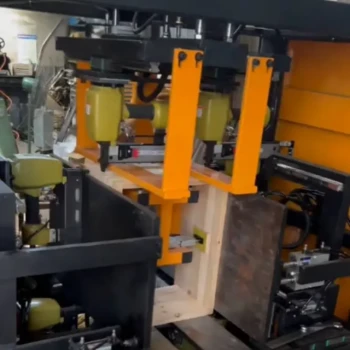
- Automatic High-Speed Bee Hive Box Stapling Machine
- Langstroth Honey Bee Box Hive Boxes for Different Depths
- Portable Bee Mating Hive Boxes Mini Mating Nucs 8 Frames for Queen Rearing
- Australian Langstroth Beehive Boxes for Beekeeping Wholesales
- Plastic Transporting Bee Packages and Nuc Boxes for Beekeeping
People Also Ask
- How is the Bee Box machine adjusted for different box sizes? Maximize Your Woodworking Versatility and Precision
- How is the Bee Box machine operated? Optimize Your Commercial Hive Production with Scalable Staffing Solutions
- How was the Bee Box machine designed? Industrial Engineering for High-Volume Beekeeping Production
- What is the production capacity of the Bee Box machine? Boost Output up to 1,000 Boxes Daily
- What are the power requirements and control system for the Bee Box machine? Optimize Your Apiary Equipment Production