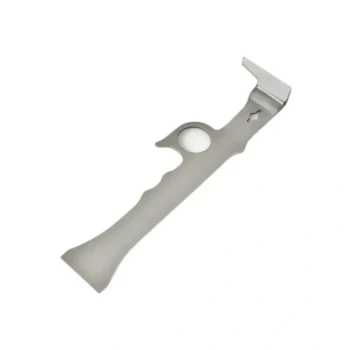
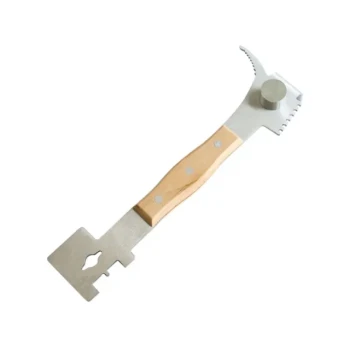
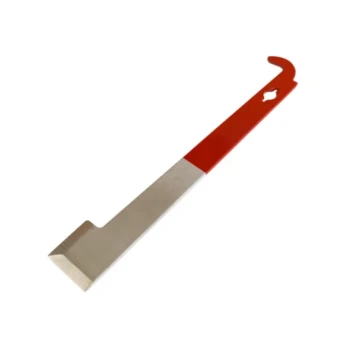
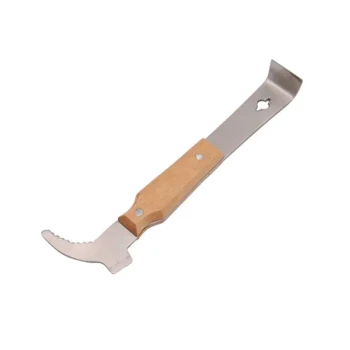
Complete beekeeping tool kits generally reduce total procurement cost and simplify supply management compared with purchasing scrapers, brushes, queen excluders, and related equipment individually. For commercial apiaries and distributors, the main advantages are lower combined pricing, fewer purchase transactions, easier inventory planning, and greater assurance that the tools are compatible and available together.
The central advantage of a complete kit is operational efficiency: it can lower the cost per outfitted beekeeper or technician while reducing the sourcing, stock-control, and fulfillment work required to assemble the same equipment from individual items.
Where Complete Kits Create Cost Advantages
Lower Combined Purchase Price
Suppliers can package multiple beekeeping tools at a lower total price than the same items purchased separately. The savings typically come from consolidated production, packing, handling, and order processing.
For distributors and wholesalers, this can improve the cost base for each resale package and create a clearer margin structure than assembling individual tools into a bundle internally.
Reduced Procurement and Administrative Costs
Buying individual tools often requires multiple product selections, purchase lines, price checks, and supplier confirmations. A complete kit reduces those activities to a more standardized order.
The direct unit price is only part of the calculation. Lower purchasing labor, fewer invoices, and less coordination can make the kit more economical on a fully landed and administered basis.
More Efficient Outfitting of Teams
Commercial apiaries can use complete kits to equip technicians, seasonal workers, or new hive-management teams with a consistent set of essential tools. This avoids repeatedly calculating which individual items each person needs.
A standardized kit also makes replacement planning easier because managers can reorder the same package rather than reconstructing a tool set from memory.
How Kits Improve Supply Management
Fewer Stock-Keeping Units to Manage
A kit can consolidate several individual products into one inventory item or one standard purchasing package. This simplifies forecasting, warehouse organization, and reorder administration.
For a reseller, fewer active purchasing combinations can also make product catalogs easier to manage while preserving a complete solution for customers.
Better Availability of Complete Solutions
Individual procurement creates a risk that one essential item is unavailable while the rest of the order is ready. A complete kit reduces the chance of delivering a partially equipped customer.
This is particularly valuable when rapid fulfillment matters. Distributors can ship a ready-to-use package instead of waiting for missing brushes, scrapers, or other components to arrive.
More Predictable Replenishment
A kit provides a repeatable replenishment unit. Once demand is understood, buyers can forecast how many complete apiary or maintenance kits are needed rather than estimating demand separately for every tool.
This supports more consistent purchasing schedules and can improve communication between suppliers, warehouses, sales teams, and end customers.
Why Compatibility Matters
Tools Arrive as a Coordinated Package
Complete kits are designed to cover a defined task or use case, such as hive inspection, routine maintenance, or starter setup. That gives buyers greater confidence that the package contains the necessary core equipment.
For starter kits that include hive components, compatibility is especially important because frames, boxes, covers, and related parts must fit together correctly.
Consistency Across Apiaries and Customers
Using the same kit across multiple locations reduces variation in the tools issued to staff. This can make training, maintenance procedures, and replacement decisions more consistent.
For distributors, standardized kits also create a more reliable customer experience because buyers receive a known assortment rather than a collection assembled from different product decisions.
Advantages for Distributors and B2B Resellers
A Stronger One-Stop Sourcing Offer
A complete kit allows a distributor to present one practical solution instead of requiring customers to identify every component separately. This supports a one-stop purchasing model for beginners, commercial apiaries, and maintenance teams.
It also aligns with faster quotation and order handling because the supplier can work from established kit configurations.
Easier Product Positioning
Kits can be positioned by use case, such as starter, inspection, or maintenance requirements. This is often easier for customers to understand than a long list of unrelated tool SKUs.
The result can be a simpler sales conversation: identify the customer’s operation and recommend the appropriate package.
Faster Order Fulfillment
Predefined kits are easier to pick, pack, and dispatch than custom combinations assembled order by order. With suitable stock planning, this can support faster response times and more efficient fulfillment.
For wholesale buyers, predictable kit configurations also make it easier to replenish retail or distribution inventory quickly.
Understanding the Trade-offs
A Kit May Include Unneeded Items
Bundling is not automatically cheaper for every buyer. If a customer needs only one replacement tool, purchasing a complete kit may create unnecessary expenditure and excess stock.
The correct comparison is between the kit price and the value of the items the buyer will actually use—not simply between the kit price and the total list price of every included item.
Kit Contents and Quality Must Be Verified
A lower package price should not be evaluated without reviewing the tool specifications, materials, durability, and included quantities. Two kits with similar names may not provide equivalent value.
Distributors should confirm the exact bill of materials, packaging requirements, labeling, and replacement availability before standardizing a kit.
Demand Forecasting Still Matters
Holding too many kits can tie up working capital, especially for seasonal beekeeping demand or slow-moving configurations. Buyers should match kit quantities to customer demand and expected replenishment cycles.
A supplier with responsive customer service and efficient order fulfillment can reduce the need to overstock every possible kit variation.
Individual Purchases Can Be Better for Customization
Purchasing tools separately remains appropriate when an apiary already owns most of the required equipment, needs specialized tools, or wants to select different quality levels for different tasks.
The best procurement model may therefore combine standard kits for common needs with individual items for replacements, upgrades, and specialized requirements.
Making the Right Choice for Your Goal
Complete kits are usually the stronger option when the objective is to equip people or customers efficiently, but the final decision should reflect usage patterns and inventory priorities.
- If your primary focus is reducing total procurement cost: Choose complete kits when several included tools are needed, because the combined package price can be lower than purchasing the same items separately.
- If your primary focus is supply reliability: Use standardized kits to reduce the risk of assembling an order around individually stocked items with uneven availability.
- If your primary focus is distributor efficiency: Prioritize clearly defined starter and maintenance kits that simplify quoting, catalog management, warehousing, and fulfillment.
- If your primary focus is customization or replacement purchasing: Buy individual tools when only one component is required or when customers need specifications outside the standard kit.
- If your primary focus is fast delivery: Work with a supplier that maintains dependable kit availability, provides rapid responses, and can fulfill repeat orders consistently.
For most B2B buyers, complete beekeeping tool kits deliver the greatest value when they are treated as standardized operational solutions rather than merely discounted bundles.
Summary Table:
| Advantage | Cost Impact | Supply Impact |
|---|---|---|
| Lower combined purchase price | Reduced per-unit cost | Easier budget planning |
| Fewer procurement transactions | Lower admin overhead | Less coordination effort |
| Consolidated SKUs | Simplified inventory costing | Reduced stock complexity |
| Complete solution availability | Avoids partial orders | Faster fulfillment readiness |
| Standardized kit configurations | Consistent cost per outfitted team | Predictable reordering |
Ready to streamline your beekeeping supply chain? At HONESTBEE, we offer a comprehensive range of complete tool kits designed for commercial apiaries and distributors, backed by premium trading services, rapid response, and ultra-fast delivery. Whether you need starter kits for new beekeepers or bulk standardization for your team, our one-stop sourcing with OEM/ODM support and full certifications ensures reliable supply and better profit margins.
Contact us today to discuss your bulk requirements and experience the HONESTBEE advantage.
Related Products
- HONESTBEE 15-in-1 Beekeeper Multi-Tool with Hammer and Pliers for Beekeeping
- Stainless Steel J Hook Hive Tool for Beekeeping
- HONESTBEE Advanced Ergonomic Stainless Steel Hive Tool for Beekeeping
- Ergonomic Plastic Frame Spacer Tool for Rapid Hive Management Beekeeping
- HONESTBEE Classic Pry Bar Hive Tool with High Visibility Finish for Beekeeping
People Also Ask
- What is the recommended method for storing beekeeping tools? Expert Vertical Storage Solutions for Your Apiary
- How does a favorable microclimate interact with beekeeping tools? Boost Overwintering Success and Equipment Longevity
- Why is the treatment of beekeeping tools with high-concentration chemical disinfectants necessary for preventing AFB?
- Why design beekeeping tools with ergonomics in mind? Empowering All Beekeepers with Inclusive Equipment
- What role do specialized beekeeping tools play in pest management? Enhance Apiary Health with Precision Tech