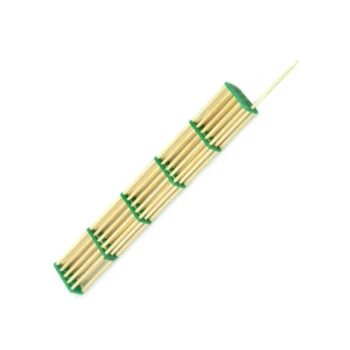
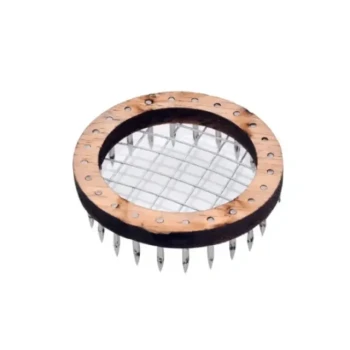
The fundamental design principle of metal wire mesh collection cages is selective physical exclusion based on organism size. These devices rely on a precisely calibrated mesh count—specifically featuring a pore size of approximately 2mm—to act as a mechanical sieve. This barrier is engineered to safely retain honeybees within the cage while allowing detached Varroa mites to pass through for collection and quantification.
The design functions as a passive filtration system that becomes active only when a stimulus causes the parasite to detach. The mesh ensures total physical separation between the host and the parasite without requiring manual sorting.
The Mechanics of Physical Separation
Precise Mesh Calibration
The efficacy of the cage is dictated by the mesh count or pore size. The openings must be large enough to allow Varroa mites to fall through freely but small enough to prevent honeybees from escaping or getting their heads stuck.
The Role of Gravity
Designers orient the mesh to act as a floor or a sieve-lid. Once mites are dislodged from the bees, gravity drives the separation process, pulling the mites through the metal grid and into a lower collection tray.
Stimulus Integration
The cage design assumes the use of a detachment stimulus, such as an anesthetic or the "sugar shake" method. The wire mesh facilitates the exposure of the bees to these agents while maintaining a secure enclosure.
Operational Design Considerations
Host Safety and Containment
The primary structural goal is sequestration. The wire mesh is rigid enough to withstand the weight of the bee cluster and the agitation of shaking, ensuring the bees remain isolated from the chemical or physical debris that falls through.
Efficiency of Retrieval
By using a metal wire construction, the system minimizes surface area where mites could cling. This ensures that the majority of dislodged parasites pass through the screening tool rather than adhering to the cage walls.
Understanding the Trade-offs
Pore Size Sensitivity
There is a critical tolerance in manufacturing the mesh. If the pore size deviates even slightly below 2mm, mites may be retained with the bees, leading to false negatives in sampling data.
Barrier Limitations
While the mesh is effective for separation, it is a physical barrier only. It relies entirely on the effectiveness of the anesthetic or mechanical shaking to dislodge the mites first; the cage itself cannot harvest mites that are still attached to the host.
Making the Right Choice for Your Goal
When selecting or designing a wire mesh collection cage, prioritize the balance between containment and permeability.
- If your primary focus is Sampling Accuracy: Ensure the mesh pore size is verified at approximately 2mm to prevent mites from bridging the gaps or getting trapped.
- If your primary focus is Bee Welfare: Verify that the wire mesh edges are finished smoothly to prevent injury to the bees during the agitation or anesthesia process.
The ultimate value of these cages lies in their ability to turn a complex biological separation problem into a simple mechanical process.
Summary Table:
| Design Principle | Key Feature | Operational Benefit |
|---|---|---|
| Selective Exclusion | 2mm Pore Size | Separates mites from bees without injury |
| Gravity Separation | Sieve-lid/Floor Design | Facilitates passive collection after detachment |
| Structural Integrity | Rigid Metal Mesh | Protects bee cluster during agitation |
| Surface Efficiency | Low-adhesion Metal | Maximizes mite retrieval into collection trays |
Upgrade Your Apiary Operations with HONESTBEE Professional Wholesale Solutions
Looking to optimize your Varroa management or scale your commercial operations? HONESTBEE specializes in serving commercial apiaries and distributors with high-quality, wholesale beekeeping tools and industrial machinery.
Our comprehensive portfolio includes:
- Precision Tools: Advanced screening and sampling equipment for health monitoring.
- Specialized Machinery: Automated hive-making and honey-filling machines to boost efficiency.
- Essential Consumables: A full spectrum of industry-standard supplies and honey-themed cultural merchandise.
Streamline your production and supply chain today. Contact HONESTBEE for a custom wholesale quote and see how our expertise adds value to your beekeeping enterprise.
References
- Jiangli Wu, Shufa Xu. Brain metabolomic profiling of eastern honey bee (Apis cerana) infested with the mite Varroa destructor. DOI: 10.1371/journal.pone.0175573
This article is also based on technical information from HonestBee Knowledge Base .
Related Products
- Professional Bamboo Queen Isolation Cage
- Langstroth Screen Bottom Board for Beekeeping Wholesale
- Wood and Mesh Push-In Queen Cage
- Compact Circular Bee Mite Treatment Dispenser
People Also Ask
- Why are specialized queen bee cages used for the banking of mated queen bees? Maximize Commercial Apiary Storage Efficiency
- What is the mechanism of action for using temporary queen bee cages? Master Successful Queen Introduction
- How does the side ventilation design of a queen bee cage impact the safety of the queen during long-distance transport?
- What should you do if the queen is still in the cage and the worker bees have not accepted her? Protect Your Colony from Queen Rejection
- What technical precaution must be taken regarding the mesh or grill side of a queen bee cage? Ensure Queen Survival