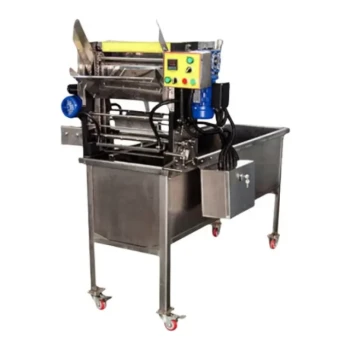
The primary drawback of the conventional honey drying method is significant chemical and sensory degradation caused by excessive heat exposure. By circulating hot water around a drum to heat honey to approximately 65°C (149°F), the process exceeds the thermal safety threshold, leading to a sharp increase in Hydroxymethylfurfural (HMF) and an irreversible alteration of the honey's natural flavor profile.
Conventional drying prioritizes moisture reduction at the expense of quality. While effective at lowering moisture content to 19%, the high operational temperatures compromise the honey's chemical integrity, rendering it closer to a processed sweetener than a raw natural product.
The Mechanism of Thermal Degradation
Excessive Temperature Exposure
The conventional method utilizes a jacketed drum system where honey is continuously stirred and heated.
While the recommended maximum temperature for drying honey to preserve quality is 35°C (95°F), conventional systems often heat the honey to 65°C (149°F).
This 30-degree difference is the root cause of the quality issues associated with this method.
The Spike in HMF Levels
The most measurable chemical drawback is the rapid increase in Hydroxymethylfurfural (HMF).
When honey is heated above the 35°C threshold, HMF content can increase significantly, sometimes by up to 40%.
High HMF is universally recognized in the industry as an indicator of poor quality, overheating, or even adulteration.
Sensory and Quality Impact
Alteration of Flavor and Aroma
Beyond chemical markers, conventional drying negatively impacts the consumer experience.
The elevated temperatures introduce a caramel-like taste to the honey.
While this might sound benign, this artificial flavor profile masks the honey's delicate, natural aromas and distinct floral notes.
Indicators of Lower Quality
In the honey industry, maintaining natural characteristics is paramount.
Ideally, honey should be dried until moisture is at 19% while keeping HMF levels low (around 25%).
Conventional drying fails to balance these metrics, producing honey that meets moisture targets but fails quality markers due to heat stress.
Understanding the Trade-offs
Moisture Reduction vs. Chemical Integrity
The conventional method is designed to solve a specific problem: reducing moisture from an initial 25-30% down to a shelf-stable 19%.
It succeeds in this mechanical task.
However, the trade-off is a degradation of the product's value. You are effectively exchanging shelf stability for chemical purity and flavor authenticity.
Making the Right Choice for Your Goals
If you are evaluating honey processing methods, consider your end-product requirements carefully.
- If your primary focus is Premium Quality: You must avoid conventional heating above 35°C to preserve the natural flavor profile and keep HMF levels low.
- If your primary focus is Standardizing Moisture: Recognize that using conventional drum drying at 65°C will likely result in a product classified as lower quality due to HMF spikes and flavor masking.
True quality honey processing requires moisture reduction methods that respect the thermal sensitivity of the product.
Summary Table:
| Feature | Conventional Drying Method | Recommended Quality Standard |
|---|---|---|
| Operating Temperature | ~65°C (149°F) | Max 35°C (95°F) |
| HMF Levels | High (Up to 40% increase) | Low (Ideally < 25 mg/kg) |
| Flavor Profile | Caramelized/Processed | Natural/Floral Aromas |
| Moisture Goal | 19% | 19% |
| Chemical Integrity | Compromised | Preserved |
Elevate Your Honey Quality with HONESTBEE Professional Solutions
Don't let outdated drying methods compromise your honey's natural integrity and market value. HONESTBEE provides commercial apiaries and distributors with advanced honey-processing machinery and specialized beekeeping tools designed to maintain premium quality.
Whether you need precision honey-filling machines, high-efficiency moisture reduction systems, or durable hive-making equipment, our comprehensive wholesale portfolio has you covered. We empower you to achieve shelf-stable results without sacrificing flavor or chemical purity.
Ready to upgrade your production? Contact us today to discuss how our professional equipment can optimize your facility's efficiency and product value.
Related Products
- 0.5T Capacity Honey Dehumidifier Dryer with Vacuum Heating and Thickening Filtering Machine
- High Quality Honey Dehumidifier Dryer Thickening Machine for Beekeeping
- Economy Small Scale Honey Dryer Dehumidifier Thickening Machine
- Honey Concentrating and Filtering Dehumidifier Machine 2T Capacity for Honey
- Fully Automatic Honey Filling Packaging Machine for Processing Line
People Also Ask
- What is the primary function of professional dehumidification equipment in honey processing? Stability & Quality
- How to dry up honey? The Safe Guide to Stabilizing Honey and Preventing Fermentation
- What is the process for using a dehumidifier to lower honey's moisture content? Expert Drying Techniques
- How to decrease moisture in honey? Prevent Fermentation and Ensure Long-Term Quality
- How to remove humidity from honey? Protect Your Harvest from Fermentation