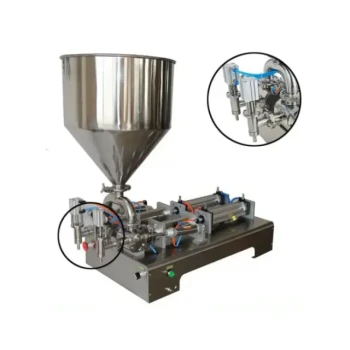
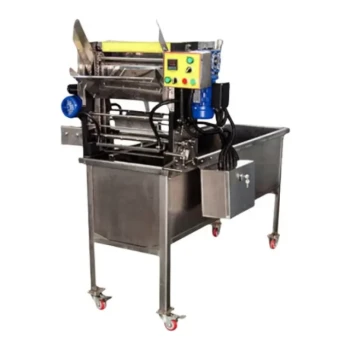
Automated honey filling and post-processing equipment generate economic value by transforming raw agricultural output into high-margin, standardized consumer goods. These systems allow commercial operations to maximize throughput, ensure strict hygiene compliance for export, and significantly lower production costs through economies of scale.
By streamlining the conversion of raw honey into market-ready products, automation allows beekeepers to offset the high labor and management costs associated with maintaining large or difficult apiaries. This shift enables a profitable transition from selling low-value bulk commodities to establishing a premium, scalable brand.
Maximizing Operational Efficiency
Achieving Economies of Scale
The primary economic driver of automated processing is the ability to handle massive volumes of honey rapidly. By mechanizing the filling and packaging workflow, operations can increase their total output without a proportional increase in time or labor. This volume capability lowers the per-unit cost of production, making the business more competitive in the global market.
Offsetting High Management Costs
Commercial beekeeping involves significant overhead, particularly when managing defensive bee populations or extensive pollination contracts. Automated back-end processing reduces the labor burden in the honey house. This efficiency creates a financial buffer, compensating for the increased investment required for field management and colony maintenance.
Precision and Waste Reduction
Industrial-grade filling machines utilize precise volumetric controls to eliminate material waste. Manual filling often leads to overfilling or spillage, which accumulates into significant revenue loss over thousands of units. Automation ensures every container receives the exact specified dosage, maximizing the sellable inventory from every harvest.
Unlocking Market Value and Revenue Streams
Transitioning from Bulk to Brand
Automation facilitates the shift from selling bulk honey—which commands lower prices—to selling branded, retail-ready commodities. Consistent packaging allows producers to capture value-added margins. By controlling the final presentation, beekeeping operations can bypass intermediaries and retain a larger share of the final retail price.
Ensuring Export-Grade Hygiene
Accessing high-end export markets requires strict adherence to food safety standards. Automated lines minimize human contact, reducing the risk of secondary contamination. They also maintain optimal processing conditions to preserve biochemical indicators, such as Hydroxymethylfurfural (HMF) levels. Meeting these rigorous standards is a technical prerequisite for entering lucrative international distribution channels.
Enabling a Dual-Revenue Model
For operations involved in pollination services, honey is often a byproduct. Automated processing turns this byproduct into a reliable second revenue stream. This creates a stable dual-revenue model (pollination fees + value-added product sales), incentivizing the expansion of apiary scale and providing financial stability against crop fluctuations.
Understanding the Trade-offs
Capital Investment vs. Production Volume
While the efficiency gains are substantial, they require a significant upfront capital investment. Beekeepers must ensure their honey production volume is sufficient to justify the depreciation and maintenance costs of industrial machinery. Automation is an economic multiplier for large operations but can be a financial burden for small-scale hobbyists without established distribution channels.
Maintenance and Technical Competence
Introducing complex machinery shifts the operational requirement from pure agricultural knowledge to technical maintenance. The economic benefits can be eroded by downtime if the equipment is not properly maintained. Operators must budget for technical support and spare parts to ensure the processing line remains active during critical harvest windows.
Making the Right Choice for Your Goal
To maximize the return on investment in processing equipment, align your choice with your specific business objective:
- If your primary focus is Volume and Export: Prioritize high-throughput machines with certified hygiene controls to meet international safety standards and reduce unit costs.
- If your primary focus is Brand Building: Focus on equipment with high-precision dosing and versatile packaging capabilities to ensure a premium, consistent shelf appearance.
Automation is not just about speed; it is the strategic lever that turns a beekeeping operation into a sustainable manufacturing business.
Summary Table:
| Economic Driver | Benefit for Commercial Apiaries | Financial Impact |
|---|---|---|
| Economies of Scale | Rapidly processes massive volumes with minimal labor | Lowers per-unit production cost |
| Precision Dosing | Eliminates overfilling and product spillage | Maximizes sellable inventory |
| Market Positioning | Transitions from bulk sales to branded retail | Captures higher value-added margins |
| Hygiene Compliance | Meets export-grade safety and HMF standards | Opens lucrative international markets |
| Operational Buffer | Reduces labor burden in the honey house | Offsets high field management costs |
Transform Your Apiary into a High-Margin Business with HONESTBEE
Transitioning from bulk honey production to a scalable, premium brand requires more than just bees—it requires industrial precision. HONESTBEE empowers commercial apiaries and distributors with the high-performance tools needed to dominate the market.
Why partner with HONESTBEE?
- Full Spectrum Solutions: From high-precision honey-filling and hive-making machines to essential consumables.
- Industry Expertise: We specialize in helping large-scale operations achieve the hygiene standards required for global export.
- Scale & Efficiency: Our machinery is designed to reduce labor costs and eliminate waste, ensuring every drop of honey contributes to your bottom line.
Ready to elevate your production and maximize your ROI? Contact HONESTBEE today for a custom wholesale consultation!
References
- Ernesto Guzmán‐Novoa, José Javier G. Quezada‐Euán. The Process and Outcome of the Africanization of Honey Bees in Mexico: Lessons and Future Directions. DOI: 10.3389/fevo.2020.608091
This article is also based on technical information from HonestBee Knowledge Base .
Related Products
- Fully Automatic Honey Filling Packaging Machine for Processing Line
- Automatic Honey Filling and Filtering Machine for Beekeeping Bottle Filling
- Precision Durable Efficient HONESTBEE Rotary Honey Filling Machine
- Precision Automated Packaging Turntable Honey Spoon Filling Sealing Packing Machine
- Semi Automatic Small Honey Bottle Filling Machine Honey Filler
People Also Ask
- Why are fully automatic honey filling and packaging lines essential? Boost Your Honey's Market Value and Quality
- What is a fully-automatic honey filler? Streamline Your Production with High-Precision Automation
- How do automated honey filling and packaging machines affect profitability? Boost Margins with HONESTBEE Technology
- How do automated honey filling and packaging machines contribute to the market value of honey products? Maximize Your ROI
- How do industrial-grade automated honey filling and packaging machines mitigate the risk of physical contamination?