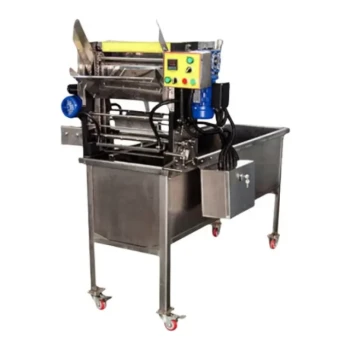
Automated honey filling machines serve as the critical infrastructure for converting bulk honey storage into standardized, retail-ready products. They functionally bridge the gap between raw apiary harvests and consumer shelves by maximizing production efficiency, ensuring rigorous hygiene standards, and delivering precise volume control that manual methods cannot match.
Core Takeaway By replacing manual handling with high-precision fluid control, automated machines eliminate volume variance and contamination risks. This standardization is the absolute prerequisite for honey suppliers to transition from local, short-chain sales to high-volume domestic and international retail markets.
Achieving High-Precision Consistency
Quantitative Volume Control
The primary functional benefit of automation is high-precision quantitative filling. Unlike manual pouring, which is subject to human error, automated machines use fluid control technology to ensure every bottle contains the exact net weight required.
Reduction of Material Loss
Manual filling often results in product waste due to dripping or overfilling. Automated precision filling machines significantly reduce this material loss, maximizing the yield from large-scale annual harvests.
Batch Uniformity
To maintain a professional brand image, consistency is key. These machines ensure that filling levels remain identical across different production batches, providing the standardized appearance expected by consumers and retailers alike.
Ensuring Hygiene and Food Safety
Eliminating Secondary Contamination
Manual handling introduces significant risks of biological or physical contamination. Automated machines operate as closed-loop systems, drastically reducing human contact with the product and preventing "secondary contamination" during the packaging process.
Preserving Product Integrity
By maintaining a sterile, hygienic environment, automated fillers protect the honey's intrinsic qualities. This closed process helps maintain the nutritional integrity and flavor profile of the honey by isolating it from external environmental factors.
Compliance with International Standards
For suppliers aiming for global trade, hygiene is not just a preference; it is a regulatory requirement. High-specification filling equipment is a fundamental tool for meeting strict international food safety standards required for export.
Scaling for Market Competitiveness
Speed and Throughput
Automated machinery is essential for high-volume requirements. It increases the packaging speed of finished goods, allowing suppliers to rapidly convert raw inventory into commercial products during peak harvest seasons.
Enhancing Brand Value
Retail chains require products that look professional and industrial. When combined with automated sealing and labeling, these machines create a polished, "market premium" appearance that increases the product's competitiveness on the shelf.
Logistics and Supply Chain Integration
Automation facilitates the transition from direct, short-chain sales to complex supply chains. By producing airtight, standardized packaging, these machines leverage logistics advantages, making it easier to distribute bee products into the global marketplace.
Understanding the Trade-offs
While the benefits are clear, adopting this technology implies a shift in operational philosophy.
The Shift to Industrialization
Moving to automated filling signifies a departure from "artisan" manual processes. While this boosts efficiency, it requires the adoption of high-specification equipment and professional maintenance protocols to ensure the machinery retains its precision over time.
Standardization vs. Flexibility
Automated lines are optimized for standardization. This creates immense value for mass-market retail but requires a commitment to specific bottle sizes and packaging formats, unlike the high flexibility of manual, small-batch packing.
Making the Right Choice for Your Goal
To determine if automated filling aligns with your current operational maturity, consider your primary business objective:
- If your primary focus is International Export: Prioritize automation to meet rigorous food safety standards and eliminate the risk of contamination during packaging.
- If your primary focus is Mass-Market Retail: Leverage high-precision filling to ensure exact net weights and the standardized visual presentation required by supermarkets.
- If your primary focus is Yield Optimization: Adopt automation to eliminate material loss from dripping and maximize the commercial volume of your harvest.
Ultimately, automated filling is the mechanism that transforms honey from a raw agricultural commodity into a high-value consumer brand.
Summary Table:
| Functional Benefit | Impact on Honey Trade | Key Technology/Mechanism |
|---|---|---|
| Precision Filling | Eliminates product waste and ensures net weight compliance | Fluid control technology & quantitative sensors |
| Hygiene Control | Reduces contamination risks for international food safety standards | Closed-loop systems & minimal human contact |
| Production Speed | Rapidly converts raw harvest into retail-ready products | High-throughput automated conveyor lines |
| Brand Consistency | Delivers a professional, standardized retail appearance | Batch uniformity & integrated labeling systems |
| Yield Optimization | Maximizes profit by reducing dripping and overfilling | Precision nozzle design & anti-drip mechanisms |
Scale Your Apiary Operations with HONESTBEE
Transition from raw harvest to a global consumer brand with HONESTBEE. As a premier partner for commercial apiaries and distributors, we provide the industrial-grade machinery you need to dominate the market. Our comprehensive wholesale offering includes high-precision honey-filling machines, hive-making equipment, and a full spectrum of beekeeping tools and consumables.
Why partner with HONESTBEE?
- Maximize Yield: Reduce material loss with our advanced fluid control technology.
- Global Compliance: Meet rigorous international hygiene standards with our closed-loop systems.
- Market Premium: Enhance your brand value with professional, standardized packaging.
Ready to industrialize your production? Contact us today to explore our wholesale solutions!
References
- Nuray Şahiṅler, Nesibe Özge Toy. 2000 Yıllardan Günümüze Türkiye Arıcılığının Değerlendirilmesi. DOI: 10.24925/turjaf.v10i1.86-91.4644
This article is also based on technical information from HonestBee Knowledge Base .
Related Products
- Fully Automatic Honey Filling Packaging Machine for Processing Line
- Automatic Honey Filling and Filtering Machine for Beekeeping Bottle Filling
- Precision Durable Efficient HONESTBEE Rotary Honey Filling Machine
- Semi Automatic Small Honey Bottle Filling Machine Honey Filler
- Precision Automated Packaging Turntable Honey Spoon Filling Sealing Packing Machine
People Also Ask
- Why are fully automatic honey filling and packaging lines essential? Boost Your Honey's Market Value and Quality
- What is a fully-automatic honey filler? Streamline Your Production with High-Precision Automation
- How do automated honey filling and packaging machines affect profitability? Boost Margins with HONESTBEE Technology
- How do automated honey filling and packaging machines contribute to the market value of honey products? Maximize Your ROI
- How do industrial-grade automated honey filling and packaging machines mitigate the risk of physical contamination?