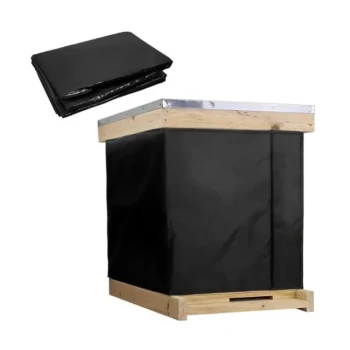
Professional wintering packaging creates a critical thermal barrier that reduces the metabolic energy honeybees must expend to maintain hive warmth, directly preventing starvation. Simultaneously, environmental sensors serve as a diagnostic tool, providing real-time temperature and humidity data that enables beekeepers to execute timely, data-driven interventions.
Winter survival is not just about keeping bees warm; it is about energy conservation and actionable insight. By combining high-resistance insulation with active monitoring, you transform wintering from a passive gamble into a managed process that significantly reduces colony mortality.
The Mechanics of Thermal Protection
Reducing Metabolic Cost
The primary function of professional packaging is thermal resistance. In extreme cold, a bee colony acts as a single organism, consuming honey to generate heat through muscle vibration.
Without insulation, the colony burns through fuel reserves rapidly to fight the cold. Professional packaging slows heat loss, drastically lowering the colony's energy consumption.
Preventing Isolation Starvation
A major cause of winter mortality is not a lack of food, but the inability to access it.
When internal temperatures drop too low, the cluster contracts tightly and cannot break formation to move toward honey stores located just inches away. By retaining heat, packaging maintains a looser cluster, ensuring bees can remain mobile enough to reach their food.
The Strategic Advantage of Sensors
Real-Time Environmental Visibility
Environmental sensors shift management from reactive to proactive. They provide a constant stream of data regarding internal temperature and humidity.
This visibility eliminates the need to physically open the hive, which would break the propolis seal and release critical heat during freezing conditions.
Enabling Data-Driven Adjustments
The true value of sensors lies in actionable intelligence.
Rather than guessing the status of the colony, beekeepers can analyze trends in the data. If humidity spikes or temperature drops unexpectedly, the beekeeper can make precise management adjustments immediately, correcting issues before they become fatal.
Understanding the Trade-offs
Equipment Cost vs. Colony Value
While professional materials and electronics reduce mortality, they represent a significant upfront capital investment.
You must weigh the cost of this equipment against the current market price of replacing a lost colony (nuc or package bees) in the spring.
Interpretation Requirements
Data is only useful if it is understood. Implementing sensors requires the beekeeper to learn how to interpret climate metrics relative to colony health.
Simply having the data does not save the bees; the beekeeper must be prepared to act on the information provided.
Making the Right Choice for Your Goal
To determine the best approach for your apiary, consider your specific operational needs:
- If your primary focus is passive survival: Prioritize high-quality packaging to maximize thermal resistance and minimize the risk of starvation.
- If your primary focus is active management: Invest in environmental sensors to gain the insights required for precise, timely interventions during temperature fluctuations.
By integrating thermal efficiency with digital monitoring, you secure the highest probability of a thriving colony come spring.
Summary Table:
| Mechanism | Core Function | Key Benefit to Colony |
|---|---|---|
| Thermal Packaging | High-resistance insulation | Lowers metabolic energy cost and prevents isolation starvation. |
| Climate Sensors | Real-time monitoring | Provides actionable data on temperature and humidity without opening the hive. |
| Cluster Management | Heat retention | Maintains cluster mobility, ensuring bees can reach honey stores. |
| Data Analytics | Trend monitoring | Enables proactive interventions to correct lethal humidity or temperature shifts. |
Secure Your Apiary’s Future with HONESTBEE
Don't leave your colony’s survival to chance this winter. HONESTBEE provides commercial apiaries and distributors with the professional-grade tools needed to minimize losses and maximize spring productivity. From high-performance wintering insulation to advanced hive-making machinery and honey-processing equipment, our comprehensive wholesale portfolio is designed to scale your success.
Our Value to You:
- For Commercial Apiaries: Industrial-strength tools and consumables that protect your bottom line.
- For Distributors: A reliable supply of market-leading beekeeping hardware and honey-themed merchandise.
Ready to upgrade your overwintering strategy? Contact HONESTBEE today for a wholesale consultation and ensure your hives thrive year-round.
References
- Alperen Varalan, Mustafa Bahadır ÇEVRİMLİ. Arıcılık sektöründeki risk faktörlerinin incelenmesi. DOI: 10.33188/vetheder.1246102
This article is also based on technical information from HonestBee Knowledge Base .
Related Products
People Also Ask
- What are the steps to properly wrap a beehive for winter? Ensure Your Colony Survives the Cold
- When is the best time to wrap a beehive for winter? A Guide to Perfect Winterization Timing
- How do professional insulation wraps provide protection for bee colonies? Optimize Winter Survival & Energy Efficiency
- What are the technical benefits of using winter wraps for beehive insulation? Boost Colony Survival & Hive Health
- What are the benefits of using insulated covers for hives? Ensure Colony Survival and Health