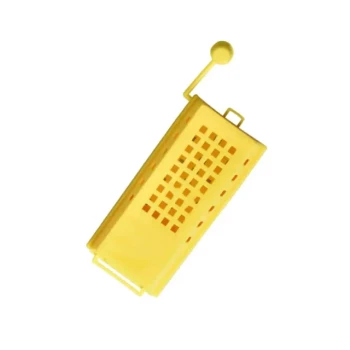
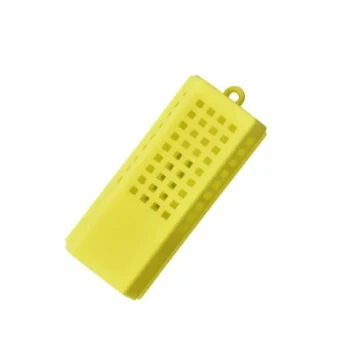
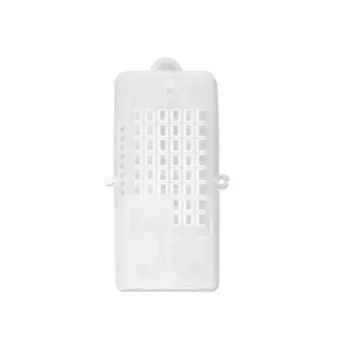
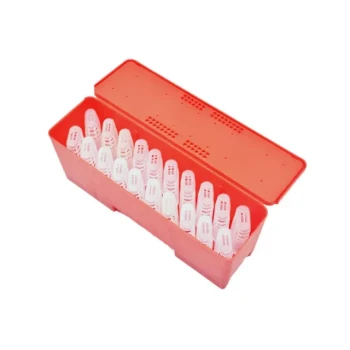
Queen cage candy is a critical dual-purpose tool used in apiculture to ensure the survival and acceptance of a queen bee. Its primary function is to serve as the sole food source for the queen and her attendants during transport, while its secondary function is to act as a time-release mechanism that facilitates her safe introduction into a new colony.
Core Takeaway: Queen cage candy bridges the gap between transport and acceptance; it sustains the queen physically during shipment and protects her socially during introduction by forcing a necessary delay for pheromone acclimation.
Sustaining Life During Shipment
Nutritional Support for the Queen
During transit, the queen is removed from the resources of a hive. The candy provides the essential food source required for her survival.
Supporting the Attendants
The queen is rarely shipped alone; she is accompanied by "attendant" worker bees. The candy also sustains these attendants, who are responsible for feeding and grooming the queen during the journey.
Facilitating Safe Colony Introduction
The Mechanical Timer
Once placed in a hive, the candy acts as a physical barrier blocking the exit of the cage.
Worker bees from the colony chew through this candy plug from the outside, while the confined bees eat from the inside. This process is intentionally slow, typically taking two to three days to complete.
Pheromone Acclimation
The delay created by the candy is the key to acceptance. It forces the colony to interact with the queen's scent before they can make physical contact.
During this chewing period, the colony becomes accustomed to the new queen's pheromones. Without this delay, the colony would likely view the new queen as an intruder and attack (or "ball") her immediately.
The Composition of the Candy
Ingredients and Consistency
The candy is not merely hardened sugar; it is a specific mixture designed for stability and edibility.
It is typically made from a blend of liquid inverted sugar (such as nulomoline) and a dried sugar (like powdered sugar or drivert).
Structural Integrity
This mixture allows the candy to remain solid enough to stay in the release tube during shipping without melting. However, it remains soft enough for the bees to consume it efficiently when the time is right.
Understanding the Trade-offs
Risks of Incorrect Consistency
The physical consistency of the candy is a critical variable. If the mixture is too soft, bees may chew through it too quickly, releasing the queen before the colony has accepted her pheromones.
This premature release is a common cause of queen rejection and mortality.
The Danger of Hardening
Conversely, if the candy is too hard or dry, the workers may be unable to chew through it at all.
This results in the queen remaining trapped in the cage, requiring the beekeeper to intervene manually to prevent her starvation or isolation.
Making the Right Choice for Your Goal
To effectively utilize queen cage candy, consider your primary objective:
- If your primary focus is Shipping: Ensure the candy is formulated with the correct liquid-to-solid sugar ratio to prevent it from running or drying out during transit.
- If your primary focus is Colony Introduction: Rely on the candy as a "hands-off" timer, allowing the full 2-3 day consumption process to occur naturally to maximize acceptance rates.
By respecting the time required for the bees to consume the candy, you allow biology to do the work of securing the queen's safety.
Summary Table:
| Function | Primary Purpose | How It Works |
|---|---|---|
| Nutritional Support | Survival during transit | Provides an essential food source for the queen and her attendants. |
| Mechanical Timer | Controlled release | Acts as a physical barrier that takes bees 2-3 days to chew through. |
| Pheromone Acclimation | Hive acceptance | Delays contact until the colony is familiar with the new queen's scent. |
| Stability & Flow | Shipping safety | Specially formulated to remain solid during transport without melting. |
Maximize Your Apiary Productivity with HONESTBEE
Ensure your queen bees thrive with high-quality supplies from HONESTBEE. As a premier partner for commercial apiaries and global distributors, we provide a complete wholesale range of beekeeping tools, specialized machinery, and essential consumables.
Whether you need specialized hive-making machines to expand your operation or honey-filling equipment to streamline production, our portfolio is designed to enhance your efficiency and scale.
Ready to elevate your beekeeping business?
Contact us today to explore our wholesale solutions and see how our industry-leading equipment can drive your success.
Related Products
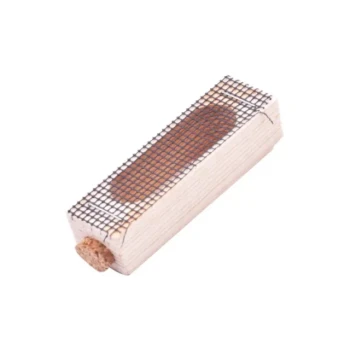
- Classic Wooden and Mesh California Queen Cage
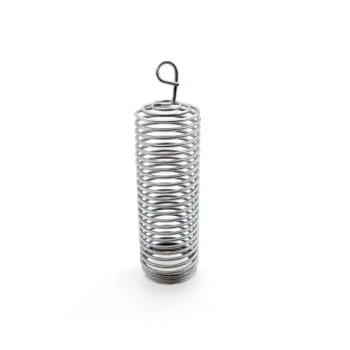
- Durable Galvanized Steel Spring Queen Bee Cage
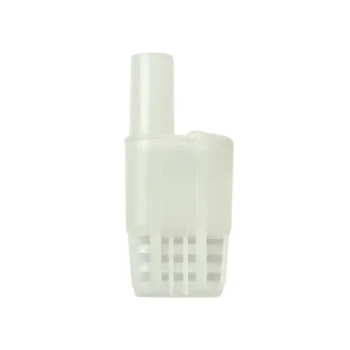
- Multi-Function Queen Roller Cage and Catcher
- Wood and Mesh Push-In Queen Cage
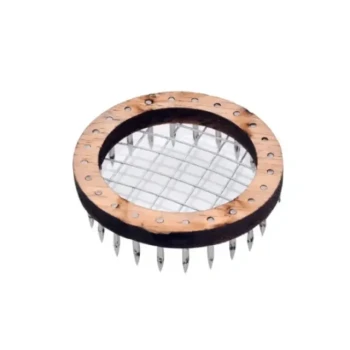
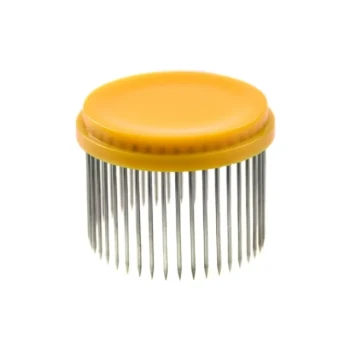
- Professional Round Push-In Queen Cage with Metal Tines
People Also Ask
- How are queen cages used to protect newly hatched queens? Secure Your Virgin Queens During Development
- Why are queen cages or grid cages used in bee studies? Achieve Precise Biological Data for Research
- Why are professional queen cages necessary for queen replacement? Secure Your Apiary’s Future
- What should be done if bees damage the queen cage? Secure Your Queen with These Emergency Intervention Steps
- What is the correct procedure for installing a queen cage into a new hive? A Pro Guide for Colony Success