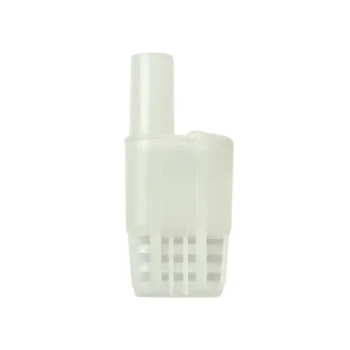
In the context of commercial honeybee trading, Queen Cages serve a dual purpose as both secure containment vessels and active biological lures. They are primarily utilized to isolate and display the queen bee for inspection while simultaneously leveraging her natural pheromones to attract loose worker bees. This allows traders to prevent the queen's escape while rapidly assembling or reinforcing new bee colonies directly within the market environment.
The Queen Cage functions as a biological magnet in trade settings; by securing the queen while allowing her scent to disperse, traders can effectively organize scattered worker bees into cohesive new colonies.
Operational Functions in the Market
Secure Isolation and Display
The fundamental application of the Queen Cage is the physical containment of the queen bee. In a busy market environment, the cage prevents the high-value queen from escaping or flying off. This isolation allows traders and buyers to visually inspect the queen's health and quality without the risk of losing her.
Facilitating Hive Integration
The cage is often positioned within or near empty hives to establish a focal point for a new colony. To enhance acceptance and attraction, these empty hives are frequently treated with aromatic plants. The cage acts as the anchor, signaling to bees that the hive is occupied and viable.
Leveraging Biological Principles for Colony Management
The Pheromone Attractor Mechanism
While the cage restricts the queen's movement, it is designed to be permeable to air and scent. This allows the queen to release pheromones into the surrounding environment. These chemical signals act as a powerful beacon to worker bees.
Gathering Scattered Workers
In trading markets, "scattered" worker bees—those displaced or without a colony—are common. The pheromones released from the Queen Cage attract these loose bees to the specific location of the cage. This biological mechanism allows traders to collect free-floating resources and bind them to a specific hive.
Rapid Colony Assembly and Reinforcement
By combining the caged queen with an attractant-treated hive, traders can rapidly assemble a new bee colony from scratch. This process is also used to reinforce existing but weak colonies by drawing in additional workforce numbers quickly.
Understanding the Constraints
Reliance on Pheromone Potency
The success of using a Queen Cage to assemble a colony depends heavily on the queen's biological signals. If a queen is weak or not producing strong pheromones, the cage alone will fail to attract sufficient worker bees to form a viable cluster.
Environmental Competition
In a market with multiple traders and many queens, pheromone signals can overlap. The effectiveness of a single cage may be diluted if it is placed too close to other strong colonies or competing cages, potentially leading to confusion among the scattered worker bees.
Strategies for Market Implementation
To maximize the utility of Queen Cages in a commercial setting, consider your immediate objective:
- If your primary focus is Display and Sale: Prioritize cages that offer high visibility for inspection while ensuring secure locking mechanisms to prevent financial loss through escape.
- If your primary focus is Colony Assembly: Ensure the cage is placed within a hive treated with aromatic plants to maximize the attractiveness of the environment for scattered workers.
By strategically utilizing the Queen Cage, you convert a simple containment tool into a sophisticated device for biological organization and colony management.
Summary Table:
| Application | Primary Function | Market Benefit |
|---|---|---|
| Secure Isolation | Physical containment & protection | Facilitates safe inspection and prevents loss of high-value queens |
| Pheromone Lure | Scent dispersal through cage mesh | Attracts scattered worker bees to form cohesive new colonies |
| Colony Assembly | Anchoring workers to new hives | Enables rapid reinforcement of weak hives or building new units |
| Hive Integration | Biological signaling focal point | Increases acceptance rates when used with aromatic attractants |
Scale Your Apiary Operations with HONESTBEE
At HONESTBEE, we specialize in empowering commercial apiaries and global distributors with the professional-grade tools required for success. Whether you are assembling new colonies or managing high-volume honey production, our comprehensive wholesale portfolio has you covered.
Our value to your business includes:
- Complete Hardware Solutions: From high-visibility, secure Queen Cages to advanced hive-making and honey-filling machinery.
- Full Spectrum Supplies: A wide array of essential industry consumables and specialized beekeeping tools.
- Market Growth: Expand your reach with our unique honey-themed cultural merchandise.
Ready to enhance your efficiency and strengthen your colonies? Contact us today to discover how HONESTBEE’s premium equipment can streamline your commercial trade.
References
- Teweldemedhn Gebretinsae, Yayneshet Tesfay. Honeybee Colony Marketing Practices In Werieleke District Of The Tigray Region, Ethiopia. DOI: 10.1080/0005772x.2014.11417590
This article is also based on technical information from HonestBee Knowledge Base .
Related Products
- Durable Galvanized Steel Spring Queen Bee Cage
- Professional Queen Cage with Sliding Gate and Feeder Plug
- Classic Wooden and Mesh California Queen Cage
- Professional Queen Bee Introduction and Transport Cage
- Professional Multi-Functional Queen Bee Cage
People Also Ask
- Why are specialized queen bee cages used for the banking of mated queen bees? Maximize Commercial Apiary Storage Efficiency
- What is the mechanism of action for using temporary queen bee cages? Master Successful Queen Introduction
- What is the step-by-step process for installing a queen bee's cage onto a frame? Ensure Hive Acceptance Safely
- What is the optimal placement for a queen bee cage? Essential Strategies for Successful Re-queening
- What are the advantages and disadvantages of introducing a queen bee by embedding the cage? Boost Your Queen Acceptance