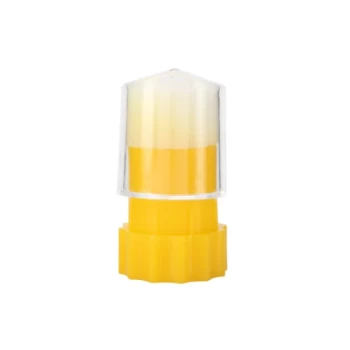
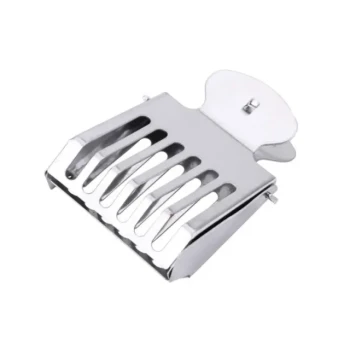
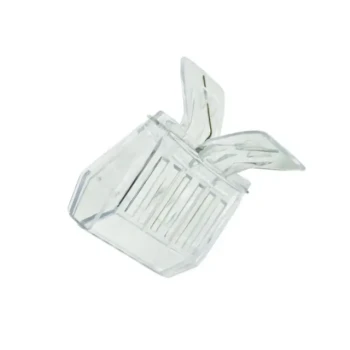
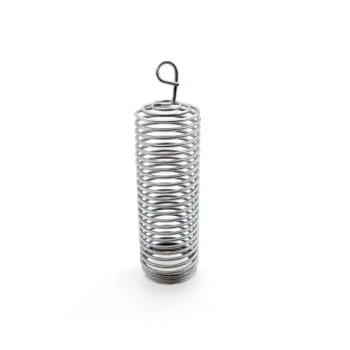
Marking a queen requires a distinct adjustment in handling precision compared to a drone. While the fundamental mechanics are similar, the queen's anatomy and social role dictate a more cautious approach. Specifically, her thinner body requires different positioning within a marking cage, and her chemical signals can trigger a defensive response from the colony that is not present when handling drones.
The transition from marking drones to queens is not just about a change in target, but a shift in risk management. You must account for the queen's slimmer profile by adjusting cage depth without increasing physical pressure, while simultaneously monitoring the colony for alarm pheromone reactions.
Anatomical Adjustments for Safe Restraint
Adjusting for Body Thickness
The most immediate physical difference you will notice is that queens have a less thick body than drones.
If you use a marking cage, the depth setting that successfully restrained a drone will likely be too shallow for a queen.
You must be prepared to push the marking cage slightly deeper into the comb to hold her securely.
The Pressure Paradox
Despite needing to position the cage deeper, you must strictly avoid applying more pressure to the queen herself.
The goal is to reduce the space available to her, not to compress her body.
Maintain the same delicate tactile feedback you practiced with drones to ensure she is immobile but uninjured.
Managing Colony Reaction and Pheromones
The Retinue Response
Unlike a drone, a queen is constantly surrounded by a retinue of attendant bees.
These bees are biologically tuned to the queen's status and will react immediately to changes in her behavior.
Alarm Pheromones and Visibility
If the queen becomes stressed during the capture, she may release alarm pheromones.
This chemical signal can cause the attendant bees to aggressively swarm the marking cage.
This reaction is problematic because the mass of bees can obscure your view, making it unsafe to attempt applying the paint.
Understanding the Trade-offs
Risk vs. Visibility
Pressing the cage deeper secures the smaller queen but inherently risks damaging the comb structure beneath her.
Conversely, insufficient depth leaves the queen too mobile, which can result in smeared paint or paint entering her spiracles (breathing tubes).
You must find the exact "sweet spot" where the cage restricts movement without crushing the comb or the queen.
Persistence vs. Safety
When attendants swarm the cage due to pheromones, the instinct is often to brush them away and hurry the process.
This is a critical error.
If your view is obscured by reacting bees, the only safe technical decision is to stop and try again another time. Forcing the issue increases the likelihood of injuring the colony's most vital member.
Making the Right Choice for Your Goal
Success depends on balancing your physical technique with situational awareness of the colony's behavior.
- If your primary focus is technique acquisition: Practice exclusively on drones first to master the "touch" required to hold a bee still without crushing it.
- If your primary focus is queen safety: Abort the marking attempt immediately if the retinue swarms the cage; visibility is the single most important factor in avoiding injury.
Master the physical adjustments regarding cage depth first, but let the colony's behavioral reaction dictate the pace of the operation.
Summary Table:
| Feature | Marking a Drone | Marking a Queen |
|---|---|---|
| Body Thickness | Thicker profile; easier to restrain. | Slimmer profile; requires deeper cage positioning. |
| Colony Reaction | Minimal to no reaction from other bees. | High risk of retinue swarming and alarm pheromones. |
| Handling Pressure | Standard tactile pressure. | Delicate; reduce space without increasing compression. |
| Visibility Risk | High visibility is easy to maintain. | Attendants may obscure view; requires high caution. |
| Strategic Priority | Technique practice and mastery. | Maximum safety and risk management. |
Elevate Your Apiary Management with HONESTBEE
Transitioning from basic hive maintenance to precision queen management requires the right tools and expertise. At HONESTBEE, we specialize in supporting commercial apiaries and distributors with a comprehensive range of professional-grade beekeeping equipment. From high-precision queen marking tools to automated honey-filling machines and specialized hive-making hardware, our wholesale portfolio is designed to enhance your operational efficiency.
Whether you are scaling your commercial production or supplying the next generation of beekeepers, we provide the essential consumables and machinery you need to succeed. Contact us today to explore our full wholesale catalog and see how our premium tools can safeguard your colony's most vital members.
Related Products
- Queen Bee Marking Pen POSCA Queen Marking Pens for Beekeeping Bee Markers
- Plastic Long Marker Device for Catching and Marking Bees Queen Bee Marking Tube and Cage
- Queen Bee Marking Tube Cage Bottle Catcher Holder with Clear Plastic Plunger Marker
- Queen Bee Marking Pen UNI Medium Point for Queen and Bee Marking
- Queen Bee Catcher Plastic Bee Marker Bottle with Piston Marking Tube
People Also Ask
- What role do specialized marking pens and color-coding systems play in honeybee tracking? Enhance Research Precision
- Why are specialized marking pens used for stingless bee queens? Essential Tools for Large-Scale Breeding Success
- How should a new paint pen be primed before marking a queen bee? Essential Tips for Safe & Clear Markings
- How should a queen bee marking pen tip be properly primed? Master the Art of Safe Queen Marking
- What specifications are required for a high-quality queen bee marking pen? Ensure Safety and Precision for Your Colony