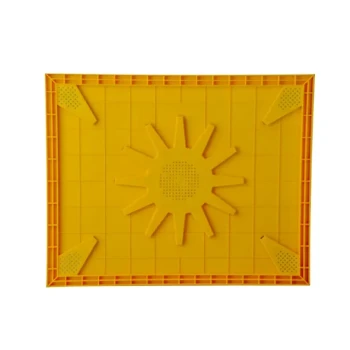
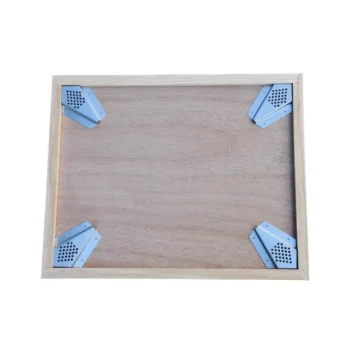
Monitoring tools provide technical assurance by converting vague observations into precise data. By utilizing devices like mite detection boards to track natural mite fall or diagnostic fluids to check infestation rates, beekeepers can quantitatively evaluate infection levels before and after treatment to ensure control measures are effective.
The primary function of these tools is to act as an early warning system against management failure. They allow you to identify when infestation rates remain above critical thresholds—specifically 1 percent post-treatment—enabling immediate remedial action before winter arrives.
The Mechanics of Quantitative Evaluation
Establishing a Data Baseline
To prevent management failure, you must first move beyond guesswork. Monitoring tools, such as sticky boards placed on the bottom board of a hive, allow for the collection and counting of naturally falling mites.
Continuous Assessment
By calculating the average daily mite drop, you can evaluate the severity of the parasite infestation without disturbing the colony. This provides a clear, quantitative picture of the hive's health status prior to applying any chemical controls.
Using Diagnostic Fluids
In addition to boards, utilizing diagnostic fluids helps determine the exact infestation rate. This dual approach ensures your management strategy is based on current, accurate infection metrics rather than assumptions.
Preventing Failure Through Verification
Post-Treatment Validation
The most critical function of these tools is validating the success of a treatment cycle. You must measure infestation levels before and after the treatment period to calculate efficacy.
Identifying Resistance and Failure
A treatment is considered a failure if the infestation rate remains above 1 percent after the cycle concludes. Identifying this specific data point immediately signals that the current chemical or method was ineffective, potentially due to mite resistance.
Enabling Remedial Action
Early identification of failure allows for remedial chemical rotations. By catching the failure early, you can switch to a targeted management strategy or a different active ingredient to suppress the mite population before the critical winter season.
Understanding the Trade-offs
Monitoring vs. Treatment
It is vital to distinguish between monitoring and control. While screened bottom boards offer some physical prevention by allowing detached mites to fall out of the hive, their primary utility in this context is assessment, not eradication.
The Limits of Physical Exclusion
Screened boards prevent parasites from re-entering and attaching to adult bees, but they cannot replace chemical treatments for high infestation levels. Relying solely on physical drop counts without diagnostic verification can lead to underestimating the severity of the infestation.
Making the Right Choice for Your Goal
To effectively prevent Varroa management failure, align your usage of these tools with your specific objectives:
- If your primary focus is verifying treatment success: Measure infestation rates immediately after your treatment cycle; if the rate exceeds 1 percent, initiate a chemical rotation immediately.
- If your primary focus is low-disturbance monitoring: Use sticky boards to calculate average daily mite drops, allowing you to track trends without opening the hive.
The difference between a surviving colony and a collapsed one often lies in the data you collect effectively.
Summary Table:
| Monitoring Tool | Primary Function | Key Metric | Best Use Case |
|---|---|---|---|
| Sticky Boards | Quantitative Evaluation | Average Daily Mite Drop | Low-disturbance trend tracking |
| Diagnostic Fluids | Precise Infestation Check | Exact % Infestation Rate | Verifying treatment efficacy |
| Screened Bottoms | Physical Exclusion | Natural Mite Fall | Supplemental mite population control |
| Treatment Validation | Success Verification | < 1% Threshold | Identifying resistance & remedial action |
Secure Your Colony's Survival with HONESTBEE
Don't let Varroa mite resistance compromise your commercial apiary operations. At HONESTBEE, we empower commercial beekeepers and distributors with the technical tools and heavy-duty machinery needed to scale hive health management.
Our comprehensive wholesale portfolio includes everything from high-precision mite detection boards and specialized hive-making machines to advanced honey-filling equipment and essential apiary consumables. Whether you are looking to optimize your treatment validation process or expand your distribution of professional beekeeping gear, we provide the industrial-grade solutions you need to succeed.
Ready to scale your production and protect your hives? Contact us today to explore our full wholesale catalog
References
- Agostina Giacobino, Marcelo Signorini. Risk factors associated with failures of Varroa treatments in honey bee colonies without broodless period. DOI: 10.1007/s13592-015-0347-0
This article is also based on technical information from HonestBee Knowledge Base .
Related Products
- Langstroth Screen Bottom Board for Beekeeping Wholesale
- Varroa Easy Check Mite Tester Kit Counter Alcohol Wash Jar
- Australian Pine Wood Langstroth Screen Bottom Board for Wholesale
- HONESTBEE Wooden Bee Escape Board with Triangle Mesh Design for Beekeeping
- HONESTBEE Multi Exit Plastic Bee Escape Board for Efficient Honey Harvesting
People Also Ask
- What is the primary function of a screen bottom board? Achieve Accurate Varroa Mite Assessment in Your Apiary
- What is the primary function of a standard screen bottom board when assessing honeybee grooming behavior? - Key Mite Data
- What role do screen bottom boards and monitoring inserts play in assessing Varroa mite mortality and maintaining hive hygiene in Langstroth hives?
- Why is the combination of a screen bottom board and a sticky trap board essential for monitoring Varroa mite? Guide
- Why might a screen bottom board be less effective for pest control? Understanding the 'Mixed Sunlight' Complication