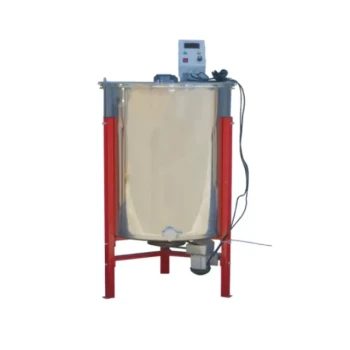
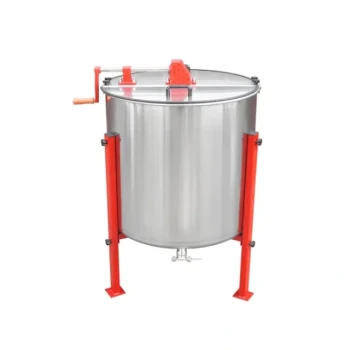
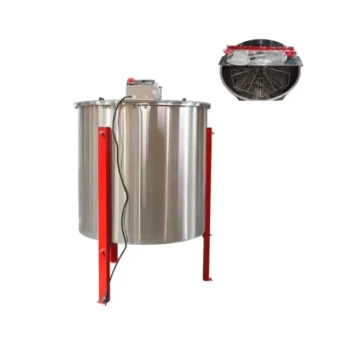
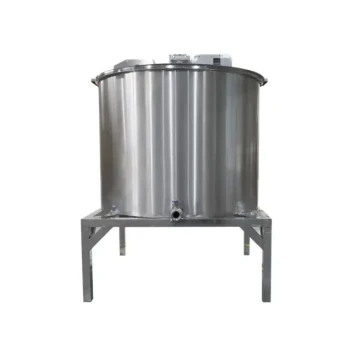
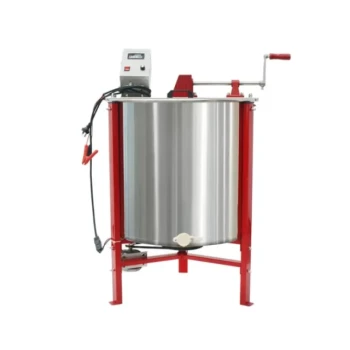
Honey extraction via centrifuge is a mechanical method used to separate liquid honey from wax combs without destroying the frame's structure. The process consists of five distinct stages: removing capped frames from the hive, uncapping the cells with a heated knife or fork, placing the frames into the extractor, spinning them at a controlled speed to fling the honey out, and finally returning the intact frames to the hive for reuse.
Core Takeaway While the centrifuge offers speed, its true value lies in resource management. By preserving the drawn wax comb rather than crushing it, you allow the bee colony to reuse the structure immediately, saving them the immense energy required to secrete new wax.
Phase 1: Preparation and Uncapping
Selecting the Frames
Begin by opening the beehive to identify frames ready for harvest.
You must remove only the frames that contain capped honeycombs. The wax capping indicates the bees have reduced the moisture content to the correct level for long-term storage.
Breaking the Seal
Before the centrifuge can work, the honey cells must be opened.
Use a heated uncapping knife or a specialized uncapping fork to slice or scratch off the thin layer of wax sealing the honeycomb. This exposes the liquid honey, allowing centrifugal force to act upon it.
Phase 2: The Extraction Process
Loading the Machine
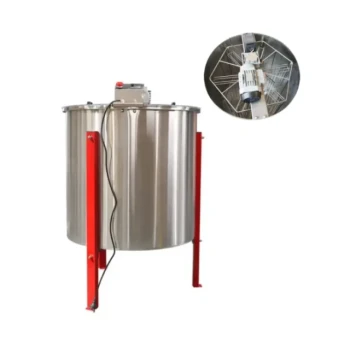
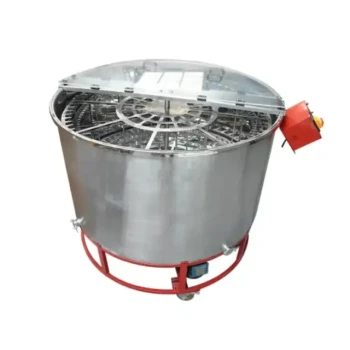
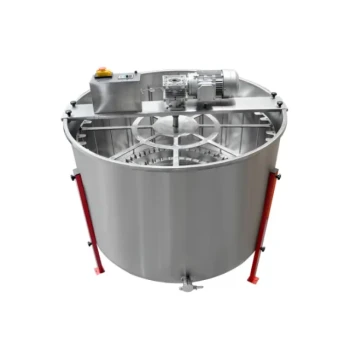
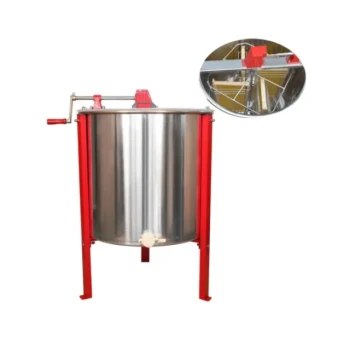
Place the uncapped frames into the basket of the honey extractor.
It is critical to balance the load within the drum. Ensure frames of similar weight are placed opposite one another to prevent the machine from wobbling violently during the spin cycle.
Spinning the Frames
Activate the extractor, whether by turning a hand crank or engaging a motor.
The machine spins the frames at a suitable speed to generate centrifugal force. This force pulls the honey out of the open cells and flings it against the inner wall of the extractor, where it drips down to the bottom.
Collecting the Honey
Once the frames are spun dry, open the honey gate (valve) located at the bottom of the extractor.
Allow the honey to flow into a collection bucket. It is standard practice to let this flow through a strainer or sieve to catch any stray bits of wax capping or debris before bottling.
Phase 3: Post-Extraction Recovery
Returning the Frames
Remove the empty frames from the extractor.
Take these frames back to the hive immediately. Because the wax structure is still intact, the bees can clean them up and begin refilling them with nectar almost immediately.
Sanitation and Maintenance
After the harvest is complete, the extractor must be thoroughly cleaned.
Wash the machine to remove residual honey and wax. Proper sanitation is essential to prevent the spread of hive diseases and to ensure your equipment remains in working order for the next season.
Understanding the Trade-offs
Initial Investment vs. Long-Term Gain
Centrifugal extraction requires a higher upfront cost compared to simple "crush and strain" methods. You must purchase or rent the extractor, uncapping tools, and filters. However, this cost is often offset by the increased honey yield and the time saved during harvest.
The Risk of Comb Damage
While the goal is to save the wax, improper technique can still destroy it. If the extractor is spun too fast, or if the wax is soft and warm, the centrifugal force can "blow out" the comb, detaching it from the frame. Operators must monitor speed carefully to balance extraction power with comb preservation.
Making the Right Choice for Your Goal
- If your primary focus is maximize harvest speed: Ensure you use a heated uncapping knife rather than a fork, as this creates a cleaner cut that drains faster during the spin.
- If your primary focus is colony health and sustainability: Prioritize gentle spinning speeds to ensure the drawn comb remains perfectly intact, minimizing the work required for the bees to rebuild.
The most successful extraction is one that yields clean honey while returning the wax infrastructure to the bees in pristine condition.
Summary Table:
| Stage | Action | Key Tool | Benefit |
|---|---|---|---|
| Phase 1 | Uncapping | Heated Knife/Fork | Opens cells while preserving the wax structure. |
| Phase 2 | Loading | Centrifuge Extractor | Ensures balanced rotation to prevent machine damage. |
| Phase 3 | Spinning | Manual/Electric Motor | Uses centrifugal force to extract honey without crushing. |
| Phase 4 | Filtering | Sieve/Strainer | Removes wax debris for clean, high-quality honey. |
| Phase 5 | Recovery | Clean & Return | Saves bee energy by reusing intact honeycomb frames. |
Scale Your Honey Production with HONESTBEE
Maximize your apiary's output and efficiency with professional-grade equipment. At HONESTBEE, we specialize in supporting commercial apiaries and distributors with a full spectrum of wholesale beekeeping solutions.
Whether you need precision honey-filling machines, high-capacity centrifuge extractors, or specialized hive-making machinery, we provide the durable hardware and essential consumables your business demands.
Partner with us to streamline your harvest and grow your brand.
Contact HONESTBEE Today for Wholesale Inquiries
Related Products
- electric honey extractor honey centrifuge 3 frame honey extractor stainless steel honey frame extractor
- Manual Hand Crank 4 Frame Honey Extractor Centrifuge for Beekeeping
- Professional 4 Frame Self Reversing Electric Honey Extractor for Beekeeping
- 24 Frame Honey Extractor Commercial Radial Honey Frame Extraction Machine
- Electric 4 Frame Tangential Honey Extractor
People Also Ask
- What are the characteristics of electric honey extractors? Boost Your Apiary Efficiency with Automated Technology
- What are the disadvantages of using an electric honey extractor? Weighing Cost, Power, and Comb Safety
- What are the advantages of an electric honey extractor? Boost Efficiency and Scale Your Honey Production
- What are the technical advantages of electric honey extractors? Maximize Yield and Protect Your Bee Colony
- How does an electric honey extractor affect the quality of honey? Preserve Flavor & Purity with Precision Extraction