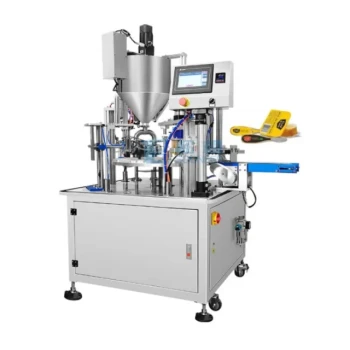
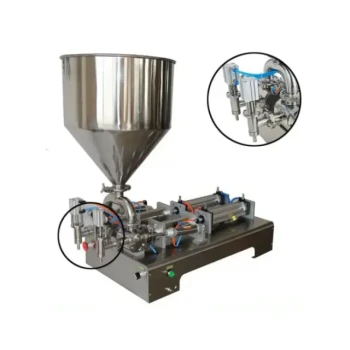
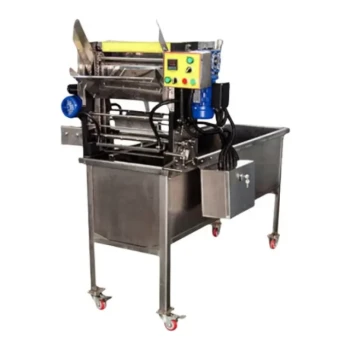
Automated honey-filling machines function as the critical bridge between raw agricultural harvest and standardized retail products. They facilitate the efficient transfer of viscous honey from bulk storage into consumer packaging with mechanical exactitude. By replacing manual methods with automated systems, producers achieve precise volume control, enforce strict hygienic designs, and ensure the consistent net weights necessary to meet commercial compliance standards.
The primary value of automation in honey processing is the transition from a variable raw material to a standardized commodity. By isolating the product from environmental exposure and eliminating human error, these machines ensure the safety, consistency, and aesthetic quality required for high-end retail markets.
Precision and Standardization
The most immediate operational advantage of automated filling is the elimination of variance. While manual filling is subject to human error, automated systems utilize high-precision quantitative technologies to ensure uniformity.
Achieving Consistent Net Weights
Primary inputs often utilize servo-driven or pneumatic control systems. These mechanisms guarantee that every unit contains the exact specified volume.
This consistency is critical for regulatory compliance. It ensures that the product meets the labeled net weight requirements without costly overfilling to "play it safe."
Managing Viscosity and Waste
Honey is a difficult fluid to handle due to its high viscosity and tendency to crystallize. Automated machines often employ constant temperature flow control and specialized nozzles.
This technology minimizes material loss caused by dripping. It also prevents air bubble formation, ensuring the product looks professional and dense in the jar.
Hygiene and Product Integrity
Maintaining the organic integrity of bee products is a significant challenge during the packaging phase. Automated fillers are designed to create a physical barrier between the product and the environment.
Closed-System Processing
Advanced machines feature fully enclosed stainless steel piping systems. This prevents the honey from coming into contact with open air during the transfer process.
By limiting air exposure, the system reduces oxidation. This preserves the honey's natural enzymes and prevents the degradation of its flavor profile.
Preventing Contamination
Manual packaging introduces risks of foreign debris or biological contamination from operators. Automated designs effectively isolate the product from these secondary pollution sources.
This hygienic design is essential for meeting international food safety standards. It allows producers to confidently certify their products for export or large-scale retail distribution.
Operational Scalability
Beyond the physical quality of the product, automation fundamentally changes the economics of honey production.
Reducing Labor Dependencies
Automated systems significantly lower the labor hours required per unit produced. This decouples production volume from workforce size.
Producers can scale up output to meet seasonal demand without the logistical bottleneck of hiring and training temporary manual packers.
Elevating Brand Positioning
Automation transforms the final output from a "bulk raw material" into a "branded retail good."
Consistent fill levels and clean sealing improve the aesthetic quality of the packaging. This professional appearance is a prerequisite for entering high-value gift markets and premium grocery channels.
Understanding the Trade-offs
While the advantages are significant, integrating automation requires navigating specific constraints.
Maintenance Complexity
The same enclosed piping that protects hygiene can be difficult to clean. Operators must adhere to rigorous Clean-In-Place (CIP) protocols to prevent cross-contamination between batches, especially when switching floral varieties.
Viscosity Limitations
Not all machines handle all types of honey equally well. Heavily crystallized or "creamed" honey may require specific machinery or pre-heating.
Excessive heating to facilitate flow can damage the honey's nutritional value (HMF levels). Producers must balance flow efficiency with thermal sensitivity.
Making the Right Choice for Your Goal
To select the appropriate automation level, you must identify your primary business objective.
- If your primary focus is entering premium/organic markets: Prioritize machines with fully enclosed, anti-oxidation piping systems to preserve enzyme activity and flavor integrity.
- If your primary focus is high-volume commercial distribution: Prioritize servo-driven systems with high-speed nozzles to maximize throughput and minimize labor costs per unit.
Automation is not just about speed; it is the tool that secures the consistency and safety required to turn a harvest into a scalable business.
Summary Table:
| Advantage | Key Benefit | Technical Feature |
|---|---|---|
| Precision Control | Eliminates overfilling and ensures regulatory compliance | Servo-driven/Pneumatic quantitative systems |
| Product Integrity | Reduces oxidation and preserves natural enzymes | Closed-system stainless steel piping |
| Hygienic Design | Prevents biological and foreign debris contamination | Isolated automated flow & Nozzle technology |
| Scalability | Increases throughput while reducing labor dependencies | High-speed automated production lines |
| Professionalism | Improves brand positioning and aesthetic consistency | Constant temperature flow & anti-drip nozzles |
Elevate Your Honey Production with HONESTBEE
Transitioning from raw harvest to a premium retail commodity requires the right technology. HONESTBEE specializes in empowering commercial apiaries and distributors with high-performance honey-filling machines, hive-making equipment, and a full spectrum of beekeeping tools.
Whether you are scaling for high-volume distribution or targeting the organic gift market, our specialized hardware and industry consumables ensure your products meet the highest standards of safety and consistency.
Ready to automate your success? Contact us today for a wholesale consultation and discover how our comprehensive equipment solutions can grow your brand.
References
- Robert Brodschneider. Make Bees Great Again!. DOI: 10.1080/0005772x.2020.1784608
This article is also based on technical information from HonestBee Knowledge Base .
Related Products
- Fully Automatic Honey Filling Packaging Machine for Processing Line
- Automatic Honey Filling and Filtering Machine for Beekeeping Bottle Filling
- Precision Durable Efficient HONESTBEE Rotary Honey Filling Machine
- Precision Automated Packaging Turntable Honey Spoon Filling Sealing Packing Machine
- Semi Automatic Small Honey Bottle Filling Machine Honey Filler
People Also Ask
- Why are fully automatic honey filling and packaging lines essential? Boost Your Honey's Market Value and Quality
- What is a fully-automatic honey filler? Streamline Your Production with High-Precision Automation
- How do automated honey filling and packaging machines affect profitability? Boost Margins with HONESTBEE Technology
- How do automated honey filling and packaging machines contribute to the market value of honey products? Maximize Your ROI
- How do industrial-grade automated honey filling and packaging machines mitigate the risk of physical contamination?