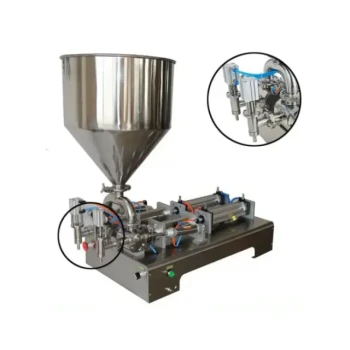
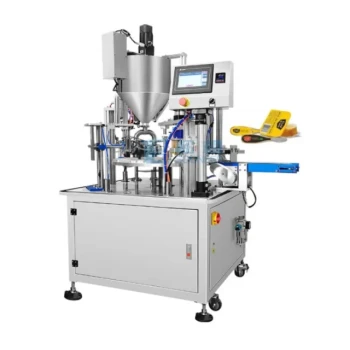
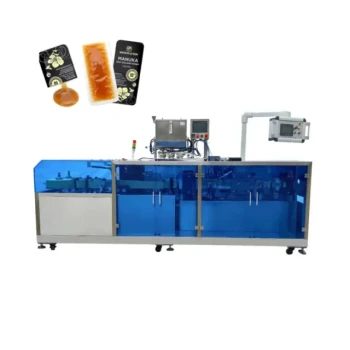
The primary technical challenge in honey bottle filling is managing the product's high viscosity. This characteristic creates resistance during the flow process, making it difficult for standard equipment to achieve precise volumetric control. Without specific adjustments, this leads to inconsistent fill levels—either underfilling or overfilling—which results in immediate financial loss and inventory waste.
The inherent thickness of honey complicates the mechanics of filling, leading to inaccuracies that erode profit margins. However, the broader challenge involves moving away from labor-intensive manual processes toward standardized automation that balances flow efficiency with strict hygiene compliance.
The Viscosity Challenge
The Impact on Accuracy
The thick consistency of honey struggles against the physics of standard volumetric filling. This resistance often causes the machinery to dispense unequal amounts of product into each bottle.
Inaccurate filling leads directly to increased costs and profit loss. Overfilling gives away product for free, while underfilling can damage brand reputation or violate weights and measures regulations.
The Thermal Solution
To mitigate flow resistance, pre-heating is a critical processing step. By applying controlled heat, the viscosity of the honey is reduced, allowing it to move more fluidly through the system.
This thermal treatment transforms the product's behavior, enabling filling equipment to operate with higher speed and precision.
Operational and Hygiene Hurdles
Overcoming Labor Intensity
Traditional, manual honey harvesting and bottling are characterized by high labor intensity and low efficiency. Relying on human labor for extraction, suction, and filtration creates bottlenecks that limit overall output per unit of labor.
Standardization of Process
Manual operations inevitably lead to inconsistencies in the final product. Mechanizing the workflow—from extraction to filtration and bottling—establishes a professional division of labor and a standardized production flow.
Meeting Global Safety Standards
Manual handling poses significant challenges to maintaining consistent hygiene. Automated machinery is essential for large-scale operations to ensure hygienic packaging that meets rigorous international food safety standards.
For commercial apiaries targeting the export market, automation is the only reliable way to maintain the "natural quality" of the honey while scaling up volume.
Understanding the Trade-offs
Process Speed vs. Product Integrity
While high-efficiency machines increase speed, the integration of automation must be carefully calibrated. The goal is to significantly increase processing speeds without compromising the delicate, natural quality of the honey during the extraction and filling stages.
Investment vs. Operational Cost
Transitioning to automated systems requires capital investment in specialized machinery (filling, capping, labeling). However, this is a trade-off against the long-term, high costs and inefficiencies associated with manual labor.
Making the Right Choice for Your Operation
For apiaries and manufacturers looking to optimize their line, the decision rests on your production goals:
- If your primary focus is Profit Protection: Prioritize filling equipment with precise temperature controls to manage viscosity and eliminate product giveaway (overfilling).
- If your primary focus is Export and Scale: Invest in fully automated lines that guarantee compliance with international hygiene standards and standardized packaging.
- If your primary focus is Efficiency: Move away from manual processing to mechanized extraction and filtration to maximize output per labor unit.
Success in honey bottling ultimately relies on mastering the balance between temperature control for flow and automation for consistency.
Summary Table:
| Challenge | Impact on Production | Recommended Solution |
|---|---|---|
| High Viscosity | Poor flow and filling resistance | Controlled pre-heating to reduce thickness |
| Filling Inaccuracy | Product waste and profit loss | Precise volumetric control & thermal treatment |
| Manual Labor | Bottlenecks and low efficiency | Mechanized extraction and automated filling lines |
| Hygiene Risks | Non-compliance with safety standards | Closed automated systems with stainless steel parts |
| Product Integrity | Risk of degrading honey quality | Calibrated machinery to balance speed and care |
Scaling Your Honey Production? Let HONESTBEE Lead the Way
Transitioning from manual labor to professional automation is the key to protecting your profit margins and entering global markets. HONESTBEE specializes in supporting commercial apiaries and distributors with high-precision honey-filling machines, hive-making equipment, and industrial-grade consumables designed to handle the toughest viscosity challenges.
Partner with HONESTBEE to benefit from:
- Reduced Waste: Eliminate overfilling with our high-precision volumetric technology.
- Global Compliance: Ensure your products meet international food safety standards with our hygienic machinery.
- Wholesale Support: Access a complete spectrum of beekeeping tools and honey-themed merchandise to grow your brand.
Ready to optimize your workflow and maximize your output? Contact us today for a tailored wholesale solution!
Related Products
- Semi Automatic Small Honey Bottle Filling Machine Honey Filler
- Precision Durable Efficient HONESTBEE Rotary Honey Filling Machine
- Economy Small Honey Filling Machine Honey Bottle Filler Packaging Machine
- Automatic Honey Filling and Filtering Machine for Beekeeping Bottle Filling
- Pneumatic Double Nozzle Honey Filling Bottling Packaging Machine
People Also Ask
- What is a semi-automatic honey filler? Scale Your Honey Production with Precision and Efficiency
- How does high-precision honey filling machinery help improve product competitiveness in modern apiary upgrades?
- What are the key features to consider in a honey filling machine? Optimize Your Production with the Right Equipment
- What does the honey packaging process in a factory typically involve? A Step-by-Step Guide to Quality Honey Production
- What are the different types of honey filling machines based on automation level? A Guide for Apiaries & Distributors