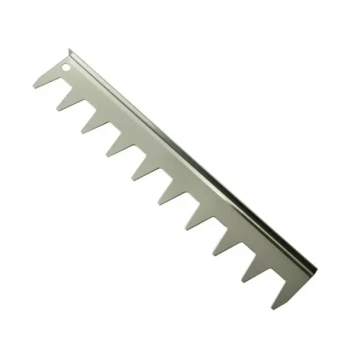
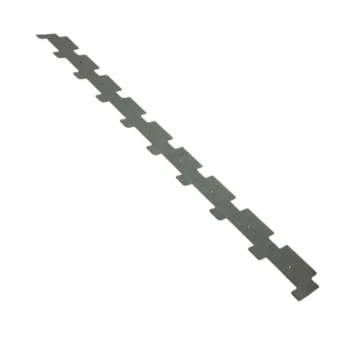
A basic 10-frame Langstroth hive is a modular, vertical structure designed to separate the colony’s living quarters from their surplus honey stores. The standard configuration typically includes a hive stand, a bottom board, an entrance reducer, two deep hive bodies for the brood, one or more honey supers, and a dual-component cover system consisting of an inner and outer lid.
The genius of the Langstroth design lies in its standardization and modularity. This setup allows beekeepers to expand the hive vertically as the colony grows, keeping the queen and brood in the lower deep boxes while harvesting pure honey from the upper supers without disturbing the nest.
The Foundation and Entry
The stability and health of the colony begin at the base. These components manage the hive's interaction with the outside environment.
The Hive Stand
This is the structural base that elevates the entire setup off the ground. By raising the hive, you protect the wooden components from ground moisture and rot while deterring pests like ants or skunks.
The Bottom Board
Sitting directly on the stand, this acts as the floor of the hive. It provides the landing platform for returning foragers and supports the weight of the boxes stacked above it.
The Entrance Reducer
This is a small wooden strip or block placed between the bottom board and the first hive body. It allows the beekeeper to control the size of the opening, helping the colony defend against robber bees and regulating ventilation during colder months.
The Brood Chamber (The Living Quarters)
The lower section of the hive is dedicated to the colony's population growth and survival.
Hive Bodies
A standard setup utilizes two deep hive bodies stacked on top of the bottom board. These large boxes serve as the "brood chamber," where the queen lays eggs and nurse bees raise the young.
Deep Frames
Inside these hive bodies, you will find 10 deep frames per box. These frames hold the wax foundation where bees draw out the comb used for raising brood and storing the colony's immediate food supply (pollen and nectar).
The Honey Supers (The Harvest Zone)
Placed above the brood chamber, these components are specifically for the beekeeper's yield.
Honey Supers
These boxes are stacked on top of the upper hive body. While they can be the same size as brood boxes, they are often medium or shallow in depth to reduce weight when full of honey.
Modular Expansion
You typically start with one or two supers. As the bees fill these with surplus honey, additional supers can be added to the stack to accommodate the flow.
The Roof System
The top of the hive requires a two-part system to manage insulation and weather protection.
The Inner Cover
This flat cover rests directly on the top box. It creates a critical dead-air space for insulation and prevents the bees from gluing the heavy outer cover to the hive bodies with propolis (bee glue).
The Outer Cover
This is the final, telescoping roof that fits over the inner cover. It is usually plated with metal to provide durable protection against rain, snow, and wind.
Understanding the Trade-offs
While the 10-frame Langstroth is the industry standard, it presents specific physical challenges that you must plan for.
Weight Management
The primary drawback of the 10-frame design is the weight. A deep hive body filled with honey and brood can weigh upwards of 80 pounds, which can be physically taxing to lift during inspections.
Equipment Compatibility
While 10-frame equipment is the most widely available, it is not interchangeable with 8-frame or 5-frame components. Once you commit to the 10-frame width, you must ensure all future boxes, bottom boards, and covers match these dimensions.
Making the Right Choice for Your Goal
The 10-frame Langstroth is a versatile tool, but how you manage these components depends on your immediate objective.
- If your primary focus is Colony Establishment: Prioritize filling the two deep hive bodies with drawn comb and brood before adding any honey supers; a strong population is required to produce surplus.
- If your primary focus is Honey Production: Monitor the upper hive body closely; once 70-80% of the frames are drawn and filled, immediately add a honey super to prevent swarming and encourage storage.
The standard 10-frame setup is a balance of biology and logistics, designed to give the bees a permanent home below while offering the beekeeper a harvestable surplus above.
Summary Table:
| Component Type | Specific Parts | Primary Function |
|---|---|---|
| Foundation | Hive Stand, Bottom Board, Entrance Reducer | Structural support, pest protection, and entry control. |
| Brood Chamber | 2 Deep Hive Bodies & 10 Deep Frames | The colony's living quarters for queen laying and brood rearing. |
| Harvest Zone | Honey Supers (Medium/Shallow) & Frames | Storage for surplus honey intended for beekeeper harvest. |
| Roof System | Inner Cover & Telescoping Outer Cover | Insulation, ventilation, and weatherproofing protection. |
Scaling Your Beekeeping Operation?
At HONESTBEE, we specialize in supporting commercial apiaries and distributors with premium, high-durability beekeeping solutions. Whether you need complete 10-frame Langstroth setups, high-efficiency honey-filling machines, or specialized hive-making hardware, we provide the industrial-grade tools and consumables you need to thrive.
Our Value to You:
- Comprehensive Wholesale: Full spectrum of tools, machinery, and equipment in bulk.
- Industry Expertise: Tailored solutions for large-scale production and distribution.
- Global Supply Chain: Reliable delivery of essential consumables and cultural merchandise.
Ready to enhance your apiary's efficiency? Contact us today to discuss your wholesale needs!
Related Products
- Durable Plastic Frame Spacer
- Wooden Bee Hive Frames for Beekeeping and Wholesale
- Stainless Steel 9 Frame Hive Spacer Durable Precise for Commercial Beekeeping
- Rapid Bee Feeder White Plastic 2L Round Top Feeder for 8 or 10-Frame Bee Hives
- Long Langstroth Style Horizontal Top Bar Hive for Wholesale
People Also Ask
- Are plastic bee hive frames good? A Guide to Modern Durability vs. Natural Appeal
- Are plastic bee frames good? A Guide to Durability, Efficiency & Bee Acceptance
- What are the advantages of using Standard Langstroth 10-frame equipment? Scale Your Commercial Apiary Efficiency
- How do you clean plastic frames? A Gentle Guide to Preserving Your Frames
- How must plastic frames be prepared for bees? Expert Tips for 100% Acceptance & Success