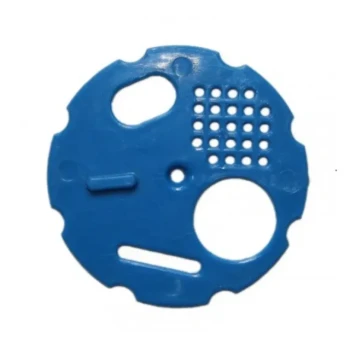
An entrance reducer serves as a critical mechanical gatekeeper for your beehive. Its primary function is to restrict the hive opening to a specific, manageable area—often approximating 15 square centimeters—to simulate the narrow, protective entrances found in natural tree hollows. By limiting this physical space, the device allows the colony to efficiently regulate their internal environment and defend against external threats.
The entrance reducer bridges the gap between artificial boxes and wild habitats, empowering the colony to conserve heat, repel intruders, and manage airflow with significantly less energy expenditure.
Regulating the Hive Environment
Simulating Natural Habitation
In the wild, honey bees typically inhabit tree hollows with very small, restrictive openings.
Modern man-made hives often feature wide, bottom-board entrances that leave the colony exposed.
The entrance reducer corrects this by artificially recreating the "tight" architecture bees instinctively prefer for survival.
Controlling Internal Temperature
Temperature regulation is vital for brood rearing and winter survival.
A wide-open entrance allows massive amounts of heat to escape, forcing the bees to consume more resources to generate warmth.
By shrinking the opening, the reducer minimizes heat loss and helps the colony maintain a stable internal climate.
Optimizing Ventilation Efficiency
While it may seem counterintuitive, a smaller opening can actually aid in ventilation.
It allows the bees to create directed airflow channels rather than fighting against turbulent, uncontrolled drafts.
This controlled airflow helps the colony manage humidity levels more effectively.
Enhancing Colony Security
Creating Defendable Choke Points
A full-width entrance requires a large number of guard bees to patrol the perimeter.
An entrance reducer creates a bottleneck, allowing a small number of guards to easily defend the hive against a larger force.
This is particularly crucial for young or weak colonies that lack the population to man a wide "front gate."
Preventing Robbing Behavior
During nectar dearths, strong colonies may attempt to "rob" or steal honey from weaker hives.
A reduced entrance makes it difficult for robber bees to overwhelm the resident colony.
It allows the inhabitants to focus their defense on a single, small point of entry.
Physical Exclusion of Pests
Larger pests, particularly mice, often seek the warmth of a beehive during cooler months.
The reducer acts as a physical barrier that is too small for rodents to pass through.
This simple blockage prevents significant damage to the comb and protects the colony's winter cluster.
Understanding the Trade-offs
Managing Traffic Congestion
While beneficial for defense and climate, a reducer can cause a bottleneck during peak activity.
If a strong colony is bringing in heavy nectar flow, a very small opening may slow down foragers, creating a "traffic jam" at the entrance.
Heat Regulation in Extreme Summer
In exceptionally hot weather with a booming population, the standard reduction might limit the bees' ability to fan hot air out.
Beekeepers must monitor the entrance; if bees are "bearding" (clustering outside) heavily, the reducer may need to be adjusted or removed temporarily.
Making the Right Choice for Your Hive
To use an entrance reducer effectively, you must align its setting with the current status of your colony and the season.
- If your primary focus is establishing a new package or nucleus: Use the smallest opening to prevent robbing and help the small population conserve heat.
- If your primary focus is winter preparation: Install the reducer with the "mouse guard" orientation (small opening) to retain warmth and exclude rodents.
- If your primary focus is managing a nectar flow: Consider using the largest notch or removing the reducer entirely to maximize foraging efficiency.
Ultimately, this simple wooden strip allows you to adapt a standardized box to meet the dynamic biological needs of your bees.
Summary Table:
| Function | Key Benefit | Ideal Scenario |
|---|---|---|
| Temperature Control | Minimizes heat loss & stabilizes internal climate | Winter survival & early spring brood rearing |
| Colony Defense | Creates a choke point for guard bees to defend | Weak colonies or during nectar dearths |
| Pest Prevention | Acts as a physical barrier against mice/rodents | Overwintering in colder climates |
| Robbing Deterrence | Prevents stronger hives from stealing honey | Low forage periods (dearth) |
| Natural Simulation | Replicates the tight openings of wild tree hollows | Establishing new packages or nucleus hives |
Maximize Your Apiary Productivity with HONESTBEE
Effective hive management starts with the right tools. At HONESTBEE, we specialize in supporting commercial apiaries and distributors with high-quality beekeeping essentials designed for professional success.
Whether you need specialized hive-making machinery, high-precision honey-filling equipment, or a bulk supply of durable hive hardware and consumables, we provide the comprehensive wholesale solutions your business requires. Our portfolio extends from industrial-grade equipment to unique honey-themed merchandise, ensuring you have everything needed to scale your operations.
Empower your commercial beekeeping business today. Contact our expert team at HONESTBEE to discuss wholesale pricing and customized equipment solutions tailored to your specific goals.
References
- J. Carter Loftus, Thomas D. Seeley. How Honey Bee Colonies Survive in the Wild: Testing the Importance of Small Nests and Frequent Swarming. DOI: 10.1371/journal.pone.0150362
This article is also based on technical information from HonestBee Knowledge Base .
Related Products
- Steel Round Disc Entrance Reducer for Flexzion Bee Hive Nuc Box Gate
- Beehive Entrance Reducer Guardian Metal Hive Entrance for Bees
- Professional Hive Front Entrance Bee Feeder
- HONESTBEE Entrance Bee Feeder Efficient Hive Front Liquid Feeding Solution for Beekeeping
- HONESTBEE Entrance Bee Feeder Professional Hive Nutrition Solution for Beekeeping
People Also Ask
- What is the purpose of an entrance reducer for a beehive? Strengthen Colony Defense and Prevent Robbery
- Why are entrance reducers used to counter hornet infestations? Protect Your Hive with Strategic Choke Points
- Why is it critical to maintain a smaller entrance for a newly established bee hive? Boost Colony Growth and Security
- What is the function of an entrance reducer on a beehive? Strengthen Colony Defense and Climate Control
- Under what conditions should a beekeeper adjust the size of a beehive entrance? Seasonal & Defense Management Tips