Beeswax is far more than a waste product; it is a high-value industrial raw material with versatile physicochemical properties. Its primary applications span across cosmetics, pharmaceuticals, food processing, and specialized manufacturing, while its economic benefits center on diversifying revenue streams and reducing operational costs through circular usage.
Core Takeaway Beeswax transforms beekeeping from a single-product operation into a multi-revenue enterprise. By refining raw wax for external industries (cosmetics, pharma) and recycling it for internal use (foundations), operators significantly enhance overall economic efficiency and asset utilization.
Industrial Applications and External Market Value
Cosmetics and Personal Care
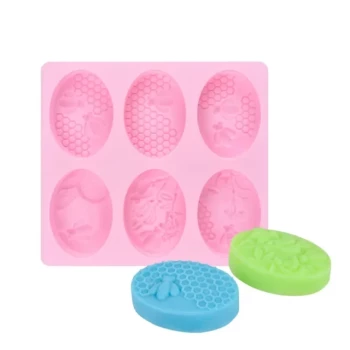
The cosmetic industry is a dominant consumer of refined beeswax. It serves as a critical ingredient in face creams, lip balms, soaps, and deodorants. Its natural properties make it an ideal thickener and emulsifier that enhances the texture and stability of personal care products without relying on synthetic alternatives.
Pharmaceuticals and Food Processing
In the pharmaceutical sector, beeswax is utilized as a specialized coating agent. It provides a protective layer for pills and tablets, controlling release rates and preserving shelf life.
In food processing, it acts as a glazing agent and additive. While sometimes referenced in the context of sugar replacements due to its texture-modifying capabilities, its primary role is providing a natural seal and sheen to confectionery and fruit.
Manufacturing and Specialized Industrial Use
Beeswax has niche but vital applications in heavy industry and manufacturing. It is used in the tobacco industry specifically for its moisture retention capabilities. Additionally, it serves as a superior lubricant for mechanical parts (such as drawer slides) and is a primary material for industrial casting models due to its malleability and clean burnout characteristics.
Arts and Illumination
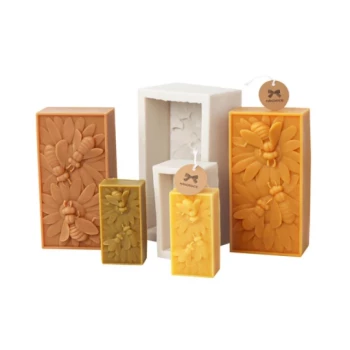
High-purity, unbleached beeswax is the standard binder for encaustic painting, offering exceptional weather resistance and color stability for pigments. It remains the premium material for illumination candles, valued for its clean burning properties compared to paraffin alternatives.
Economic Implications for Beekeeping Operations
Revenue Diversification through Deep Processing
Reliability on honey sales alone leaves apiaries vulnerable to market fluctuations. Processing beeswax into high-value secondary products (such as candles, balms, or refined blocks) allows enterprises to enter new markets. This "deep processing" significantly increases the total economic output per hive compared to selling raw wax.
The Circular Utilization Model
Beeswax offers a unique opportunity for cost reduction through internal recycling. Discarded honeycombs and wax cappings collected during harvest can be melted, filtered, and pressed into new beeswax foundations.
Operational Cost Reduction
By utilizing beeswax machines to recycle byproducts, beekeepers produce their own biological building materials. This eliminates the need to purchase synthetic or external foundation sheets, lowering the overhead costs of the apiary management cycle.
Understanding the Trade-offs
Processing Complexity vs. Value
While raw beeswax has value, the highest economic returns require refinement. Selling raw wax yields lower margins; however, producing pharmaceutical-grade or cosmetic-grade wax requires investment in filtration and processing equipment to remove impurities.
Equipment Investment
To leverage the "circular model" effectively, operations must invest in beeswax machines capable of melting and pressing. While this ensures a steady supply of foundation sheets, it represents an upfront capital expenditure that must be weighed against long-term savings.
Making the Right Choice for Your Goal
To maximize the potential of beeswax, align your processing strategy with your business objectives:
- If your primary focus is Immediate Cash Flow: Focus on selling semi-refined wax blocks to the cosmetics or casting industries to avoid the overhead of manufacturing finished consumer goods.
- If your primary focus is Operational Sustainability: Prioritize the acquisition of a beeswax machine to recycle cappings into foundation sheets, drastically reducing your recurring material costs.
- If your primary focus is Brand Expansion: Invest in "deep processing" to create branded value-added products (candles, balms) that decouple your revenue from bulk commodity prices.
Treating beeswax as a strategic asset rather than a byproduct is the hallmark of a mature, economically efficient beekeeping operation.
Summary Table:
| Application Category | Specific Industrial Uses | Economic Benefit for Beekeepers |
|---|---|---|
| Cosmetics | Face creams, lip balms, soaps, deodorants | High-margin demand for refined wax |
| Pharmaceuticals | Tablet coatings, controlled release agents | Access to premium healthcare markets |
| Food Processing | Glazing agents, confectionery coatings | Diversification into food-grade supply |
| Manufacturing | Lubricants, casting models, tobacco moisture | Stable demand from niche industries |
| Internal Operations | Hive foundation sheets, wax recycling | Reduced overhead & circular sustainability |
Maximize Your Apiary’s Profitability with HONESTBEE
Don't let valuable beeswax go to waste. HONESTBEE empowers commercial apiaries and distributors with the professional machinery needed to transform raw byproducts into high-value assets. From beeswax foundation machines for circular cost reduction to advanced honey-filling and processing equipment, we provide the full spectrum of tools required to scale your operation.
Whether you are looking to supply the cosmetic industry or enhance your own hive efficiency, our comprehensive wholesale portfolio is designed for your success.
Ready to upgrade your production? Contact HONESTBEE today to discuss our tailored equipment solutions!
References
- M.O Mustafa, Olukayode Dare Akinyemi. Mitigating Effects of Climate Change and Deforestation on Bees With Respect to Their Ecology and Biology. DOI: 10.5296/jee.v6i2.8460
This article is also based on technical information from HonestBee Knowledge Base .
Related Products
- Beeswax Foundation Sheets Beehive Foundation for Wholesale
- Colorful Silicone Beeswax Foundation Mold Mould for Beekeeping
- Economy Manual Beeswax Embossing Mill Wax Foundation Machine Roller
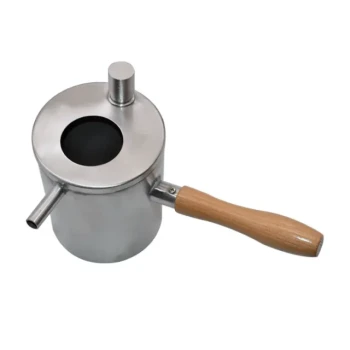
- Beeswax Melter for Candle Making Honey Bee Wax Melter
- Electric Beeswax Flat Sheet Machine with Operating Tray for Wax Processing
People Also Ask
- What are the technical advantages of beeswax foundations and feeding tools? Optimize Your Bee Breeding Phase
- Why is the regular exchange and replacement of beeswax foundations encouraged? Boost Honey Yield & Hive Biosafety
- What are the negative consequences of using old or contaminated beeswax in foundations? Protect Your Hive Today
- Why is high-purity natural beeswax essential for foundations? Prevent Larval Mortality & Boost Colony Health
- What are the specific advantages of regular comb replacement? Boost Hive Health with New Beeswax Foundations