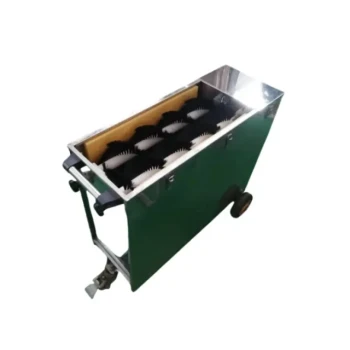
The primary operational scales in global beekeeping are hobbyist, semi-commercial, commercial, migratory, and research-oriented operations. Each scale has different priorities: small apiaries value portability and affordability, while larger businesses need throughput, standardization, transport durability, automation, and dependable consumable supply. Equipment selection should therefore follow colony volume, labor availability, mobility requirements, processing capacity, and the frequency of hive management.
The correct equipment configuration is determined by operational scale: manual and modular tools suit small or flexible apiaries, while expanding and commercial operations require standardized hive components, mechanized handling, high-capacity processing equipment, and reliable supply support.
How Operational Scale Determines Equipment Needs
Hobbyist And Small Domestic Apiaries
Hobbyist operations commonly manage fewer than 10 hives and perform most tasks manually. Their priorities are ease of use, low capital cost, durability, and equipment that can be stored without dedicated industrial space.
Typical requirements include manual hive tools, protective clothing, smokers, hand-operated honey extractors, feeders, and modular hive components. Compact equipment is usually more practical than automated machinery because processing volumes do not justify complex installation or maintenance.
Semi-Commercial Apiaries
Semi-commercial operations represent an intermediate stage, often managing approximately 51 to 100 colonies. At this scale, manual methods begin to create labor bottlenecks, particularly during inspections, honey harvests, hive movement, and equipment maintenance.
These operators generally benefit from automated or higher-capacity honey extractors, professional transport equipment, standardized frames, durable hive hardware, and more organized storage systems. The objective is selective mechanization: investing first in equipment that reduces repetitive labor and improves harvest throughput.
Commercial Enterprise Apiaries
Commercial apiaries manage hundreds or thousands of colonies and operate around production targets, labor productivity, product consistency, and delivery schedules. Equipment must withstand frequent use and support high-volume workflows.
Core requirements include high-capacity honey extractors, automated honey-filling and packaging lines, hive-making machinery, frame assembly tools, mechanized hive handling, and automated monitoring systems. Commercial operators also need standardized equipment that allows components to be exchanged efficiently across apiary sites.
Migratory And Pollination Operations
Migratory beekeepers transport colonies across regions to follow crop blooms and provide pollination services for crops such as almonds, apples, and blueberries. Their equipment must function reliably under repeated loading, unloading, road transport, and changing field conditions.
Large migratory operations may move 100 to more than 1,000 hives, with a single large flatbed truck capable of carrying more than 500 hives. This creates demand for stackable transport boxes, secure hive hardware, ventilation features, lifting and loading equipment, transport vehicles, and machinery-compatible designs.
Scientific And Research Operations
Research apiaries are usually defined less by colony volume than by the need for controlled observation, repeatability, and accurate data collection. Researchers may require specialized monitoring and sampling equipment even when the number of colonies is limited.
Their equipment choices can include modular hive systems, observation tools, precise monitoring devices, controlled feeding equipment, and standardized components. Flexibility and measurement accuracy may matter more than maximum extraction capacity.
Why Scaling Requires Different Machinery
Labor Efficiency Becomes A Primary Constraint
Small-scale beekeepers can complete many tasks with hand tools because the number of colonies is manageable. As colony numbers rise, the same manual process is repeated across dozens or hundreds of hives, increasing labor cost and the risk of management oversights.
Mechanized extractors, hive-handling systems, frame assembly tools, and filling equipment reduce repetitive work. They also help operators complete time-sensitive tasks during short harvest windows or peak crop-pollination periods.
Standardization Supports Multi-Site Management
Commercial and migratory operators cannot rely on individually fitted or inconsistent hive components. Uniform box dimensions, interchangeable frames, and standardized hardware make it easier to maintain colonies across multiple locations.
Precision hive-making machinery supports this consistency. Standardization simplifies repairs, inventory planning, transport loading, and the replacement of damaged components.
Processing Throughput Must Match Colony Volume
A few backyard hives can be served by a hand-operated extractor. Hundreds of colonies generate much greater volumes of honey, requiring equipment that can process, fill, and package product without creating a harvest backlog.
Commercial operators therefore prioritize high-capacity extraction and automated filling systems. The appropriate choice depends on expected harvest volume, processing frequency, labor availability, packaging format, and required product consistency.
Transport Changes The Equipment Specification
Migratory operations place unusually high mechanical demands on hive equipment. Boxes and securing systems must tolerate vibration, stacking pressure, rapid loading, and repeated seasonal movement.
Hive designs should also provide adequate ventilation during transit and permit efficient handling with forklifts or other machinery. Portable manual tools remain important for field work, but they must be complemented by transport infrastructure built for commercial movement.
Colony Health Requires Reliable Support Systems
Larger apiaries face greater exposure to operational disruption because a missed inspection, delayed feeding cycle, or inconsistent pest-control process can affect many colonies. Equipment planning must therefore include more than harvesting machinery.
Commercial operators may require specialized feeding machinery, automated Varroa monitoring systems, pest-control equipment, and dependable stocks of consumables. Reliable access to replacement parts and routine supplies is as important as the initial machinery purchase.
Matching Equipment To The Operating Model
Choose Portable Equipment For Flexible Operations
Hobbyists and mobile beekeepers benefit from compact, durable tools that can be carried between sites. Modular hive components and portable protective equipment support flexible management without tying up capital in fixed installations.
This model is also useful for operators whose colony numbers vary seasonally or who are still evaluating whether to expand.
Introduce Mechanization At Repetitive Bottlenecks
Semi-commercial operators do not need to automate every process immediately. A practical approach is to identify the tasks consuming the most labor, such as extraction, transport, frame preparation, or hive assembly, and mechanize those first.
This creates a more balanced investment profile while improving daily productivity and preparing the apiary for further growth.
Build Integrated Systems For Commercial Scale
Large enterprises need equipment that works as a coordinated system. Hive manufacturing, colony handling, extraction, filling, packaging, transport, monitoring, and consumable replenishment should support the same operating capacity.
For distributors and B2B resellers, this creates demand for full-spectrum sourcing rather than isolated product sales. Customers often need compatible hive components, machinery, protective gear, replacement parts, and consumables delivered according to an operational schedule.
Understanding The Trade-offs
Automation Requires Capital And Technical Support
Automated machinery can improve throughput and reduce labor dependence, but it requires greater upfront investment, installation planning, maintenance, and operator training. Equipment that is oversized for the apiary can remain underused while tying up working capital.
The right decision is based on expected utilization and measurable bottlenecks, not automation alone.
Heavy-Duty Equipment Reduces Portability
Transport-ready boxes, mechanized loaders, and industrial processing systems are valuable for migratory and commercial operations. They can be unnecessarily cumbersome for a small apiary or a beekeeper who changes locations frequently without access to vehicles or lifting equipment.
Equipment should be durable enough for the working environment without exceeding the operator’s logistical capacity.
Standardization Can Limit Local Flexibility
Standardized components improve interchangeability and inventory control. However, operators working across different climates, hive formats, or research protocols may need specialized configurations.
A modular product portfolio allows distributors to provide standard commercial components while still accommodating regional and operational differences.
Supply Disruptions Can Halt Large Operations
A small beekeeper may be able to postpone a purchase or improvise a minor repair. A commercial apiary cannot easily tolerate delays in frames, feeders, packaging materials, protective equipment, or replacement parts during a critical operating period.
Fast response times, technical product knowledge, order consolidation, and efficient fulfillment are therefore operational advantages, not merely purchasing conveniences.
Making The Right Choice For Your Goal
Equipment should be selected by combining colony count with mobility, labor structure, processing volume, and expected growth.
- If your primary focus is low-cost hobbyist management: Prioritize portable manual tools, reliable protective gear, hand-operated extraction equipment, and modular hive components.
- If your primary focus is semi-commercial expansion: Add higher-capacity extraction, professional transport equipment, standardized frames, and mechanized tools for the most repetitive tasks.
- If your primary focus is large-scale honey production: Invest in high-throughput extraction, automated filling and packaging, hive-making machinery, frame assembly systems, and monitoring equipment.
- If your primary focus is migratory pollination services: Choose stackable, transport-resistant hive boxes, secure hardware, ventilation features, and machinery-compatible loading systems.
- If your primary focus is distribution or B2B resale: Build a one-stop portfolio covering hive hardware, machinery, protective equipment, consumables, spare parts, and responsive fulfillment support.
The strongest equipment strategy matches every purchase to the scale, mobility, and workflow demands of the apiary.
Summary Table:
| Operational Scale | Key Characteristics | Typical Equipment Needs |
|---|---|---|
| Hobbyist | <10 hives, manual tasks | Manual tools, protective gear, hand extractors |
| Semi-Commercial | 51-100 colonies, labor bottlenecks | Automated extractors, standardized frames, transport gear |
| Commercial | Hundreds/thousands of colonies | High-capacity extractors, filling lines, hive-making machinery |
| Migratory | 100-1,000+ hives, transport demands | Stackable boxes, secure hardware, lifting equipment |
| Research | Controlled observation, data accuracy | Modular hive systems, monitoring devices, sampling tools |
Ready to optimize your beekeeping operations? At HONESTBEE, we provide a one-stop sourcing solution for commercial apiaries and distributors, offering a full spectrum of beekeeping tools, machinery, and consumables. From high-capacity honey extractors to automated filling lines and hive-making equipment, our products are designed to streamline your workflow and maximize productivity. With rapid response, OEM/ODM support, certifications, and ultra-fast delivery, we ensure your supply chain stays efficient. Contact us today to discuss your needs and discover how we can support your success.
Related Products
- Stainless Steel J Hook Hive Tool for Beekeeping
- Stainless Steel Honey Bee Smoker Hive and Honeycomb Smoker for Beekeeping
- HONESTBEE 15-in-1 Beekeeper Multi-Tool with Hammer and Pliers for Beekeeping
- Multi-Function Plier-Style Frame Grip Hive Tool
- HONESTBEE Professional Mini J-Hook Hive Tool for Beekeeping
People Also Ask
- What specific challenges do beekeeping hive tools address during hive maintenance? Essential Solutions for Apiaries
- What are the features of a J-hook hive tool? Effortlessly Lift Frames with Superior Leverage
- What is a J-hook hive tool and why is it favored by some beekeepers? Master Gentle Frame Handling
- What is the purpose of the J-hook hive tool? Effortlessly Lift Frames with Superior Leverage
- How is a J-hook hive tool designed and what is its primary use? Master Effortless Hive Inspections