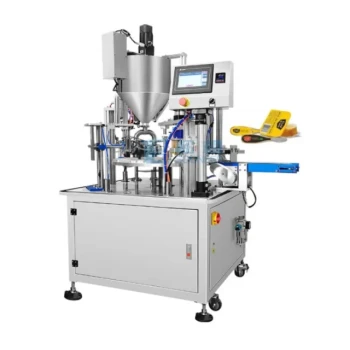
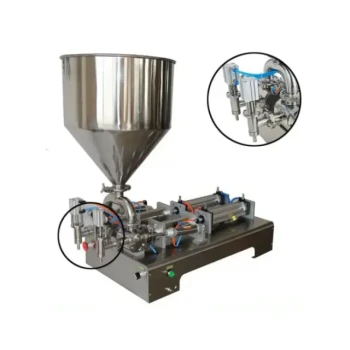
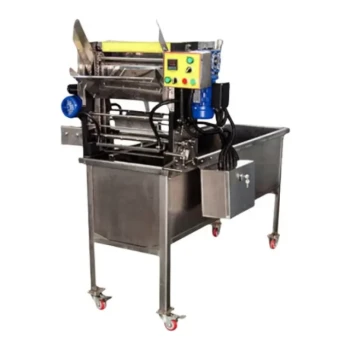
The transition to semi-automatic or automatic honey filling represents a critical shift from manual approximation to industrial precision. These machines utilize precise quantitative controls to ensure standardized bottling, drastically reducing material loss and the risk of environmental contamination inherent in manual methods. By guaranteeing uniform volume and superior seal tightness, they provide the technical foundation required for large-scale market supply and high-value branding.
Manual filling often creates bottlenecks defined by inconsistency and hygiene risks. Semi-automatic and automatic machines resolve this by enforcing exact volumetric standards within a closed environment, directly translating to professional consistency and improved operational margins.
Transforming Consistency and Control
Precision Quantitative Control
The primary technical advantage of automation is the elimination of human error in dosing. These machines employ high-precision piston or weighing systems to dispense exact amounts of honey.
This precision ensures that the net content of every bottle meets industry standards, preventing the financial bleed caused by overfilling. Conversely, it prevents underfilling, which protects your brand from regulatory penalties and consumer complaints.
Standardization of Retail Units
Manual operations often result in slight visual variances between units. Automated fillers ensure uniform specifications for every bottle on the line.
This visual consistency is vital for retail display and brand perception. It signals a professionalized operation to distributors and consumers alike, enhancing the perceived value of the product.
Elevating Hygiene and Product Quality
Mitigating Contamination Risks
Honey is sensitive to its environment. Automated machines operate largely within a closed environment, significantly reducing the product's exposure to open air and human contact.
This isolation minimizes the risk of secondary microbial contamination or foreign particulate matter entering the jar. It is a critical step in meeting strict international food safety and hygiene standards.
Preserving Product Integrity
Beyond safety, the speed and enclosure of the process protect the honey's chemical properties. By reducing the time honey is exposed to air, the machinery prevents moisture absorption.
Limiting moisture uptake is essential for preventing fermentation and preserving the natural enzyme activity and flavor profile that define high-quality honey.
Scaling for Market Demands
Enhanced Seal Tightness
A filled bottle is only as good as its closure. Automatic systems integrate precision sealing technology that provides reliable, airtight closures superior to manual capping.
This reduces leakage rates during transportation and storage. Secure sealing is a prerequisite for large-scale distribution, where products must withstand shipping logistics without compromising integrity.
Foundation for Brand Scale
To move from local sales to mass market supply, throughput must be predictable. These machines provide the production efficiency necessary to meet large orders without fatigue-related slowdowns.
They provide the hardware infrastructure that allows a business to scale its operations while maintaining the "small batch" quality promise.
Understanding the Trade-offs
Maintenance and Cleaning Complexity
While efficiency increases during operation, the complexity of maintenance also rises. Honey is viscous and sticky; cleaning high-precision pistons and flow meters requires a rigorous, time-consuming protocol to prevent cross-contamination or mechanical gumming.
Initial Capital and Setup
Implementing this technology requires a significant upfront investment compared to manual labor. Furthermore, changing bottle sizes often requires mechanical adjustments or tooling changes, which can introduce downtime if your product line is highly variable.
Making the Right Choice for Your Production Line
To maximize the return on your investment, align the machine's capabilities with your specific operational bottlenecks:
- If your primary focus is Hygiene and Compliance: Prioritize machines with fully enclosed filling environments to minimize human contact and prevent moisture absorption.
- If your primary focus is Cost Reduction: Select equipment with high-precision quantitative sensors to eliminate material waste and overfilling.
- If your primary focus is Market Expansion: Focus on systems with integrated, high-speed sealing technology to ensure transport durability and professional presentation.
Adopting automated filling is not merely a purchase of speed; it is an investment in the standardization required to turn a raw agricultural product into a trusted commercial brand.
Summary Table:
| Feature | Manual Filling | Semi-Automatic/Automatic Filling |
|---|---|---|
| Dosing Accuracy | High variance; manual error | High-precision piston/weighing systems |
| Hygiene Level | Open air exposure; high risk | Closed environment; minimal human contact |
| Visual Consistency | Variable fill levels | Standardized retail units |
| Seal Integrity | Inconsistent manual capping | Integrated precision airtight sealing |
| Scalability | Limited by labor fatigue | High throughput for mass market supply |
| Waste Management | Material loss from overfilling | Minimal waste through exact quantitative control |
Scale Your Honey Production with HONESTBEE
Transitioning from manual labor to automated precision is a vital step for growing commercial apiaries and distributors. HONESTBEE provides the industry-leading hardware needed to secure your brand’s future. From high-precision honey-filling machines that eliminate material waste to comprehensive beekeeping tools and machinery, we supply everything required to maintain professional consistency and food safety standards.
Whether you are expanding your wholesale offering or looking for specialized hive-making equipment, our team is ready to support your growth with robust, high-performance solutions.
Ready to professionalize your honey processing line?
References
- Nicholaus Bhikolimana Tutuba, Jasinta Msamula. Governance of the Business Ecosystems to Commercialize Beekeeping Activities in Emerging Markets. DOI: 10.33423/jsis.v15i5.3590
This article is also based on technical information from HonestBee Knowledge Base .
Related Products
- Semi Automatic Small Honey Bottle Filling Machine Honey Filler
- Precision Durable Efficient HONESTBEE Rotary Honey Filling Machine
- Automatic Honey Filling and Filtering Machine for Beekeeping Bottle Filling
- Automatic Single-Dose Snap & Squeeze Honey Sachets Packing Machine
- Fully Automatic Honey Filling Packaging Machine for Processing Line
People Also Ask
- What is a semi-automatic honey filler? Scale Your Honey Production with Precision and Efficiency
- What are the application advantages of honey filling machines? Elevate Precision and Hygiene in Your Production Chain
- Why are high-precision honey filling machines and labeling equipment necessary for the commercialization of stingless bee honey?
- How does a honey filling machine benefit small-scale honey processing businesses? Boost Efficiency & Brand Quality
- What are the key features to consider in a honey filling machine? Optimize Your Production with the Right Equipment