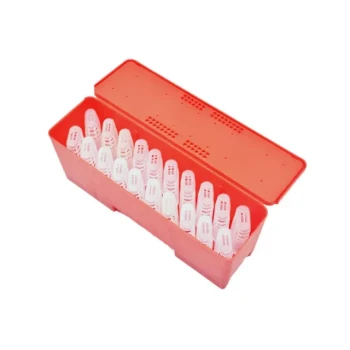
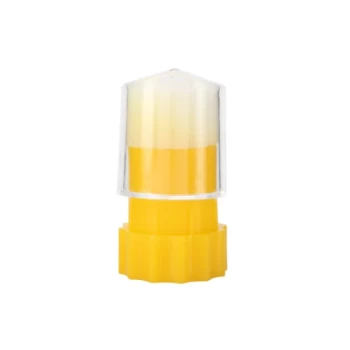
Marking tools and transport boxes function as essential control mechanisms in honeybee homing experiments to ensure data validity.
Marking tools, such as colored markers or tags, are used to visually differentiate between various treatment groups, such as healthy bees versus those infected with parasites. Simultaneously, well-ventilated transport boxes are utilized to maintain the bees' physiological stability while moving them to release locations typically 1 to 2 kilometers away.
By minimizing transport stress and ensuring clear identification, these tools allow researchers to accurately isolate specific variables—such as the impact of Varroa mites—on a bee’s spatial orientation and navigational cognitive abilities.
Visual Identification and Group Separation
Distinguishing Treatment Groups
In homing ability tests, it is critical to compare different cohorts of bees simultaneously. Specialized marking tools, including colored markers or physical tags, allow researchers to instantly identify which bee belongs to which experimental group.
This visual distinction is vital when analyzing how specific conditions affect performance. For instance, distinguishing a control group from a group affected by Varroa mites requires immediate, error-free visual recognition upon the bee's return.
Tracking Individual Performance
Beyond simple group separation, marking ensures that data is attributed to the correct individual. This precision prevents data mixing and ensures that the behavioral metrics recorded correspond strictly to the biological variables being tested.
Ensuring Physiological Stability During Transit
Maintaining Normal Cognitive Function
The primary function of the transport box is to preserve the bee's normal physiological state during the journey to the release site. These boxes must be well-ventilated to prevent overheating or oxygen deprivation.
If a bee is physically stressed or exhausted by the transport process itself, its failure to return home could be misattributed to navigational deficits. Proper transport ensures the bee arrives in a "normal" cognitive and physical condition.
Standardizing the Release Context
Homing tests typically involve releasing bees at distances of 1 to 2 kilometers from the hive. The transport box provides a standardized environment during this displacement.
By neutralizing external stressors during the move, researchers ensure that the flight back to the hive is a true test of spatial orientation and navigation, rather than a measure of recovery from a traumatic transfer.
Critical Methodological Considerations
The Risk of Transport Stress
While transport boxes are designed for safety, they represent a potential point of failure. Inadequate ventilation is a common pitfall that can alter the internal state of the bee.
If the internal environment of the box fluctuates significantly, the bees' ability to orient themselves may be compromised before the experiment begins, rendering the resulting data on navigational ability invalid.
Impact of Marking on Flight
The application of marking tools must be non-invasive. Tags or markers must not impede wing movement or add significant weight.
If the marking tool alters the aerodynamics of the bee, the study measures physical burden rather than cognitive navigational ability.
Ensuring Experimental Validity
To conduct accurate honeybee homing tests, prioritize the integrity of your subjects above all else.
- If your primary focus is accurate behavioral data: Prioritize ventilation and stability in transport boxes to ensure bees are tested on navigation, not stress recovery.
- If your primary focus is comparative analysis: Use distinct, high-contrast marking tools to eliminate ambiguity between control groups and treatment groups (e.g., Varroa-infected bees).
The reliability of your homing study depends entirely on releasing a calm, healthy, and clearly identifiable subject.
Summary Table:
| Tool | Primary Function | Impact on Experimental Data |
|---|---|---|
| Marking Tools | Visual identification & group separation | Ensures accurate attribution of behavior to specific biological variables (e.g., Varroa-infected vs. healthy). |
| Transport Boxes | Maintaining physiological stability during transit | Minimizes transport stress and ensures navigation tests measure cognitive ability, not physical exhaustion. |
| Ventilation Systems | Preventing overheating & oxygen deprivation | Preserves the bee's normal cognitive state for valid spatial orientation testing. |
| Identification Tags | Tracking individual performance | Prevents data mixing and allows for precise behavioral metrics per subject. |
Elevate Your Research & Commercial Success with HONESTBEE
Precision in bee management requires the right equipment, whether for scientific research or large-scale honey production. HONESTBEE specializes in catering to commercial apiaries and distributors with a comprehensive wholesale portfolio designed to maximize efficiency and honey quality.
From specialized beekeeping tools for delicate field tests to industrial-grade honey-filling and hive-making machines, we provide the full spectrum of equipment and consumables needed to scale your operations. Our expert solutions ensure your bees remain healthy and your productivity stays high.
Ready to upgrade your apiary’s performance?
Contact us today to explore our wholesale offerings
References
- Heyan Yang, Xiaobo Wu. <i>Varroa destructor</i> mite infestations in capped brood cells of honeybee workers affect emergence development and adult foraging ability. DOI: 10.1093/cz/zoab002
This article is also based on technical information from HonestBee Knowledge Base .
Related Products
- Plastic Transporting Bee Packages and Nuc Boxes for Beekeeping
- JZBZ Style Professional Battery Box with 20 Shipping Cages
- Langstroth Honey Bee Box Hive Boxes for Different Depths
- HONESTBEE Professional Mini J-Hook Hive Tool for Beekeeping
- HONESTBEE Premium Italian Style Hive Tool with Hardwood Handle
People Also Ask
- What role do bee package boxes play in the commercial transport and expansion of honeybee colonies? - Logistic Essentials
- What are beekeeping boxes called? A Guide to Hive Bodies and Box Types
- How do standardized bee packages serve as a recovery mechanism for commercial beekeeping? Ensure Business Continuity
- What is the commercial value of using standardized bee packages? Drive Scalability in Large-Scale Apiaries
- Why is the timely introduction of high-quality bee packages critical? Save Your Apiary from Asian Hornet Invasions