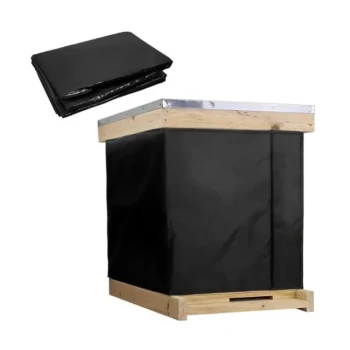
A waterproof and windproof beehive cover is typically engineered using a composite structure of heavy, tear-resistant marine-grade vinyl paired with foam board insulation. These covers secure tightly around the hive bodies using heavy-duty Velcro to prevent wind infiltration, all while maintaining a specific design geometry that prevents the blockage of vital hive openings or top vents.
Core Takeaway The ideal winter cover functions as a thermal envelope, protecting the colony from wind chill and water ingress while critically maintaining airflow. The structural integrity relies on durable exterior materials and adjustable fasteners that accommodate ventilation, preventing the accumulation of lethal condensation inside the hive.
Anatomy of a Protective Cover
Exterior Shell Construction
The primary defense against the elements is a shell made from heavy, tear-resistant material, most commonly marine-grade vinyl.
This material provides a robust barrier against wind gusts and precipitation, ensuring the hive remains dry.
Frequently, these covers are black or dark-colored to absorb solar radiation, passively warming the hive on sunny winter days.
Thermal Insulation Layer
Beneath the exterior shell, the cover incorporates foam board insulation.
This layer is critical for retaining the heat generated by the winter cluster, reducing the energy expenditure required for the bees to maintain warmth through muscle contraction.
Securement Mechanisms
To function as a windbreak, the cover must eliminate gaps where cold air could enter.
Structural integrity is achieved using heavy-duty Velcro fasteners, which allow the cover to fit tightly onto the hive bodies.
This design enables the cover to be installed without tools and allows it to be stored flat during the off-season.
Critical Ventilation Features
Preserving Airflow Pathways
A structural imperative of these covers is that they must not block the top vent or hive openings.
While the sides are sealed, the design allows moisture—a byproduct of bee respiration—to escape through the top, preventing it from condensing and freezing on the colony.
Upper Entrance Compatibility
Proper covers are designed to accommodate an upper entrance hole or a notched inner cover.
This structural feature provides an essential exit for cleansing flights if the bottom entrance is blocked by snow or ice.
Understanding the Trade-offs
Moisture Retention Risks
The most significant structural risk of a "waterproof" vinyl or plastic cover is breathability.
While marine-grade vinyl effectively stops rain and wind, it also traps internal humidity if ventilation is obstructed.
If moisture cannot escape through the top vents, it creates a damp environment that is often more lethal to bees than the cold itself.
Material Alternatives
While vinyl covers offer high durability and insulation, supplementary methods like tar paper offer different structural benefits.
Tar paper is less insulating than foam board but is significantly more breathable and acts as an effective windbreak.
However, tar paper lacks the reusable, tool-free convenience of Velcro-secured vinyl covers.
Making the Right Choice for Your Apiary
The structural choice you make should align with your specific climate conditions and management style.
- If your primary focus is thermal retention and reusability: Choose a marine-grade vinyl wrap with foam insulation and heavy-duty Velcro, ensuring the top vents remain unobstructed.
- If your primary focus is moisture management and breathability: Consider using tar paper wraps, which serve as a windbreak and heat absorber without sealing the hive as tightly as plastic.
- If your primary focus is colony survival in heavy snow: Ensure your cover structure accommodates a top entrance or notched inner cover, guaranteeing bees have an exit route even if the base is buried.
Winterizing a hive is a balance between retaining heat and releasing moisture; your equipment must facilitate both.
Summary Table:
| Feature | Material/Component | Key Function |
|---|---|---|
| Exterior Shell | Marine-grade Vinyl | Waterproof, tear-resistant, and windproof barrier. |
| Insulation | Foam Board | Retains colony heat and reduces bee energy expenditure. |
| Fasteners | Heavy-duty Velcro | Ensures a tight fit and tool-free installation/storage. |
| Ventilation | Precise Cut-outs | Prevents lethal condensation by maintaining airflow. |
| Color | Dark/Black Pigment | Passive solar heating for thermal regulation. |
Maximize Overwintering Success with HONESTBEE
Protect your investment with high-performance beekeeping infrastructure. HONESTBEE provides commercial apiaries and distributors with professional-grade winterization solutions, ranging from heavy-duty hive wraps and insulation systems to advanced hive-making machinery. Our comprehensive wholesale catalog includes everything from specialized hardware to essential industry consumables designed for durability and colony health.
Ready to scale your operation or stock premium equipment?
Contact our team today to discuss your wholesale needs and see how our expertise in beekeeping tools and machinery can benefit your business.
Related Products
- Professional Insulated Winter Hive Wrap for Beekeeping
- Inner Beehive Cover for Beekeeping Bee Hive Inner Cover
- Telescopic Beehive Outer Cover Lid Roof with Galvanised Sheeting for Langstroth Hive and Beehive Outer Cover
- Solid Bottom Board Australian Pine Wood Langstroth Bottom Board for Wholesale
- Wooden Bee Hive Frames for Beekeeping and Wholesale
People Also Ask
- What are the steps to properly wrap a beehive for winter? Ensure Your Colony Survives the Cold
- When is the best time to wrap a beehive for winter? A Guide to Perfect Winterization Timing
- How do professional insulation wraps provide protection for bee colonies? Optimize Winter Survival & Energy Efficiency
- What are the technical benefits of using winter wraps for beehive insulation? Boost Colony Survival & Hive Health
- What are the benefits of using insulated covers for hives? Ensure Colony Survival and Health