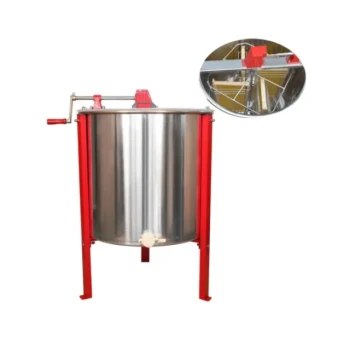
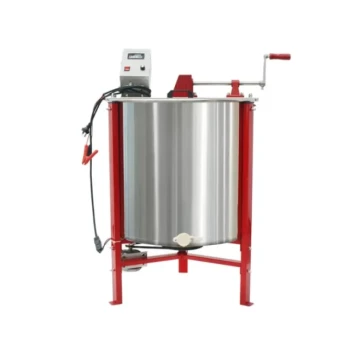
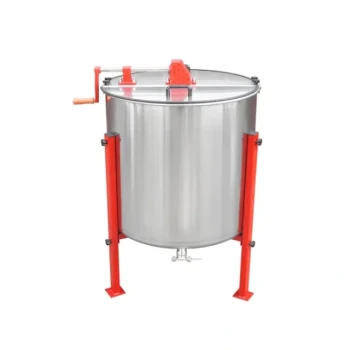
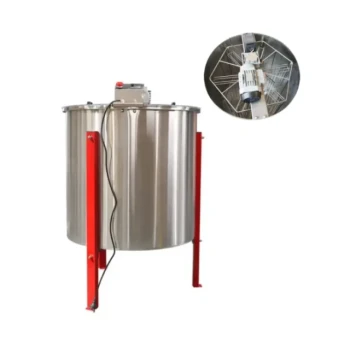
Automatic honey extractors represent a decisive technical upgrade over manual methods by utilizing motor-driven centrifugal force within a closed chamber to separate honey. This mechanization allows for precise control over rotation speeds and extraction cycles, ensuring thorough honey removal while significantly reducing the physical labor required by the operator.
Core Takeaway The shift to automation is not merely about speed; it is about consistency and preservation. Automatic extractors protect the chemical quality of the honey by reducing environmental exposure and preserve the structural integrity of the comb, which directly improves the long-term productivity of the bee colony.
Preservation of Honey Quality
Minimizing Oxidation and Aroma Loss
Manual extraction often involves open-air processing that exposes honey to the environment for extended periods. Automatic extractors operate in closed chambers with reduced processing times.
This containment preserves the volatile organic compounds responsible for the honey's natural floral aromas. Furthermore, it significantly lowers the risk of oxidation, ensuring the final product retains its distinct flavor profile.
Reducing Impurities and Spoilage Risks
Mechanized extraction avoids the crushing and squeezing techniques sometimes associated with manual processing.
By relying on centrifugal force rather than physical pressure, the process minimizes the introduction of beeswax impurities into the honey. Additionally, faster processing reduces moisture absorption from the air, preventing fermentation and extending the commercial shelf life of the product.
Optimizing the Biological Cycle
Protecting the Honeycomb Structure
A critical advantage of automatic units is the ability to maintain a stable, controlled rotation speed. Manual cranking often leads to erratic speeds that can fracture or destroy delicate wax combs.
Automatic extractors gradually ramp up speed or hold consistent RPMs, ensuring honey is evacuated without damaging the underlying comb foundation.
Energy Conservation for the Colony
The technical benefit of saving the comb extends beyond the harvest. Because the wax structure remains intact, frames can be immediately returned to the hive for reuse.
This significantly reduces the energy expenditure of the bees, as they do not need to consume honey resources to secrete new wax. Consequently, the colony can focus immediately on foraging, increasing the yield of subsequent harvest cycles.
Operational Efficiency and Scalability
Decoupling Labor from Extraction
In manual setups, the operator is physically tied to the crank handle for the duration of the spin. Electric motors decouple the operator from the machine.
This allows for "parallel processing": while one batch is spinning, the beekeeper can uncap the next set of frames. This workflow alteration dramatically increases throughput and reduces labor intensity during peak harvest periods.
Consistency Through Speed Control
Manual extraction varies based on the operator's fatigue levels. Automatic extractors deliver identical force profiles every time.
This consistency ensures a uniform "dryness" of the extracted frames, maximizing the harvest yield per frame and standardizing the production process to meet commercial market standards.
Understanding the Operational Trade-offs
While automatic extractors offer superior technical performance, they introduce dependencies that manual methods avoid.
- Infrastructure Dependence: Unlike manual cranks, these units require a reliable power source, which may limit their utility in remote field operations.
- Maintenance Complexity: The addition of motors and speed controllers introduces mechanical complexity, requiring a higher level of technical maintenance compared to simple manual gears.
Making the Right Choice for Your Goal
To maximize the value of your equipment, align the extractor's capabilities with your specific operational objectives.
- If your primary focus is Commercial Scalability: Leverage the multitasking capability of electric motors to establish a continuous workflow of uncapping while extracting to maximize daily throughput.
- If your primary focus is Product Quality: Utilize the variable speed controls to extract at the lowest effective RPM, minimizing aeration and preserving the most delicate floral notes.
Automation transforms extraction from a labor-intensive bottleneck into a controlled, preservation-focused process.
Summary Table:
| Feature | Manual Extraction | Automatic Extraction | Business Benefit |
|---|---|---|---|
| Power Source | Manual Labor (Cranking) | Electric Motor (Speed Control) | Reduces labor costs & physical fatigue |
| Comb Safety | High risk of fracture | Controlled centrifugal force | Preserves frames for immediate hive reuse |
| Honey Quality | High oxidation risk | Closed chamber processing | Retains floral aromas and prevents spoilage |
| Throughput | Sequential (One at a time) | Parallel (Uncap while spinning) | Maximizes daily harvest volume |
| Consistency | Variable (Fatigue dependent) | Standardized RPM cycles | Ensures uniform dryness and yield per frame |
Scale Your Honey Production with HONESTBEE
At HONESTBEE, we understand that for commercial apiaries and distributors, efficiency and quality are the cornerstones of profitability. Our comprehensive wholesale offering provides the specialized hardware you need to transform your operations—from advanced automatic honey extractors and honey-filling machines to durable hive-making equipment.
By choosing HONESTBEE, you gain a partner dedicated to your growth. We supply the full spectrum of beekeeping tools, machinery, and industry consumables, ensuring your colony's productivity is maximized while labor costs are minimized.
Ready to upgrade your equipment or stock your distribution business?
Contact Us Today to Get a Wholesale Quote
References
- Sandra Notaro, Gianluca Grilli. Citizens’ perceptions and willingness to pay for urban beekeeping: a case study in northern Italy. DOI: 10.1007/s11252-025-01681-y
This article is also based on technical information from HonestBee Knowledge Base .
Related Products
- HONESTBEE 72 Frame Industrial Electric Honey Extractor for Beekeeping
- 32 Frame Commercial Electric Honey Extractor for Beekeeping and Honey Production
- Commercial Electric 12 Frame Honey Extractor Spinner Motorized Honey Extractor
- HONESTBEE 4 Frame Manual Self Reversing Honey Extractor for Beekeeping
- Stainless Steel Manual 8 Frame Radial Honey Extractor Machine for Beehives
People Also Ask
- What is the importance of balancing honeycomb frames within a honey extractor? Ensure Stability and Protect Machinery
- How is honey separated from the frames after they are uncapped? Efficient Extraction Methods for High Yields
- What are the main benefits of using a honey extractor? Maximize Yields and Protect Your Honeycomb
- What are the recommended methods for removing honey from the honeycomb? Top Extraction Techniques for Maximum Efficiency
- How do manual honey extractors compare to electric honey extractors? Choosing the Right Tool for Your Apiary Growth