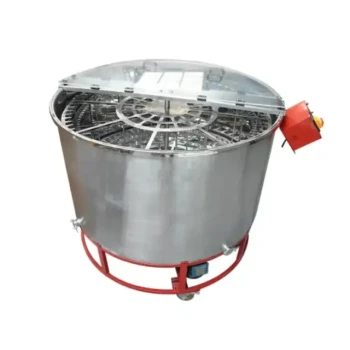
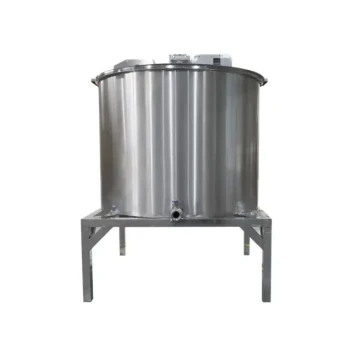
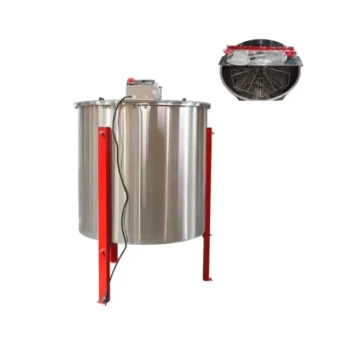
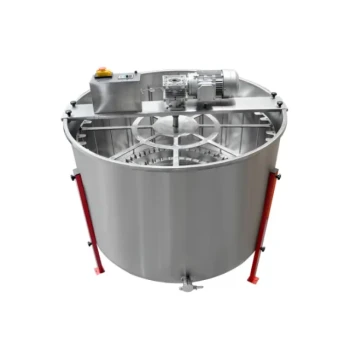
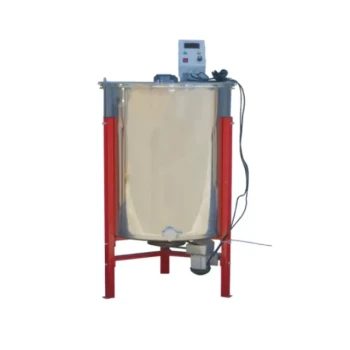
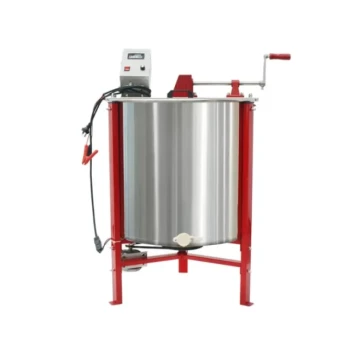
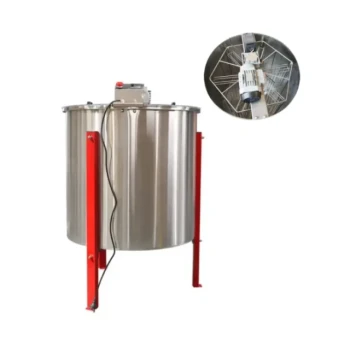
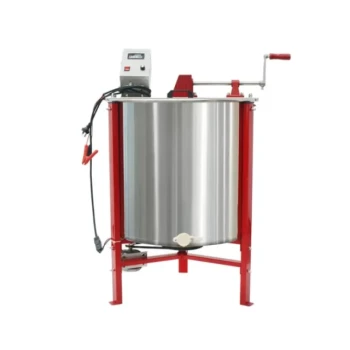
Industrial Electric Honey Extractors fundamentally transform apiary throughput by utilizing high-torque motor systems to generate consistent, high-precision centrifugal force. For operations scaling beyond 30 to 45 hives, these machines replace the variability of physical labor with automated precision, significantly shortening extraction cycles while ensuring a more thorough separation of honey from the comb than manual cranking can achieve.
The transition to industrial electric extraction is not merely about speed; it is about stabilizing your production variable. By automating force application and speed regulation, these systems maximize yield per frame and protect the structural integrity of the honeycomb for immediate reuse.
The Mechanics of Efficiency and Throughput
Consistent Centrifugal Force
Manual extraction relies on the operator's physical stamina, which leads to inconsistent spinning speeds and variable results.
Industrial electric extractors utilize motor-driven systems to maintain a constant, optimal RPM. This ensures that the centrifugal force applied is uniform throughout the entire batch, resulting in a significantly higher extraction rate per frame.
Rapid Cycle Times
In medium to large-scale operations, time is the most critical resource.
Electric systems drastically shorten extraction cycles by reaching target speeds instantly and maintaining them without fatigue. This allows for continuous batch processing, preventing bottlenecks during peak harvest seasons.
Reduction of Labor Intensity
Processing hundreds of frames manually is physically exhausting and unsustainable for commercial growth.
By automating the spinning process, electric extractors reduce labor intensity, allowing operators to focus on uncapping frames or filtering honey while the machine runs. This parallel processing capability is essential for operations managing 30 to 45 hives or more.
Preservation of Assets and Quality
Automated Speed Regulation
One of the distinct advantages of industrial-grade systems is the ability to utilize automated speed regulation.
These systems often start slowly and ramp up speed, which prevents the heavy, honey-filled combs from "blowing out" or collapsing under sudden force. This reduces mechanical damage to the wax structure.
Frame Reusability
The economic viability of an apiary often depends on the bees reusing existing comb rather than building new wax.
Because the automated regulation protects the comb structure, frames can be returned to the bee colony immediately. This allows the bees to focus their energy on honey production rather than wax secretion, further boosting the apiary's overall efficiency.
Quality Control and Hygiene
Speed and automation also contribute to the final product's quality.
Rapid extraction via high-precision force minimizes the time honey is exposed to air. This helps maintain the honey's natural quality by reducing oxidation and exposure to ambient moisture or contaminants.
Understanding the Trade-offs
Infrastructure Dependencies
Unlike manual extractors, which can be used in remote fields, industrial units require a reliable power source.
This introduces a dependency on grid power or generators. A power failure during a harvest window can halt production entirely, unlike manual methods which are resilient to infrastructure issues.
Complexity and Maintenance
With motors and speed controllers comes increased mechanical complexity.
While manual extractors are mechanically simple, industrial electric versions require regular maintenance of motors and bearings. The potential for technical failure requires the operator to have basic troubleshooting skills or access to spare parts to ensure uptime.
Making the Right Choice for Your Scale
The decision to upgrade to industrial electric extraction should be driven by your specific production bottlenecks and growth targets.
- If your primary focus is labor efficiency: The automation of the spinning cycle allows a single operator to manage uncapping, extraction, and filtering simultaneously, essentially doubling workforce productivity.
- If your primary focus is long-term yield: The precision speed control preserves drawn comb, allowing bees to refill frames immediately and increasing the total honey harvest per season.
For any operation exceeding 30 hives, the shift to electric extraction is the single most effective technical upgrade to professionalize your workflow.
Summary Table:
| Feature | Manual Honey Extractors | Industrial Electric Extractors |
|---|---|---|
| Power Source | Physical labor / Manual cranking | High-torque electric motors |
| Speed Control | Variable/Inconsistent | Automated precision RPM |
| Labor Intensity | High (Physically exhausting) | Low (Automated batch processing) |
| Comb Protection | High risk of wax breakage | Soft-start & speed regulation |
| Ideal Scale | Hobbyist (1-10 hives) | Commercial (30+ hives) |
| Throughput | Limited by operator fatigue | High-speed continuous cycles |
Professionalize Your Honey Production with HONESTBEE
Are you ready to scale your commercial apiary operations and maximize your seasonal yield? HONESTBEE specializes in supporting commercial apiaries and distributors with high-performance industrial beekeeping machinery. From high-capacity electric honey extractors and honey-filling machines to precision hive-making equipment, we provide the full spectrum of tools and consumables needed to professionalize your workflow.
Our value to you: We reduce your labor costs and protect your valuable hive assets through advanced automation.
Contact HONESTBEE today to explore our wholesale equipment solutions
References
- ahmed ali bilal, M A Khalaf. Economic evaluation of honeybee breeding projects in Anbar province productive season (2011-20012). DOI: 10.32649/ajas.2014.98289
This article is also based on technical information from HonestBee Knowledge Base .
Related Products
- HONESTBEE 72 Frame Industrial Electric Honey Extractor for Beekeeping
- Commercial Electric 12 Frame Honey Extractor Spinner Motorized Honey Extractor
- 32 Frame Commercial Electric Honey Extractor for Beekeeping and Honey Production
- 8-Frame Electric Self-Reversing Honey Extractor Spinner for Commercial Honey Extraction Equipment
- Electric 4 Frame Tangential Honey Extractor
People Also Ask
- What is the importance of balancing honeycomb frames within a honey extractor? Ensure Stability and Protect Machinery
- How is honey separated from the frames after they are uncapped? Efficient Extraction Methods for High Yields
- What are the main benefits of using a honey extractor? Maximize Yields and Protect Your Honeycomb
- What are the recommended methods for removing honey from the honeycomb? Top Extraction Techniques for Maximum Efficiency
- How do manual honey extractors compare to electric honey extractors? Choosing the Right Tool for Your Apiary Growth