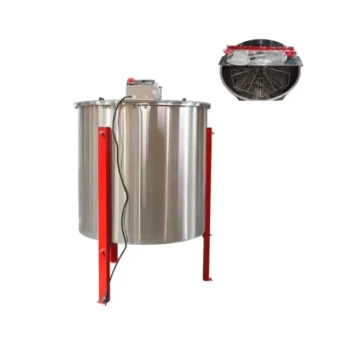
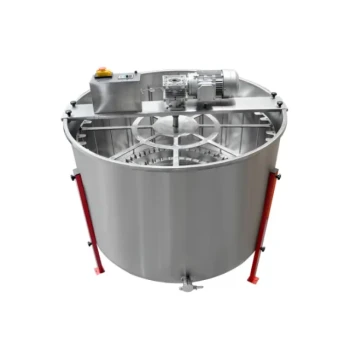
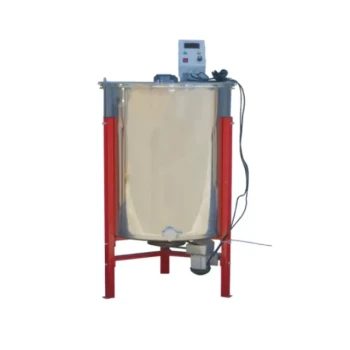
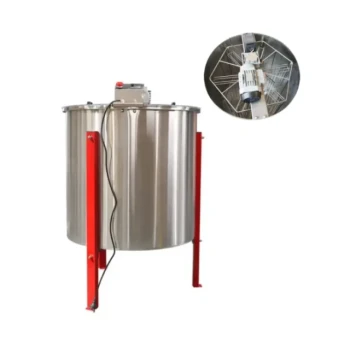
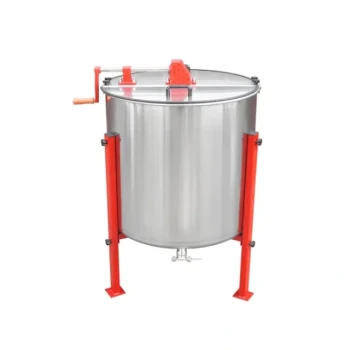
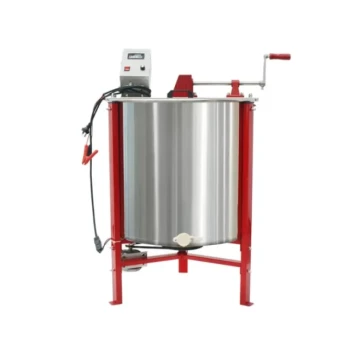
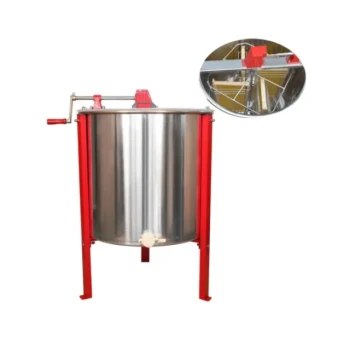
Industrial honey extractors fundamentally outperform manual methods by utilizing high-speed centrifugal force to separate honey from the comb without destroying the underlying wax structure. This mechanical process allows the honeycomb to be recycled immediately, significantly reducing labor requirements while preserving the biological resources of the hive.
By decoupling honey harvest from comb destruction, industrial extractors allow colonies to redirect energy from wax rebuilding to honey production. This efficiency gain is the primary prerequisite for transitioning from hobbyist beekeeping to scalable commercial production.
The Biological Advantage: Comb Preservation
Non-Destructive Extraction
The most critical technical advantage is the use of centrifugal force. Unlike manual pressing or crushing, which destroys the comb, industrial extractors spin the frames to evacuate liquid honey while keeping the wax foundation intact.
Energy Conservation for the Colony
Bees consume a significant amount of honey to generate the energy required to secrete wax. By returning intact combs to the hive, you eliminate the need for bees to rebuild the foundation from scratch.
Increased Honey Yield
When bees are relieved of the burden of wax reconstruction, they can focus entirely on foraging and nectar processing. This direct energy shift results in a measurably higher honey yield per colony over the course of a season.
Operational Efficiency and Scalability
Speed and Throughput
Industrial extractors utilize high-speed rotation to evacuate honey in a fraction of the time required for manual gravity draining or pressing. This speed is essential for medium-to-large scale operations where processing time directly correlates to profitability.
Reduced Labor Costs
Automated or motorized extractors minimize the physical effort required for harvest. This reduction in manual labor lowers overhead costs and allows a smaller team to manage a larger number of hives.
Precision Control
Modern industrial units allow for precise control of rotation speeds. This ensures that the extraction is thorough enough to maximize harvest, yet gentle enough to prevent mechanical damage to delicate or new honeycombs.
Product Quality and Hygiene
Closed-System Processing
Industrial extractors typically operate within a closed chamber. This minimizes the time honey is exposed to the open environment, significantly reducing the risk of contamination from dust or debris.
Flavor Preservation
By accelerating the extraction process and reducing environmental exposure, industrial units minimize oxidation. This helps preserve the natural floral aromas and distinct flavor profiles that can degrade during slower manual processing.
Material Integrity
These machines are generally constructed from food-grade stainless steel. This ensures the chemical and nutritional properties of the honey are preserved without the risk of leaching or reactivity often associated with improper manual equipment.
Understanding the Trade-offs
Initial Capital Investment
While operationally efficient, industrial extractors represent a higher upfront cost compared to manual tools. The return on investment relies on having enough hives to benefit from the increased yield and labor savings.
Maintenance Requirements
Moving from manual to mechanical extraction introduces technical complexity. Operators must account for regular maintenance of moving parts and motors to ensure consistent performance, unlike simple manual gravity filters.
Making the Right Choice for Your Goal
To determine if industrial extraction aligns with your operational needs, consider your primary objectives:
- If your primary focus is Commercial Scale: You must utilize centrifugal extraction to recycle combs, as this is the only way to maximize yield and reduce the biological tax on your bees.
- If your primary focus is Product Purity: You should leverage the closed-chamber design of industrial extractors to minimize oxidation and environmental contamination.
Industrial extraction is not just about speed; it is a resource-management strategy that converts saved biological energy into higher production volume.
Summary Table:
| Feature | Industrial Honey Extractors | Manual Extraction Methods |
|---|---|---|
| Mechanism | Centrifugal force (non-destructive) | Crushing, pressing, or gravity |
| Comb Integrity | Preserved & immediately reusable | Often destroyed or damaged |
| Honey Yield | Higher (bees save energy on wax) | Lower (energy diverted to rebuilding) |
| Processing Speed | High-speed, high-throughput | Slow and labor-intensive |
| Hygiene | Closed food-grade stainless steel | Open-air exposure risk |
| Labor Cost | Minimal due to automation | High per unit of honey produced |
Scale Your Beekeeping Operation with HONESTBEE
Transitioning to industrial-grade extraction is the ultimate strategy for commercial success. HONESTBEE caters to commercial apiaries and distributors with a comprehensive wholesale offering designed to maximize your productivity and ROI.
How We Empower Your Business:
- Advanced Machinery: Access our full spectrum of beekeeping technology, from high-capacity honey extractors to specialized hive-making and honey-filling machines.
- Total Supply Chain: We provide all essential industry consumables and specialized hardware to keep your operations running smoothly.
- Diverse Portfolio: Beyond tools, we offer honey-themed cultural merchandise, perfect for distributors looking to expand their market reach.
Ready to optimize your harvest and boost your honey yields? Contact HONESTBEE Today to explore our wholesale solutions and professional equipment.
References
- Savica Dimitrieska, Tanja Efremova. PROBLEMS IN THE PROMOTION OF HONEY AND BEE PRODUCTS. DOI: 10.37708//ep.swu.v10i1.2
This article is also based on technical information from HonestBee Knowledge Base .
Related Products
- HONESTBEE 72 Frame Industrial Electric Honey Extractor for Beekeeping
- Commercial Electric 12 Frame Honey Extractor Spinner Motorized Honey Extractor
- 32 Frame Commercial Electric Honey Extractor for Beekeeping and Honey Production
- Commercial 48-Frame Stainless Steel Honey Extractor
- 8-Frame Electric Self-Reversing Honey Extractor Spinner for Commercial Honey Extraction Equipment
People Also Ask
- What is the importance of balancing honeycomb frames within a honey extractor? Ensure Stability and Protect Machinery
- How is honey separated from the frames after they are uncapped? Efficient Extraction Methods for High Yields
- What are the main benefits of using a honey extractor? Maximize Yields and Protect Your Honeycomb
- What are the recommended methods for removing honey from the honeycomb? Top Extraction Techniques for Maximum Efficiency
- How do manual honey extractors compare to electric honey extractors? Choosing the Right Tool for Your Apiary Growth