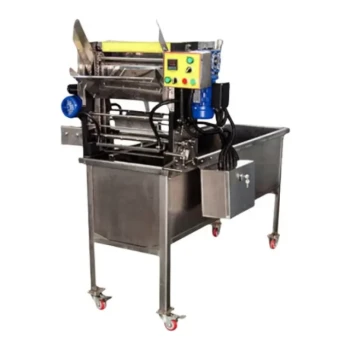
The technical advantages of automatic weighing and honey filling machines center on their ability to manage high-viscosity fluids using pneumatic or servo-driven piston filling technology. This equipment provides a scalable solution that ensures high-speed production, minimized product loss, and strict adherence to weight consistency and hygiene standards.
Core Takeaway Automatic filling technology bridges the gap between artisanal beekeeping and commercial retail by converting raw honey into standardized products. It eliminates the variability of manual labor, ensuring every unit meets international trade standards for weight and food safety.
Precision and Compliance
The primary technical hurdle in commercial honey production is maintaining consistency across thousands of units.
Achieving Metrological Compliance
Manual filling often results in weight variances that violate strict international trade standards. Automatic machines utilize precise metering control systems to ensure the volume of every bottle is consistent with its labeled weight.
Standardization for Retail
To enter supermarket supply chains, products must be uniform. Automated lines ensure that every unit produced is identical in weight and volume, providing the standardization required for modern logistics and high-value-added fractional packaging.
Managing High Viscosity and Waste
Honey is a difficult substance to package due to its thickness and tendency to cling to surfaces.
Piston-Driven Flow Control
Standard pumps often fail with thick liquids. These machines employ pneumatic or servo-driven piston technology specifically designed to handle high viscosity. This provides the force necessary to move honey efficiently without compromising speed.
Minimizing Product Loss
Honey is valuable, and spills represent direct revenue loss. High-performance machines utilize precision metering to manage overflow and "wall-clinging" issues. This significantly reduces material loss compared to manual pouring or gravity-fed systems.
Hygiene and Product Safety
As production scales, the risk of contamination increases. Automation acts as a firewall against biological hazards.
Preventing Secondary Contamination
Manual operations introduce human contact and environmental exposure. Industrial-grade filling lines typically feature enclosed hygienic designs or closed-loop operations. This effectively blocks secondary microbial contamination from the environment.
Extending Shelf Life
By maintaining a standardized and hygienic bottling process, producers can effectively extend the shelf life of their honey. This preservation is critical for distribution channels that require long storage times.
Operational Efficiency
The transition from home-based sales to commercial production requires a fundamental shift in workflow speed.
Reducing Labor Dependencies
Automated workflows significantly reduce the time required to transfer honey from large storage tanks to retail packaging. This lowers labor costs and removes the bottleneck of manual filling, allowing staff to focus on other production tasks.
Understanding the Trade-offs
While automation offers significant advantages, it introduces specific technical challenges that must be managed.
Maintenance and Cleaning
Honey creates a sticky environment that can jam mechanical components if not maintained. Automated systems require rigorous cleaning protocols, particularly to prevent crystallization within the pistons or nozzles during downtime.
Complexity of Calibration
While precise, these machines require careful calibration. Changes in honey temperature or viscosity (e.g., switching between floral varieties) may require operators to adjust the servo or pneumatic settings to maintain accuracy.
Making the Right Choice for Your Goal
Selecting the right machinery depends on your specific bottleneck.
- If your primary focus is Market Access: Prioritize machines with high-precision metering to meet strict international metrological and trade compliance standards.
- If your primary focus is Brand Reputation: Look for equipment with enclosed hygienic designs to prevent secondary contamination and ensure maximum shelf life.
- If your primary focus is Profit Margins: Choose systems featuring servo-driven pistons to minimize overflow and wall-clinging, thereby reducing expensive product loss.
Automation is not just about speed; it is the technical foundation required to turn a raw agricultural product into a compliant, professional commercial brand.
Summary Table:
| Feature | Technical Advantage | Business Impact |
|---|---|---|
| Filling Technology | Pneumatic or servo-driven pistons | Efficiently handles high-viscosity honey without clogging |
| Precision Control | Metrological metering systems | Ensures weight compliance and reduces product waste |
| Hygienic Design | Enclosed/Closed-loop operations | Prevents contamination and extends product shelf life |
| Operational Flow | Automated high-speed bottling | Reduces labor dependency and increases throughput |
| Standardization | Uniform volume/weight units | Meets international retail and logistics requirements |
Elevate Your Commercial Honey Operation with HONESTBEE
Transitioning from artisanal beekeeping to commercial retail requires the right technical foundation. HONESTBEE specializes in supporting commercial apiaries and distributors with high-performance honey-filling machines and specialized beekeeping hardware.
Our comprehensive wholesale portfolio is designed to solve your production bottlenecks—from minimizing product loss with servo-driven precision to ensuring total food safety with hygienic designs. Whether you are scaling up your production line or sourcing industrial beekeeping machinery, we provide the tools to build a compliant, professional brand.
Ready to optimize your production and maximize margins?
Contact HONESTBEE Today to explore our full spectrum of beekeeping equipment and consumables.
References
- Hossam F. Abou‐Shaara. Potential Honey Bee Plants of Egypt. DOI: 10.1515/cerce-2015-0034
This article is also based on technical information from HonestBee Knowledge Base .
Related Products
- Fully Automatic Honey Filling Packaging Machine for Processing Line
- Automatic Honey Filling and Filtering Machine for Beekeeping Bottle Filling
- Precision Durable Efficient HONESTBEE Rotary Honey Filling Machine
- Semi Automatic Small Honey Bottle Filling Machine Honey Filler
- Precision Automated Packaging Turntable Honey Spoon Filling Sealing Packing Machine
People Also Ask
- Why are fully automatic honey filling and packaging lines essential? Boost Your Honey's Market Value and Quality
- What is a fully-automatic honey filler? Streamline Your Production with High-Precision Automation
- How do automated honey filling and packaging machines affect profitability? Boost Margins with HONESTBEE Technology
- How do automated honey filling and packaging machines contribute to the market value of honey products? Maximize Your ROI
- How do industrial-grade automated honey filling and packaging machines mitigate the risk of physical contamination?