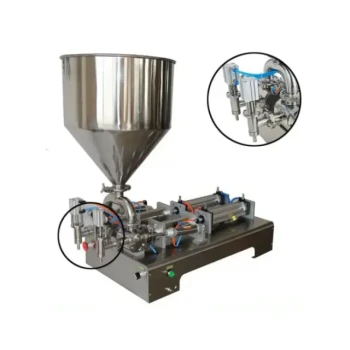
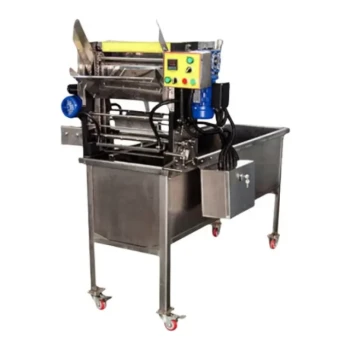
The primary technical advantages of automated filling and packaging machinery in the honey industry are the assurance of precise volumetric control, the maintenance of sterile conditions, and the ability to process high-viscosity fluids efficiently. These systems eliminate the variability of manual handling, protecting heat-sensitive bee products from oxidation and contamination while delivering the standardization necessary for large-scale commercial distribution.
The Core Insight Automated packaging is not merely a labor-saving device; it is a quality assurance necessity for industrial honey production. By creating a closed-loop environment, these machines transform a raw, variable harvest into a standardized commercial product that meets strict international hygiene and weight regulations.
Elevating Hygiene and Product Integrity
Eliminating Secondary Contamination
The most critical advantage of automation is the creation of a closed production environment. Manual operations inherently expose honey to the surrounding environment and human contact.
Industrial machinery mitigates this risk by performing filling operations under sterile conditions. This drastically reduces the likelihood of secondary contamination, ensuring the final product meets the stringent hygiene standards required for food safety.
Preserving Nutritional and Sensory Quality
Honey and royal jelly are heat-sensitive and prone to degradation when exposed to air. Automated lines are engineered to protect these delicate products from oxidation during the filling process.
By minimizing exposure time and controlling the environment, automation maintains the honey's nutritional integrity, flavor, and sensory quality. This preservation is essential for extending shelf life and maintaining the value of premium bee products.
Precision Metering and Standardization
High-Precision Volumetric Filling
Industrial machines utilize advanced fluid control technology to manage the flow of high-viscosity liquids. This ensures consistent filling volumes across different batches, regardless of the honey's thickness.
This measurement precision guarantees a consistent net weight for every unit produced. By eliminating overfilling or underfilling, producers significantly reduce material waste and maximize the yield from their harvest.
Compliance with International Standards
To enter premium global markets, products must meet rigorous specification standardization. Automated machinery ensures every jar complies with packaging weight regulations and labeling requirements.
This consistency facilitates compliance with international export standards. Consequently, automation directly enhances the brand value of beekeeping products by signaling reliability and quality to distributors.
Operational Efficiency and Scalability
Handling High-Viscosity Challenges
Processing honey requires machinery capable of moving thick, sticky fluids without degrading them. Automated systems are specifically designed to handle high-viscosity products efficiently.
This capability allows for high-speed throughput without compromising flow rate accuracy. It resolves the physical bottlenecks associated with manual handling of dense fluids.
Rapid Commercial Conversion
Automation allows producers to rapidly convert large-scale annual honey harvests into finished goods. This speed is vital for managing seasonal spikes in production volume.
By integrating packaging lines, operations increase overall production efficiency and reduce labor costs. This efficiency provides a competitive advantage in global markets where price fluctuation and supply reliability are constant pressures.
Understanding the Processing Trade-offs
The Heat vs. Viscosity Balance
While automation handles viscosity well, the machinery must be calibrated to avoid generating excess heat. Honey is heat-sensitive, and improper machine settings to force flow can damage the product's enzymes.
High-quality industrial machines differ from basic equipment by offering precise flow rate control that manages viscosity without thermal damage. Selecting equipment that balances these physical forces is critical to preventing quality loss during high-speed operations.
Making the Right Choice for Your Goal
To maximize the return on investment in automated machinery, align your equipment choice with your specific operational focus:
- If your primary focus is Export and Premium Markets: Prioritize machinery with advanced closed-loop hygiene systems to ensure the sterility and standardization required for international compliance.
- If your primary focus is Volume and Cost Reduction: Focus on high-throughput machines with precision metering to minimize material waste and labor costs during peak harvest conversion.
Automation bridges the gap between raw apiary output and the rigorous demands of the modern retail shelf.
Summary Table:
| Technical Advantage | Key Benefit to Production | Impact on Product Quality |
|---|---|---|
| Closed-Loop Environment | Eliminates secondary contamination | Ensures food safety & hygiene |
| Precision Metering | Reduces material waste & overfilling | Guarantees weight standardization |
| Oxidation Control | Protects heat-sensitive compounds | Preserves flavor & nutritional value |
| Viscosity Management | High-speed throughput for thick fluids | Maintains flow rate without damage |
| Standardized Packing | Compliance with export regulations | Enhances brand value & market access |
Elevate Your Honey Production with HONESTBEE
Transitioning to industrial automation is the key to scaling your apiary business. At HONESTBEE, we specialize in empowering commercial apiaries and distributors with the professional-grade tools needed to dominate the global market.
Our comprehensive wholesale portfolio includes:
- Advanced Machinery: High-precision honey-filling and specialized hive-making machines.
- Full-Spectrum Equipment: From industrial extractors to essential beekeeping consumables.
- Value-Added Goods: Honey-themed cultural merchandise to diversify your brand.
Whether you are looking to reduce labor costs or meet international export standards, HONESTBEE delivers the machinery and expertise to optimize your processing chain.
Contact us today to receive a tailored wholesale quote!
References
- Aliakbar Salehizadeh, Amir Gandomkar. Temperature Conditions for Determination of Beekeeping Regions in the Light of Climate Change. Case study: Fars Province. DOI: 10.2478/rtuect-2020-0006
This article is also based on technical information from HonestBee Knowledge Base .
Related Products
- Fully Automatic Honey Filling Packaging Machine for Processing Line
- Automatic Honey Filling and Filtering Machine for Beekeeping Bottle Filling
- Semi Automatic Small Honey Bottle Filling Machine Honey Filler
- Precision Automated Packaging Turntable Honey Spoon Filling Sealing Packing Machine
- Precision Durable Efficient HONESTBEE Rotary Honey Filling Machine
People Also Ask
- Why are fully automatic honey filling and packaging lines essential? Boost Your Honey's Market Value and Quality
- What is a fully-automatic honey filler? Streamline Your Production with High-Precision Automation
- How do automated honey filling and packaging machines affect profitability? Boost Margins with HONESTBEE Technology
- How do automated honey filling and packaging machines contribute to the market value of honey products? Maximize Your ROI
- How do industrial-grade automated honey filling and packaging machines mitigate the risk of physical contamination?