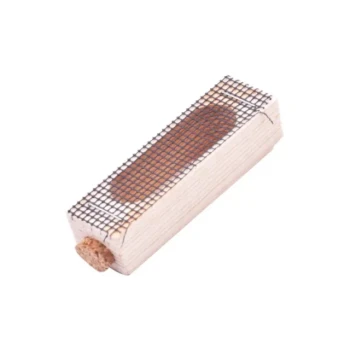
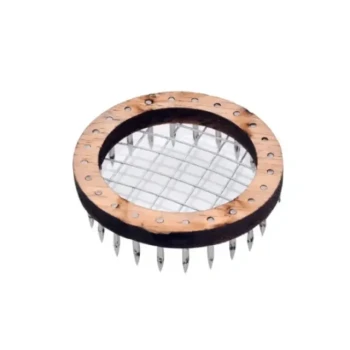
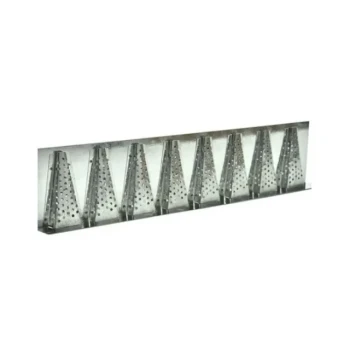
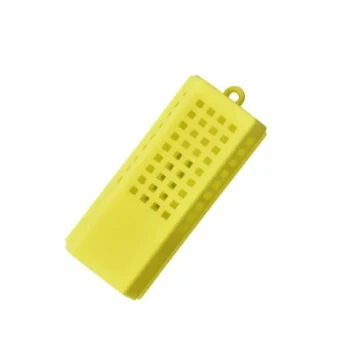
The systematic use of hive entrance blocks paired with mesh collection cages offers a precision mechanism for sampling honeybee populations. This technical setup allows you to intercept specific cohorts of returning foragers rapidly while maintaining the stability of the colony. The primary advantage lies in minimizing the stress response of the captured bees, ensuring that subsequent physiological analysis accurately reflects their natural state rather than a reaction to the trauma of capture.
Core Insight: The true value of this apparatus is data fidelity. By separating the act of capture from colony disruption and utilizing low-stress mesh environments, you ensure that physiological metrics—such as honey or pollen loads—remain valid indicators of actual foraging effort.
Preserving Colony and Sample Integrity
To understand the technical merit of this system, one must look at how it isolates the target subjects without introducing chaos into the larger system.
Disruption-Free Interception
The primary function of the entrance block is to temporarily halt traffic at the hive's threshold. This allows you to isolate a specific batch of returning foragers immediately.
Crucially, this occurs without disrupting the internal order of the colony. Because the intervention happens at the exterior, the queen, brood, and internal house bees remain undisturbed, preserving the hive's routine operations.
Stress Reduction via Design
The choice of lightweight mesh for the collection cages is not arbitrary; it is a functional requirement for biological accuracy. Unlike solid containers, mesh cages prevent the rapid overheating and panic often seen in confined insects.
While standardized metal cages are often used for rearing newly emerged bees, the principles of ventilation and visibility inherent in mesh designs are critical here. They prevent the "stress spike" that can alter the very physiological parameters researchers intend to measure.
Ensuring Data Accuracy
The technical hardware you choose directly impacts the validity of the biological data you collect.
Validating Physiological Metrics
When honeybees are stressed, their metabolic rates and physiological markers shift rapidly. Using a mesh collection cage mitigates this fight-or-flight response.
This ensures that measurements of honey or pollen loads are authentic. The data you gather reflects the foraging effort in a natural state, rather than an artifact of a stressful capture method.
Controlled Sampling Windows
By manually controlling the entrance block, you define the exact temporal window of the sample. This allows for the concentration of a high sample size within a short period, increasing the statistical power of the data without requiring prolonged hive closure.
Understanding the Constraints
While effective, this method requires strict adherence to operational limits to maintain its technical advantages.
Temporal Limitations
The entrance block must only be used temporarily. Leaving the entrance blocked for extended periods can cause congestion at the hive front, leading to overheating or aggression that negates the low-stress benefits.
Environmental Exposure
While mesh provides essential ventilation, it also exposes bees to ambient conditions. In extreme weather (high heat or rain), the open nature of the mesh cage requires immediate processing of the samples to prevent environmental stress.
Making the Right Choice for Your Project
The decision to use this specific apparatus depends on the sensitivity of the data you require.
- If your primary focus is physiological accuracy: Prioritize this method to ensure metabolic markers and resource loads are not skewed by capture stress.
- If your primary focus is colony stability: Use entrance blocks to sample foragers without triggering defensive behaviors from guard bees or disrupting the queen.
By decoupling capture from colony disruption, you transform sampling from a chaotic event into a controlled measurement.
Summary Table:
| Feature | Technical Advantage | Impact on Research |
|---|---|---|
| Entrance Block | Disruption-free interception | Maintains internal hive stability and queen safety. |
| Mesh Design | High ventilation & visibility | Minimizes heat stress and physiological trauma. |
| Controlled Timing | Precise temporal window | Increases statistical power through focused sample cohorts. |
| Low-Stress Environment | Metabolic preservation | Ensures authentic honey and pollen load measurements. |
Elevate Your Beekeeping Operations with HONESTBEE
At HONESTBEE, we understand that precision and efficiency are the cornerstones of successful commercial apiaries and distributors. Whether you are conducting scientific research or managing a large-scale honey production facility, our comprehensive wholesale portfolio is designed to meet your every need.
We provide high-quality hive-making machinery, honey-filling equipment, and a full spectrum of beekeeping tools and consumables that ensure your colony remains stable while your productivity peaks. From specialized hardware to honey-themed cultural merchandise, we deliver the value you need to scale your business.
Ready to upgrade your apiary’s technical capabilities? Contact us today to explore our wholesale solutions and discover how HONESTBEE can support your growth in the global beekeeping industry.
References
- K. Lane Kreitlow, David R. Tarpy. Environmental and Genotypic Effects on Russian-Hybrid and Italian Honey Bee (Apis mellifera) (Hymenoptera: Apidae) Foraging Behavior. DOI: 10.1093/ee/35.6.1610
This article is also based on technical information from HonestBee Knowledge Base .
Related Products
- Classic Wooden and Mesh California Queen Cage
- Wood and Mesh Push-In Queen Cage
- Multi-Functional Sliding Hive Entrance for Beekeeping
- Beehive Entrance Reducer Guardian Metal Hive Entrance for Bees
- Steel Round Disc Entrance Reducer for Flexzion Bee Hive Nuc Box Gate
People Also Ask
- How are queen cages used to protect newly hatched queens? Secure Your Virgin Queens During Development
- Why are queen cages or grid cages used in bee studies? Achieve Precise Biological Data for Research
- Why are professional queen cages necessary for queen replacement? Secure Your Apiary’s Future
- What should be done if bees damage the queen cage? Secure Your Queen with These Emergency Intervention Steps
- What is the correct procedure for installing a queen cage into a new hive? A Pro Guide for Colony Success