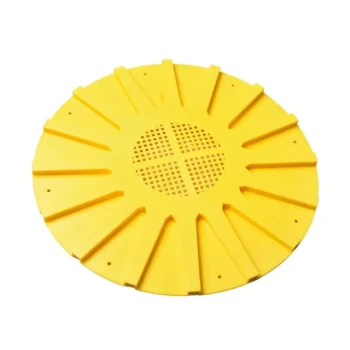
Plastic bottom board beehives offer a superior technical balance by integrating the durability of modern materials with the biological requirements of the colony. Specifically, they solve the critical issues of rot and moisture retention common in traditional all-wood bases while significantly improving airflow and hive hygiene.
Core Takeaway By replacing the most vulnerable part of the hive with plastic, you gain corrosion resistance and improved ventilation without sacrificing thermal stability. This hybrid approach significantly reduces disease risks associated with high humidity while simplifying debris removal and sanitation.
Moisture Management and Airflow
Resisting Environmental Decay
Traditional wood bottom boards are prone to rot because they sit closest to the ground and absorb ambient moisture. Plastic bases provide inherent corrosion and moisture resistance, ensuring the structural integrity of the hive's foundation remains intact over time.
Regulating Internal Humidity
Excess humidity is a primary stressor for bee colonies. Plastic bottom boards are frequently designed with integrated ventilation features that wood floors lack.
Improving Aerodynamics
This engineered ventilation improves internal airflow throughout the hive stack. By reducing stagnant air, the colony can more effectively regulate temperature and lower the humidity levels that often lead to mold and bacterial growth.
Hygiene and Disease Control
Facilitating Debris Removal
Sanitation is critical for a healthy apiary. The design of plastic bottom boards typically facilitates the removal of debris, such as varroa mites and wax cappings, falling from the frames above.
Reducing Disease Vectors
High humidity and organic debris are breeding grounds for pathogens. By combining improved airflow with a non-porous surface that is easy to clean, plastic bottoms reduce the disease risks associated with the damp environments often found in solid wood floors.
Understanding the Material Synergy
The Importance of Hybrid Construction
It is critical to note that the advantage lies in the combination of materials. The plastic bottom provides durability and hygiene, but the hive relies on the thermal insulation properties of the wooden boxes above it.
Balancing Insulation and Ventilation
While plastic excels at moisture control, it does not naturally insulate as well as wood. Therefore, the technical advantage is maximized only when the plastic base is used to complement, not replace, the thermal mass of the wooden hive body. This synergy protects the colony from the elements while ensuring the survival rates and energy efficiency mentioned in modern hive designs.
Making the Right Choice for Your Goal
To determine if switching to plastic bottom boards is the right technical move for your apiary, consider your primary operational challenges:
- If your primary focus is Disease Prevention: The superior ventilation and moisture resistance of plastic boards will directly lower humidity-related risks and improve colony hygiene.
- If your primary focus is Equipment Longevity: The corrosion resistance of plastic bases prevents the rot that typically destroys wooden bottom boards, offering a longer service life for your foundational equipment.
The technical superiority of plastic bottom boards lies in their ability to decouple the hive's need for insulation from its need for drainage and ventilation.
Summary Table:
| Feature | Traditional Wood Bottom Board | Plastic Bottom Board | Technical Benefit |
|---|---|---|---|
| Moisture Resistance | High absorption; prone to rot | Non-porous; corrosion-proof | Prevents fungal growth and foundation decay. |
| Ventilation | Limited or non-existent | Integrated airflow channels | Reduces humidity and assists in temperature regulation. |
| Sanitation | Porous surface traps pathogens | Smooth, easy-to-clean surface | Simplifies debris removal and lowers disease vectors. |
| Durability | Short lifespan in damp soil | Extremely long-lasting | Lowers long-term equipment replacement costs. |
| Thermodynamics | Natural insulation | Best used with wood boxes | Combines wood's warmth with plastic's drainage. |
Scale Your Apiary with Industrial-Grade Beekeeping Solutions
Maximize your colony's health and operational efficiency with HONESTBEE. As a premier partner for commercial apiaries and distributors, we provide more than just equipment; we provide professional-grade reliability. Whether you are seeking high-durability plastic components, precision hive-making machinery, or advanced honey-filling systems, our comprehensive wholesale catalog is designed to meet the demands of large-scale honey production.
Why partner with HONESTBEE?
- Comprehensive Range: From hive hardware to essential industry consumables and honey-themed cultural merchandise.
- Built for Business: Specialized machinery designed for high-volume efficiency.
- Expert Support: We help you select the right materials to ensure the survival and productivity of your colonies.
Contact our wholesale team today to discuss how our tools and machinery can optimize your beekeeping business.
References
- Adil Koray Yıldız, Servet Arslan. Yozgat İli Arıcılık İşletmelerinin Teknik ve Sosyo-Ekonomik Durumunun İncelenmesi. DOI: 10.24925/turjaf.v10i5.846-852.4931
This article is also based on technical information from HonestBee Knowledge Base .
Related Products
- Langstroth Solid Bottom Board for Beekeeping
- Solid Bottom Board Australian Pine Wood Langstroth Bottom Board for Wholesale
- Efficient Hive Clearing: HONESTBEE 8-Way Plastic Bee Escape
- Langstroth Screen Bottom Board for Beekeeping Wholesale
- Professional Insulated Plastic Bee Hives
People Also Ask
- What are the functions of solid bottom boards for a beehive? Essential Thermal Protection and Winter Survival Tips
- What is the purpose of a solid bottom board for bee hives? Enhance Hive Health and Winter Survival
- How does climate influence the choice between a solid and screened bottom board? Optimize Your Hive for Local Weather
- What is the primary function of a bottom board in a modern modified beehive system? Essential Foundation Guide
- What are the characteristics of a solid bottom board for a beehive? Boost Colony Health and Thermal Insulation